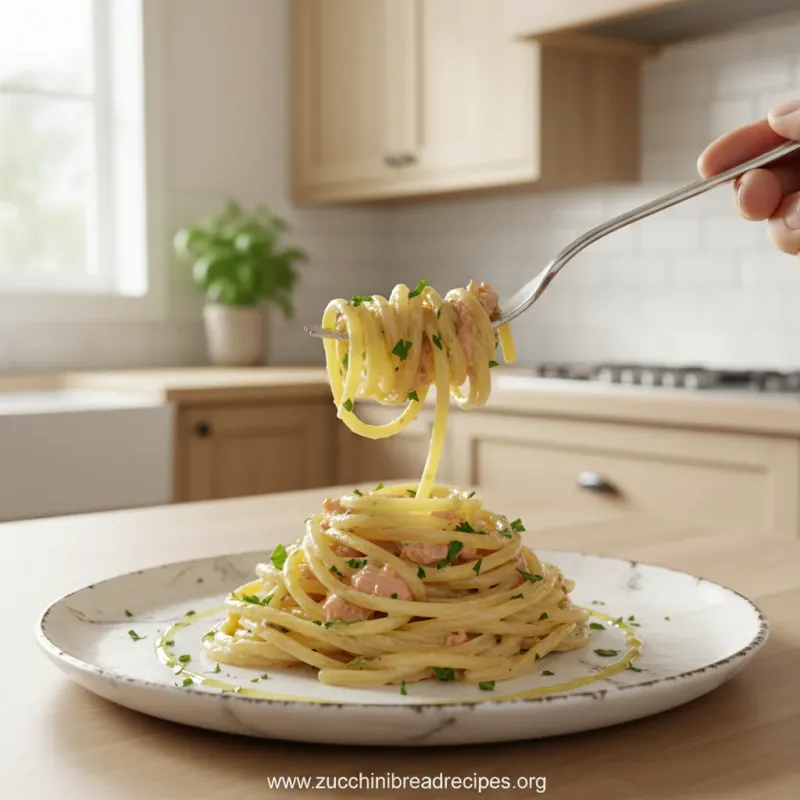
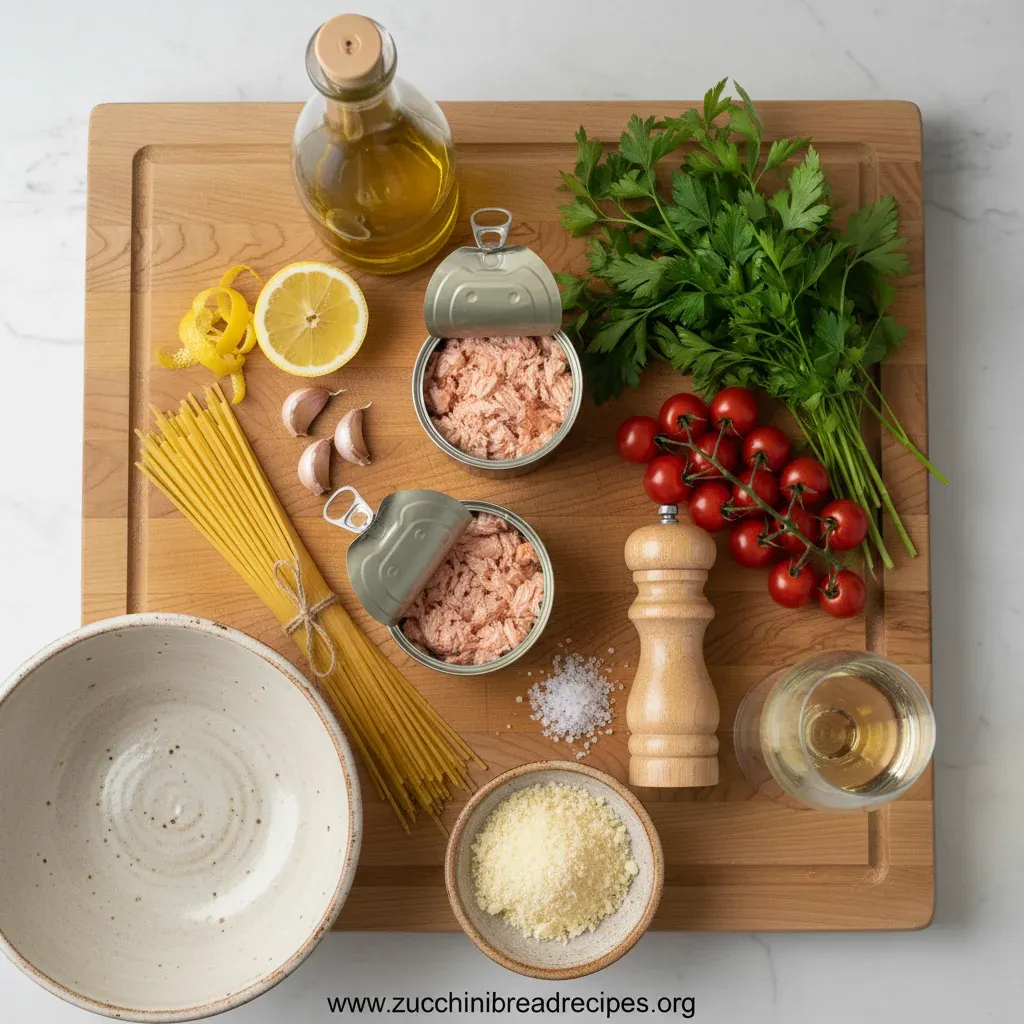
Honestly, when I first opened a tin of salmon and thought about tossing it with pasta, I felt a gentle spark of possibility. The pantry already had olive oil, garlic, and a lemon that was just waiting to brighten everything. I remember when I served this to a hurried family, and the smiles were so quiet and content. If you love canned patties, this pasta will feel familiar yet fresh, a simple solution that whispers of the sea without any fuss.
The essence of the dish
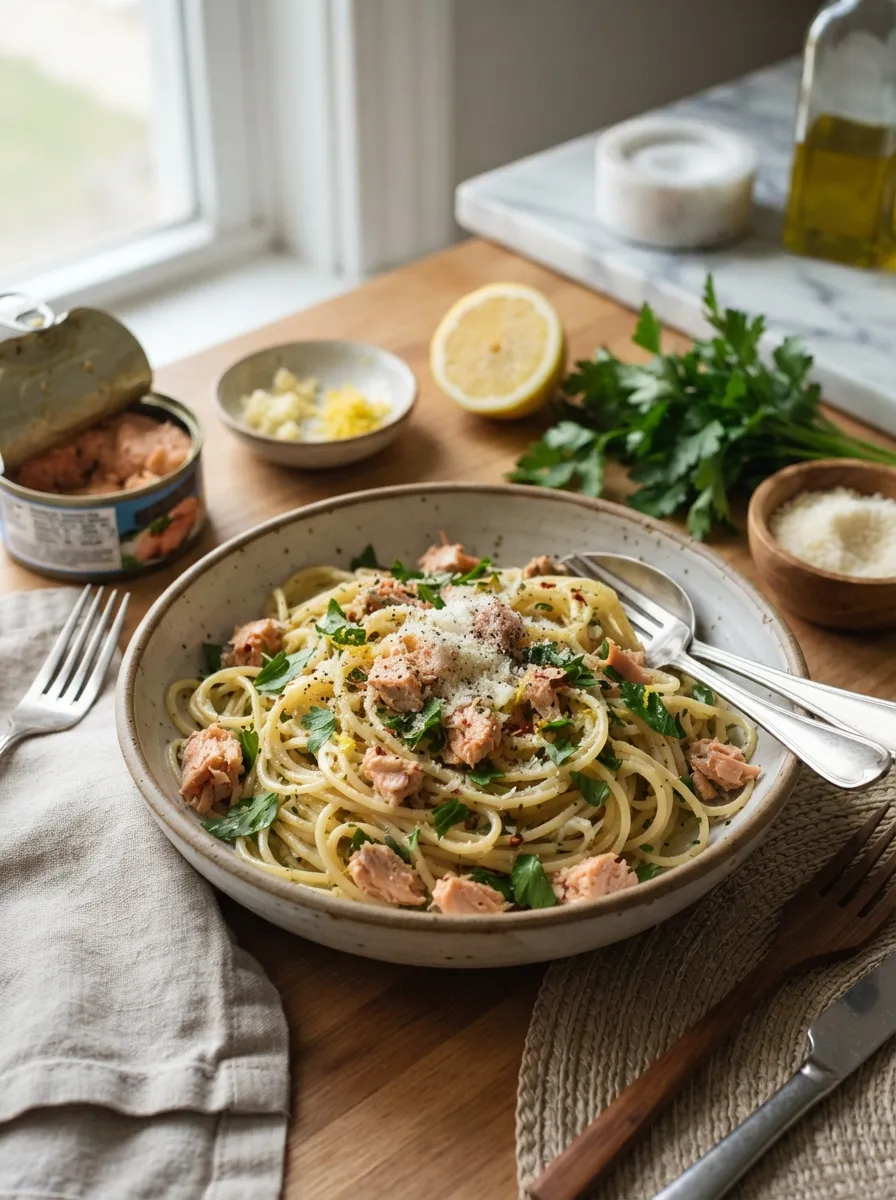
It’s the marriage of flaky salmon with a bright, herb‑focused sauce that makes the pasta feel light yet satisfying. The lemon adds a sunny note, while the parsley offers a fresh finish.
A fun fact or historical angle
During World War II, canned salmon was a staple for soldiers because it stored well and provided essential omega‑3 fats. That practicality lives on in today’s quick meals.
Flavor or sensory focus
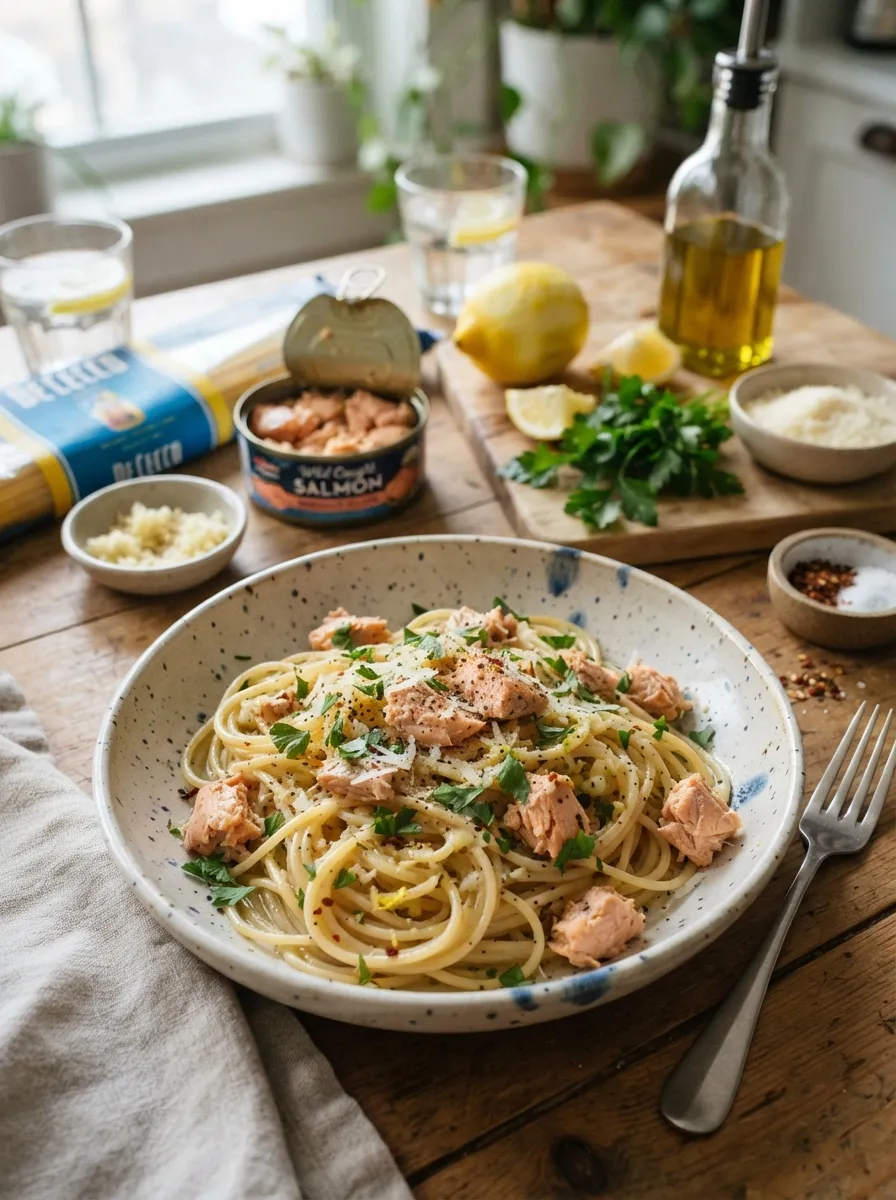
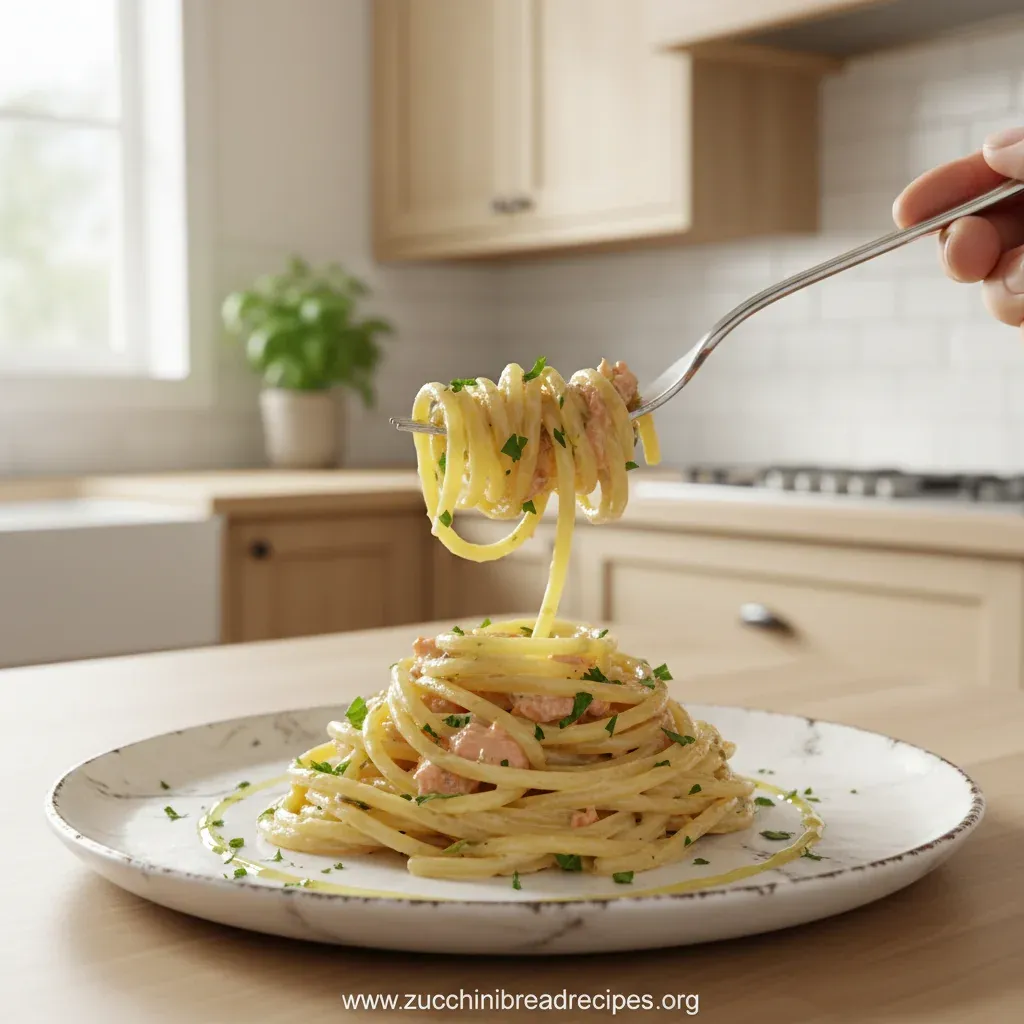
You’ll notice the subtle brine of the salmon, the citrus pop from lemon, and the fragrant whisper of garlic as you take a bite. The texture is a comforting coil of pasta wrapped around tender flakes.
You Must Know
- Use a non‑stick pan to keep the salmon from sticking.
- Don’t over‑cook the pasta; al dente holds sauce best.
- Add pasta water gradually to achieve silkiness.
When the sauce glistens on the noodles, you’ll feel a quiet pride in a dish that needed just a few simple steps. It’s a reminder that comfort often comes from pantry basics, especially when you let the flavors speak softly. tomato pasta can be a sweet variation if you crave a richer base.
The story behind it
Canned salmon entered households in the early 20th century as a reliable source of protein during wartime rationing. Its preservation method captured the buttery richness of fresh fish, allowing families to enjoy the ocean’s bounty year‑round. Over the decades the humble tin became a pantry staple, especially in the Pacific Northwest where salmon has long been a cultural icon. This recipe honors that history by pairing the modest can with quick‑cook pasta, creating a dish that bridges tradition and modern convenience.
Why You'll Love It
- It comes together in under half an hour, perfect for busy evenings.
- The canned salmon adds a delicate, buttery flavor without any extra prep.
- Bright lemon and fresh parsley lift the dish, giving it a sunny feel.
- It’s a balanced meal, offering protein, carbs, and a touch of healthy fat.
Tips for success
- Don’t overcook the garlic; it turns bitter quickly.
- Use freshly grated lemon zest for brighter flavor.
- Add pasta water gradually to control sauce thickness.
Professional secrets
- Pat the salmon dry before adding to keep the sauce from becoming watery.
- Finish the dish off the heat; residual warmth is enough to meld flavors.
- A pinch of red‑pepper flakes adds depth without overwhelming the fish.
Common mistakes to avoid
- Over‑cooking the garlic, which turns bitter.
- Adding the salmon too early, causing it to fall apart.
- Using too little pasta water, resulting in a dry sauce.
Substitutions
- Canned salmon: Smoked trout or firm tofu. Adjust cooking time for tofu – press well and add at the end.
- Wheat pasta: Gluten‑free brown rice pasta. Cooking time may vary slightly; keep an eye on tenderness.
Variations
- Spicy Version: Add a teaspoon of cayenne pepper and a dash of hot sauce for a gentle kick.
- Mediterranean Style: Stir in chopped olives, sun‑dried tomatoes, and crumble feta for a briny twist.
Storage
Store leftovers in an airtight container in the refrigerator for up to 2 days; reheat gently on the stove with a splash of water.
Make ahead
You can drain and flake the salmon a day ahead, storing it in a sealed container; the sauce components can be pre‑measured for quicker assembly.
Leftovers
Reheat gently in a skillet with a splash of water or broth; add a fresh squeeze of lemon to revive brightness.
Serving ideas
- Serve over the cooked pasta directly on a warmed plate.
- Garnish with extra parsley and a lemon wedge for a fresh pop.
- Pair with a light cucumber salad to balance the richness.
Allergy information
Contains fish and gluten (if wheat pasta is used).
Canned Salmon Pasta – Quick & Healthy Recipe
Protein‑packed canned salmon pasta ready in under 30 minutes.
- Prep time
- 10 min
- Cook time
- 15 min
- Total time
- 25 min
- Difficulty
- Easy
- Cuisine
- American
Ingredients
Main Ingredients
For the Sauce
Instructions
- 1
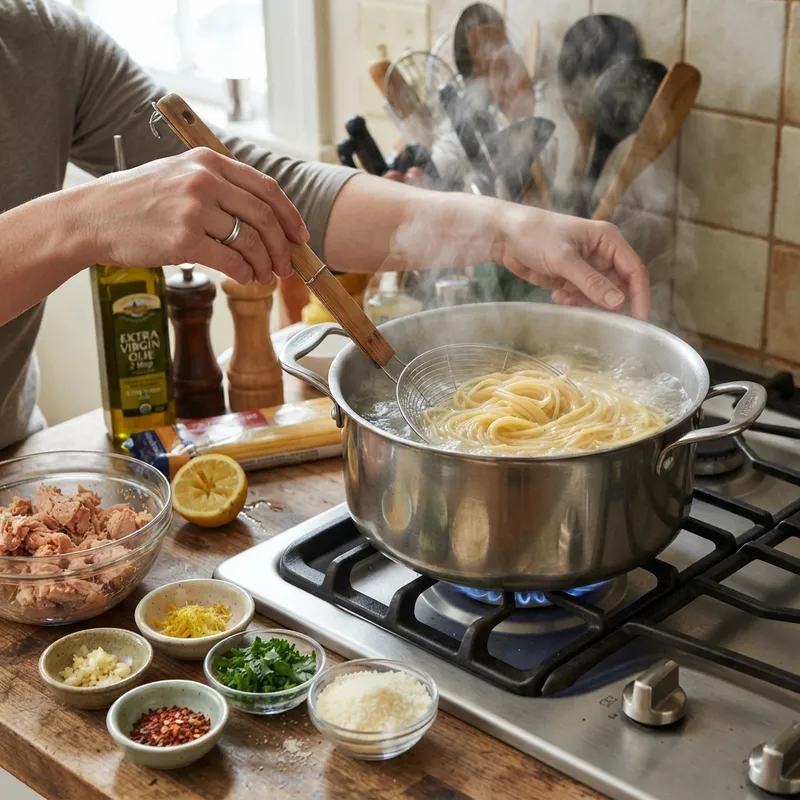
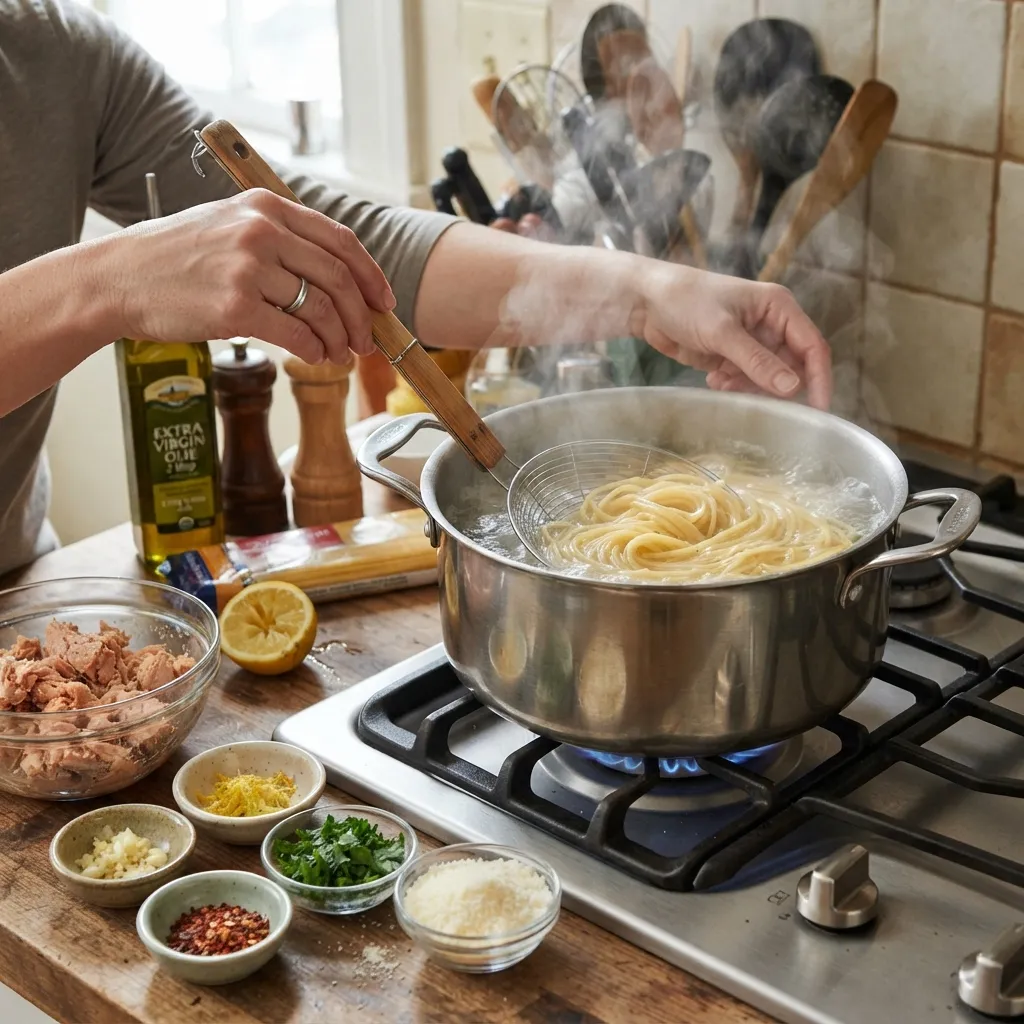
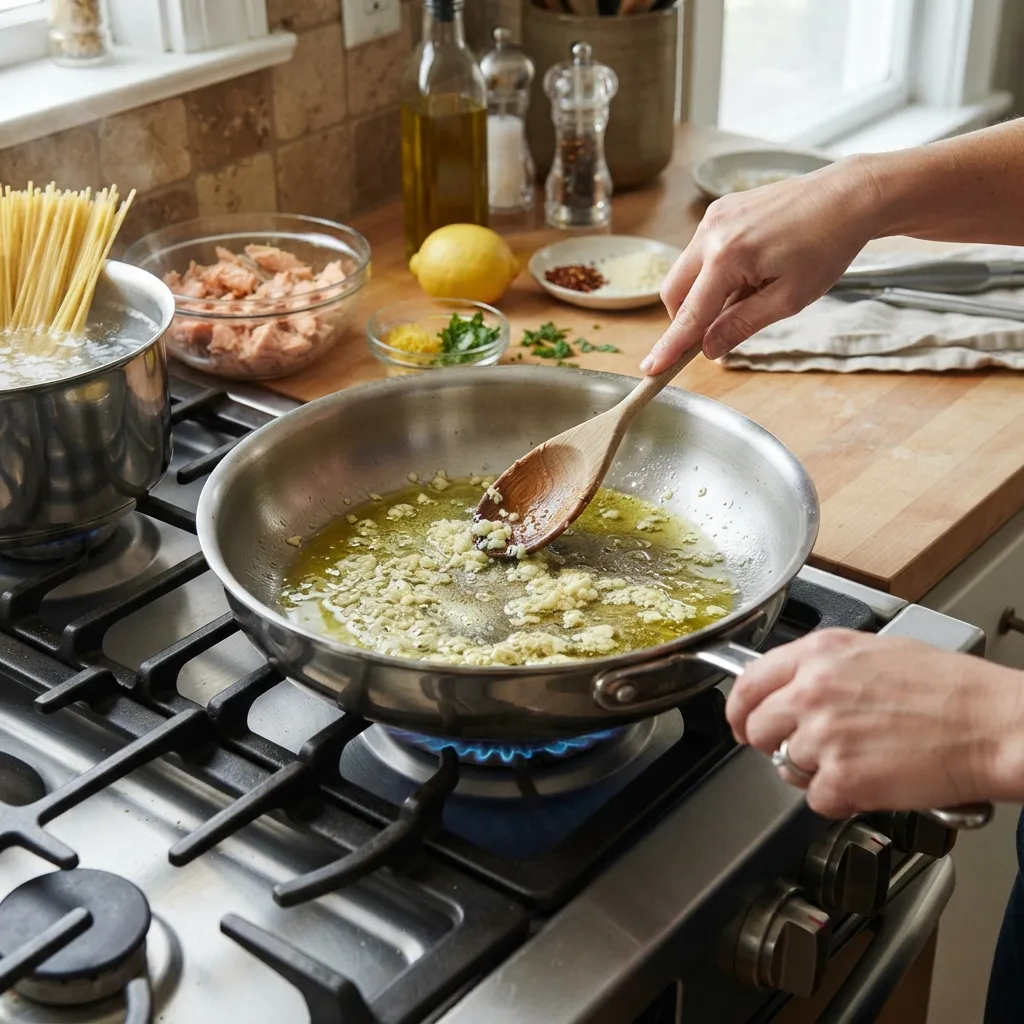
Bring a large pot of salted water to a boil; add the pasta and cook until al dente, about 9 minutes.
- 2
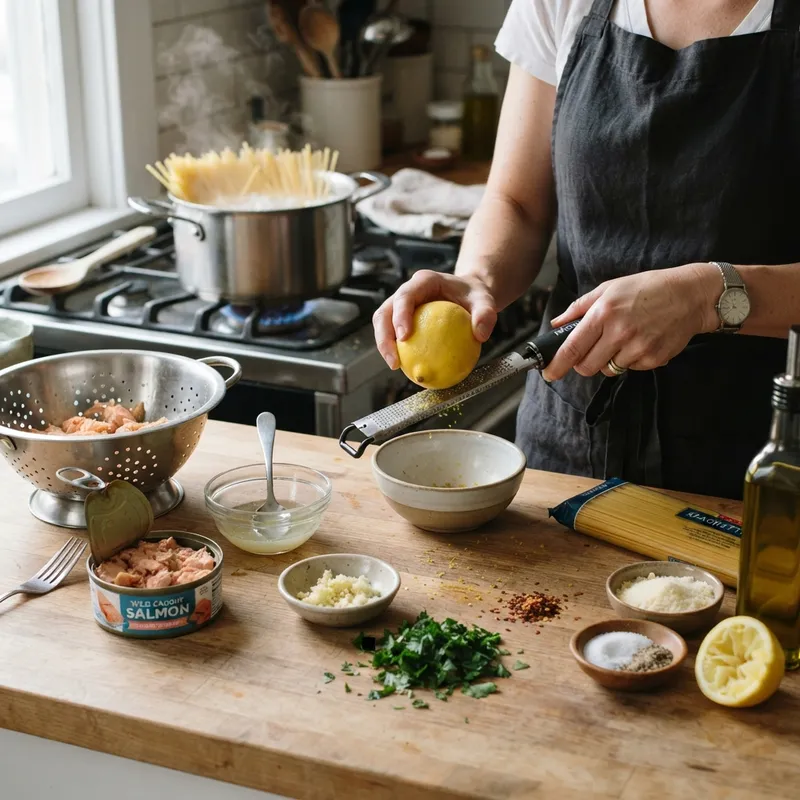
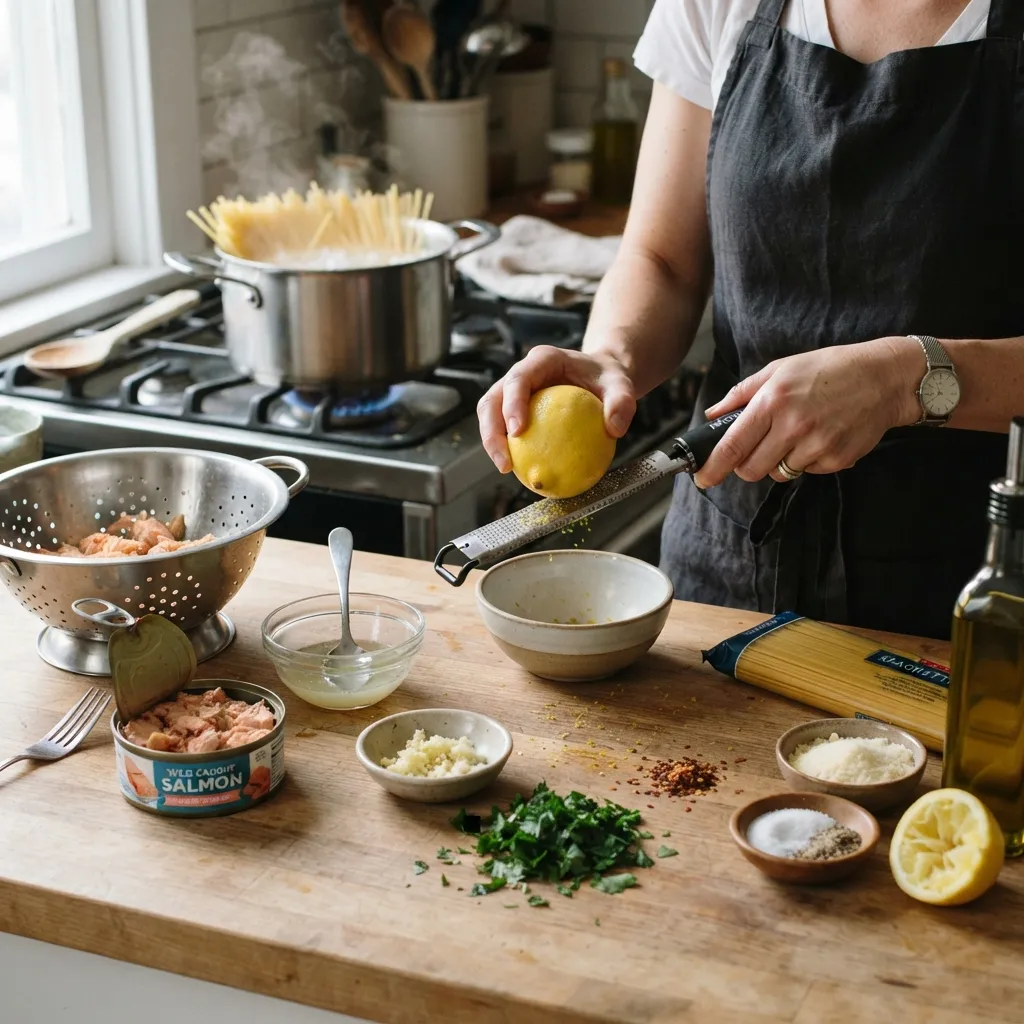
While the pasta cooks, drain the salmon and set aside; zest the lemon and then juice it.
- 3
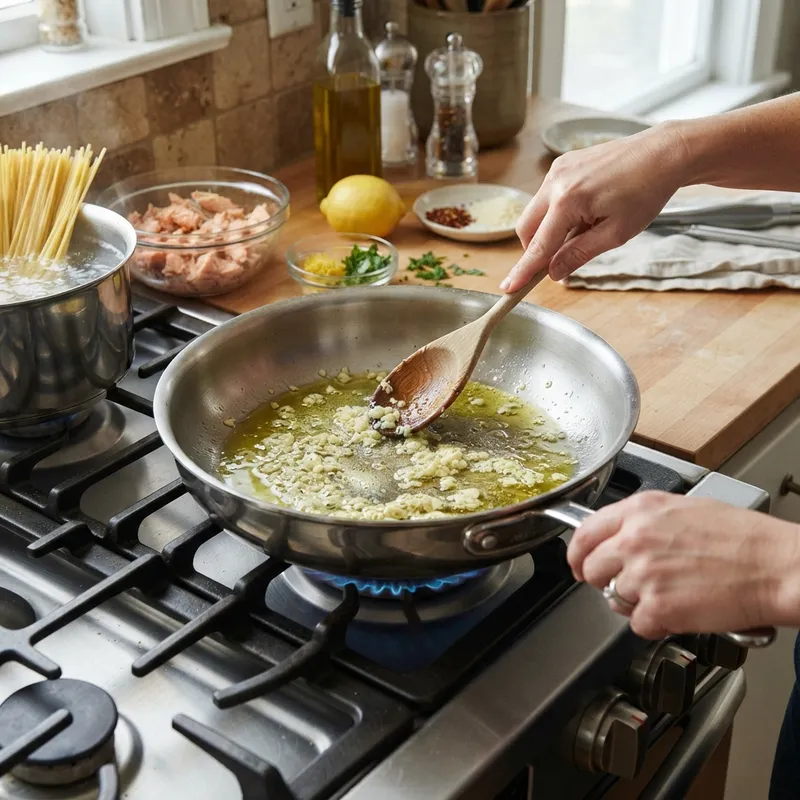
In a large skillet, heat olive oil over medium heat. Add the minced garlic and sauté for 30 seconds until fragrant, being careful not to brown.
- 4
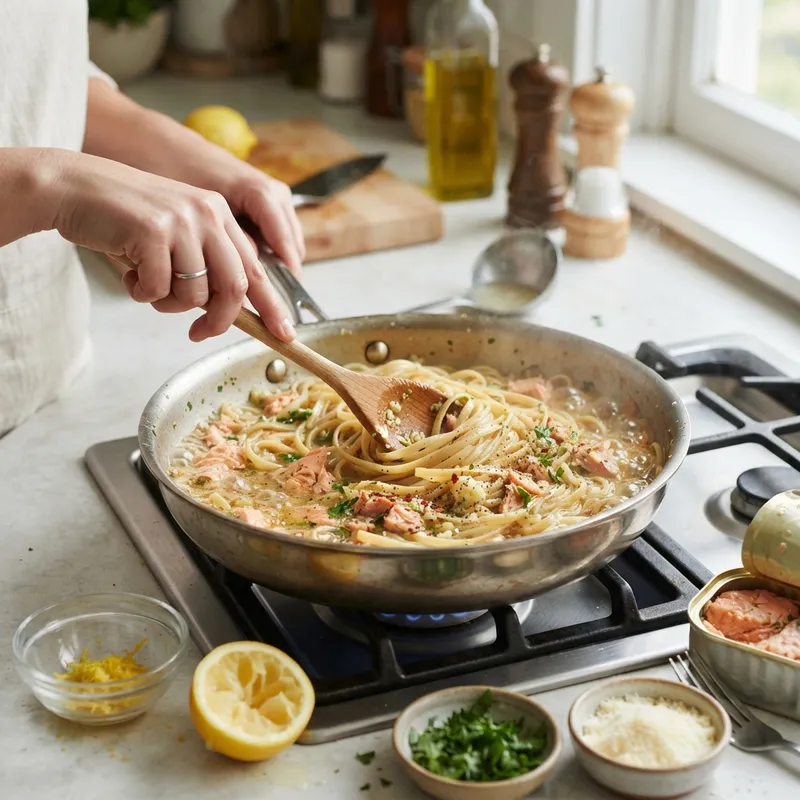
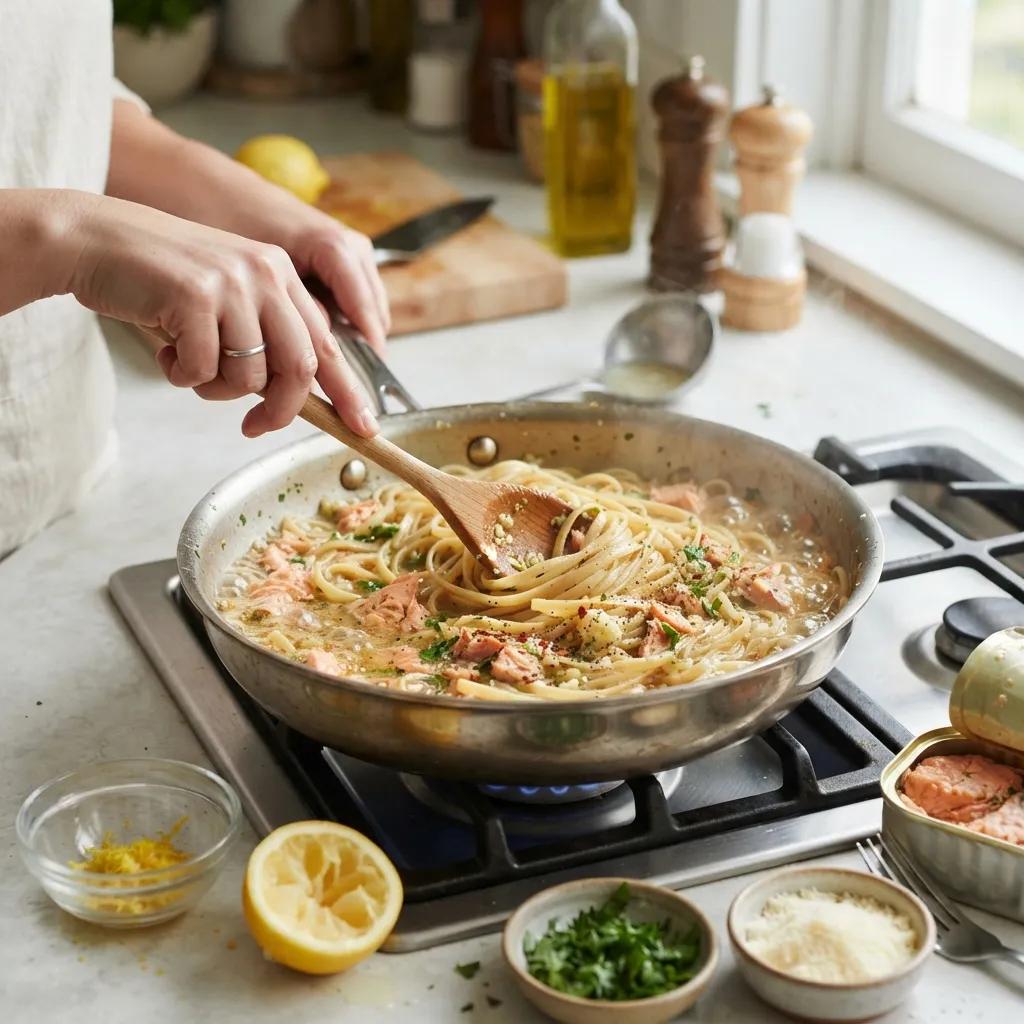
Stir in the lemon zest, lemon juice, and a splash of pasta water; let the mixture bubble gently for a minute.
- 5
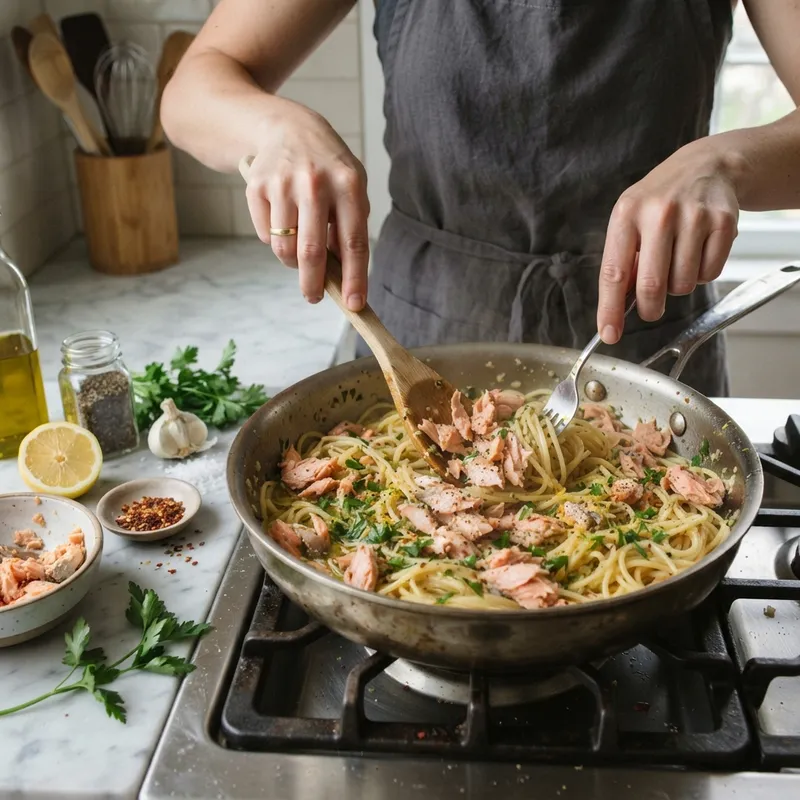
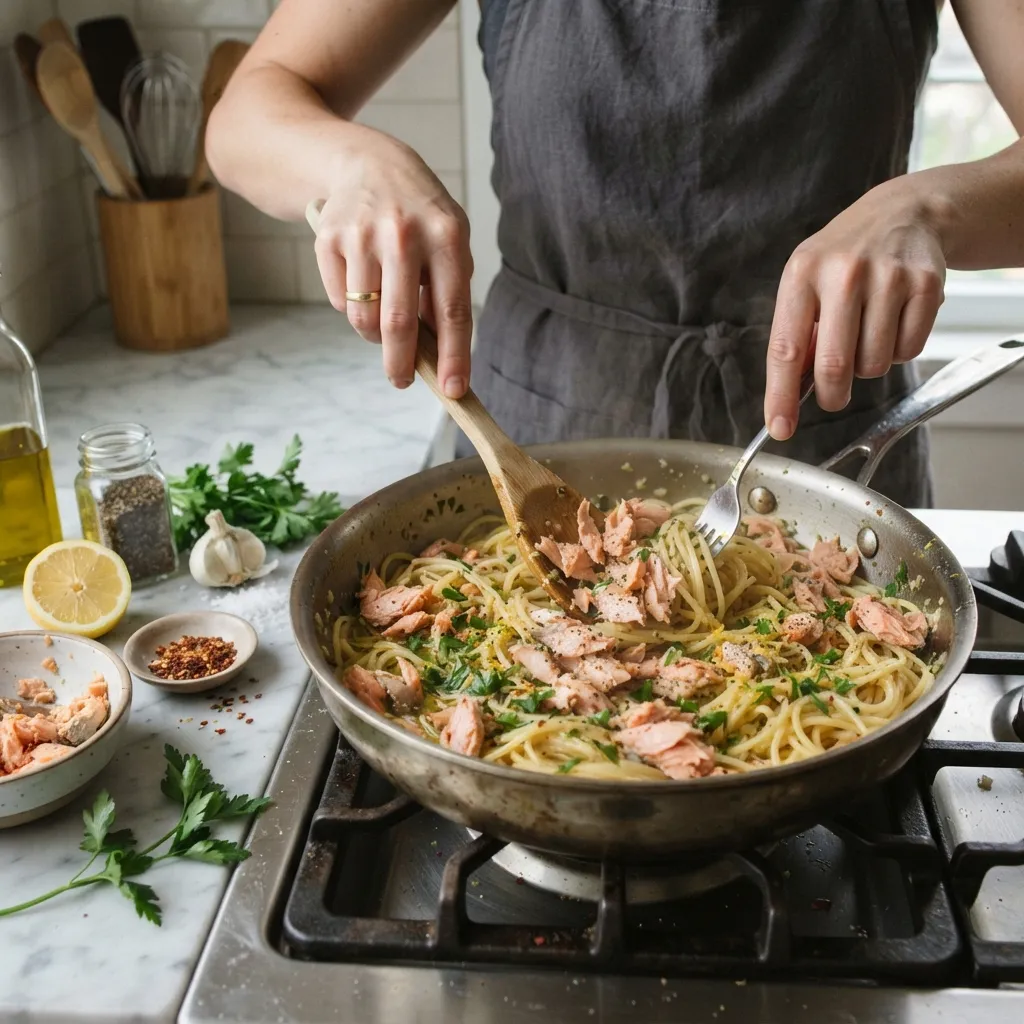
Add the flaked salmon, tossing just enough to coat; season with salt, pepper, and red‑pepper flakes if using.
- 6
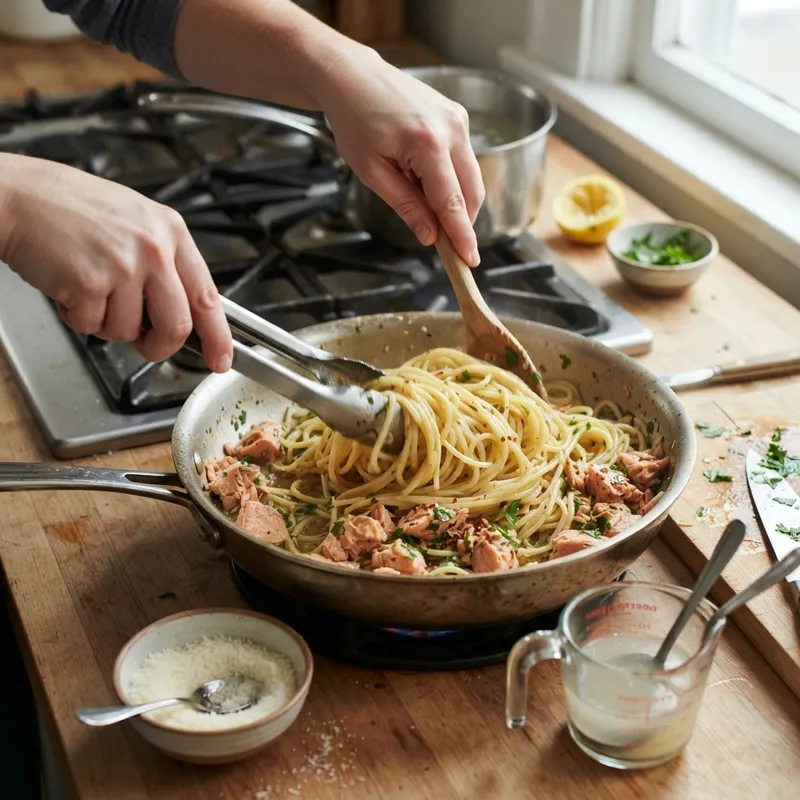
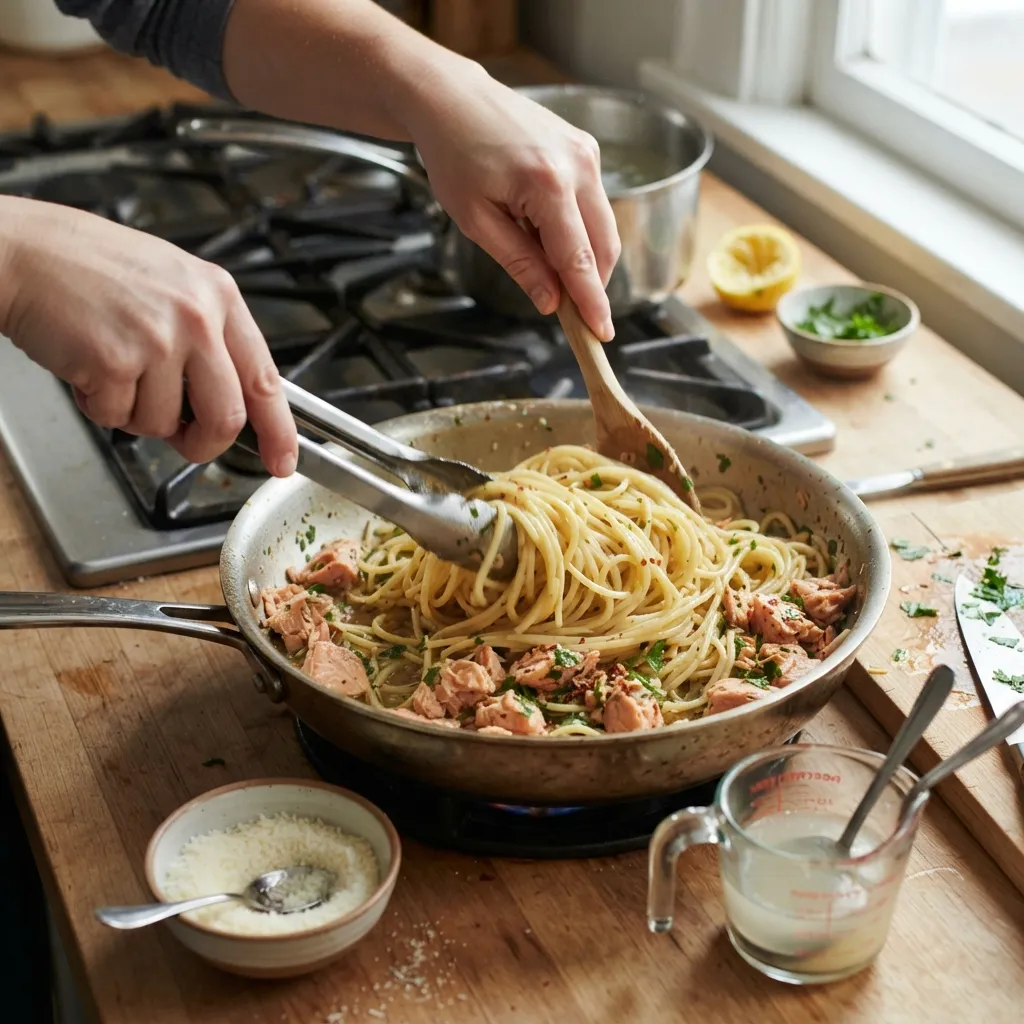
Reserve a cup of pasta water, then drain the noodles. Toss the pasta into the skillet, adding pasta water a little at a time until the sauce clings. Finish with chopped parsley and, if desired, a sprinkle of Parmesan.
Nutrition per serving
- 420 kcal
- Calories
- 28 g
- Protein
- 50 g
- Carbs
- 14 g
- Fat
Tips & notes
- Pat the salmon dry with paper towels to avoid soggy sauce. - Reserve pasta water early; it helps the sauce emulsify. - Taste and adjust seasoning after adding the lemon juice.
Frequently asked questions
Can I use fresh salmon instead of canned?
Yes, bake or poach a fresh fillet, then flake it; just reduce the added salt because fresh salmon is less salty.
What type of pasta works best?
Long, thin shapes like spaghetti, linguine, or even strap noodles let the light sauce cling nicely.
How do I keep the salmon from drying out?
Add it at the end of cooking and toss gently; the residual heat is enough to warm it without over‑cooking.
Can I make this vegan?
Swap the salmon for smoked tofu or seasoned chickpeas, and use vegetable broth in place of fish stock.
Is it okay to freeze leftovers?
Yes, store in an airtight container; reheat gently with a splash of water or broth to revive the sauce.
What side dish pairs well?
A simple green salad with a lemon vinaigrette or steamed asparagus balances the richness.

Ava Brooks
⏱️🥄 Busy baker, one-bowl expert, and mini-loaf maker. Fast recipes with maximum yum 😋🔥.