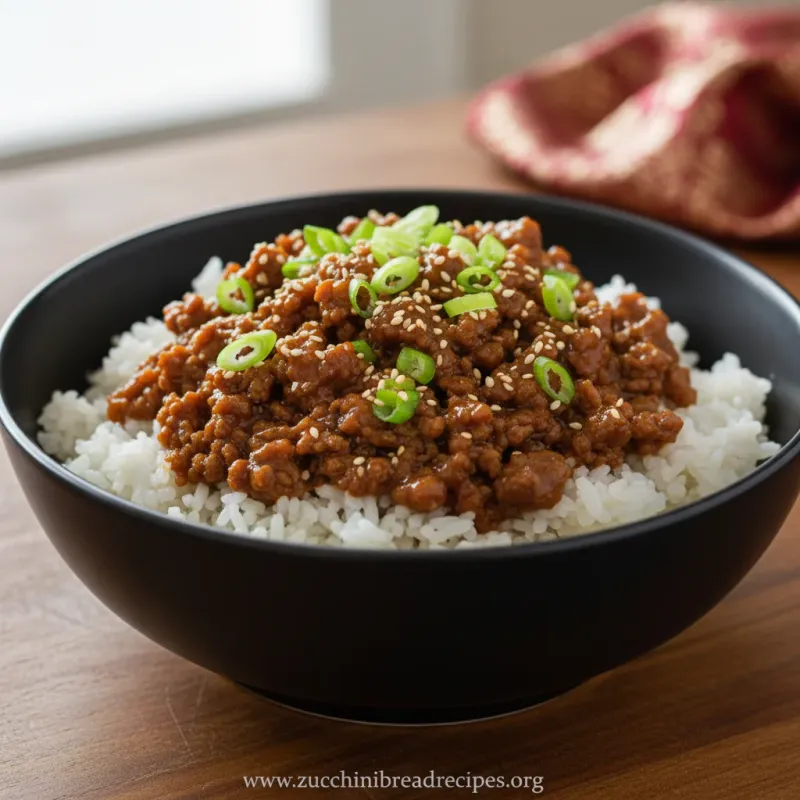
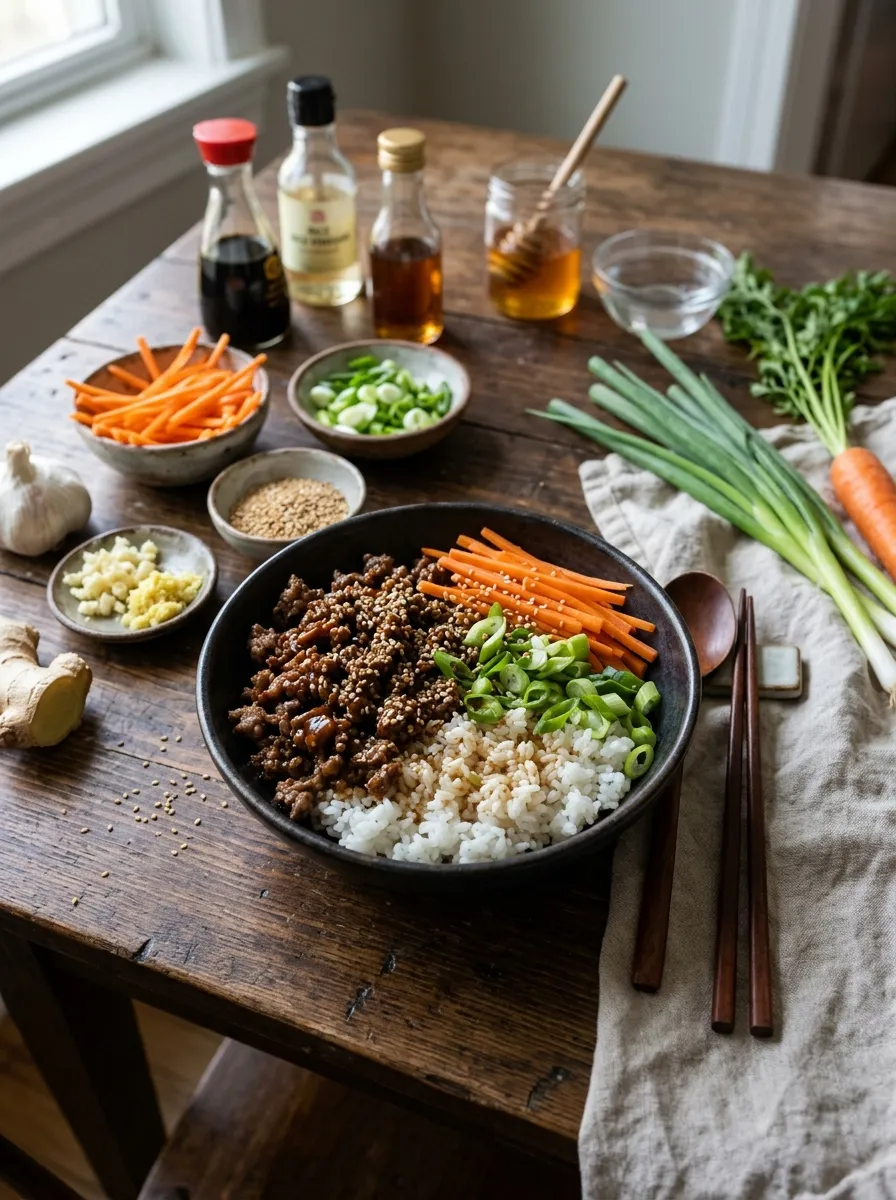
Honestly, this bowl is the kind of simple comfort that feels like a warm hug after a long day. The scent of garlic and sesame oil fills the kitchen, and before you know it the rice is steaming and the beef is caramelized. I love how the dish comes together without any fuss, and the flavors linger gently on the palate.
The essence of the dish
A harmonious blend of sweet honey, salty soy, and aromatic sesame oil coats tender ground beef, while crisp carrots and scallions add texture. The entire bowl rests on a bed of fluffy rice that soaks up every nuance.
A fun fact or historical angle
Stir‑frying with a wok originated in China, but Korean households adapted the method for quick meals, using a lighter skillet and the celebrated "bulgogi" seasoning.
Flavor or sensory focus
You’ll notice the initial kiss of garlic, followed by the sweetness of honey, and a lingering nutty finish from sesame. The rice provides a soft, warm cradle for each bite.
You Must Know
- Use a hot pan for a proper sear
- Don’t over‑cook the vegetables
- Balance sauce thickness with broth
Keeping these points in mind makes the difference between a hurried meal and a comforting, well‑rounded bowl. The simple act of watching the beef brown, hearing the sizzle, and smelling the ginger can turn an ordinary dinner into a quiet celebration of flavor.
The story behind it
Korean cuisine has long celebrated the harmony of sweet, salty, and umami, especially in quick‑cook dishes that were born out of bustling market stalls. The technique of stir‑frying thinly sliced beef with soy sauce and sugar dates back to the early 20th century, when households needed nourishing meals in minutes. This bowl carries that tradition forward, offering modern cooks a taste of history with every bite.
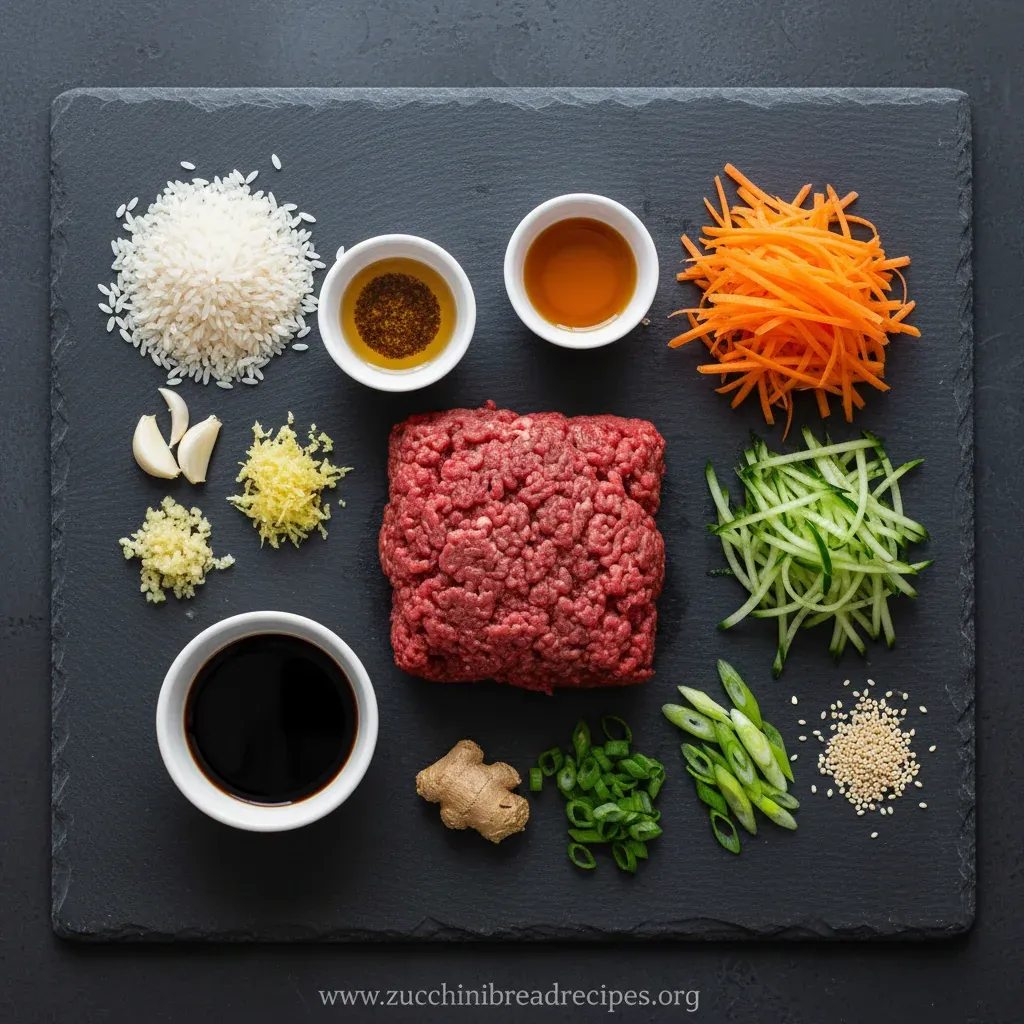
Why You'll Love It
- Ready in less than half an hour, perfect for busy nights
- Warm, aromatic sauce that clings to every grain of rice
- Fresh crunch from carrots and scallions balances the richness
- Minimal cleanup; just one skillet and a pot of rice
Tips for success
- Don't overcrowd the pan; cook beef in batches if needed.
- Let the beef rest a minute after cooking to retain juices.
- Taste the sauce before adding rice; adjust salt or sweetness.
Professional secrets
- Room temperature beef sears faster and stays juicy.
- High heat creates a caramelized crust that adds richness.
- Deglaze with a bit of water to capture browned bits.
Common mistakes to avoid
- Overcrowding the pan, which steams rather than browns the beef.
- Adding carrots too early; they become mushy.
- Letting the sauce boil vigorously; it can become overly thick.
Substitutions
- Ground beef: Ground turkey or firm tofu. Adjust cooking time for tofu; press it first to remove excess moisture.
- Honey: Maple syrup. Provides similar sweetness with a hint of caramel.
Variations
- Spicy Version: Add 1 tsp gochujang and a pinch of red pepper flakes for a subtle heat.
- Mediterranean Style: Swap beef for ground lamb, fold in olives and crumbled feta for a new twist.
Storage
Store beef and sauce in an airtight container for up to 3 days; keep rice separate.
Make ahead
You can brown the beef and mix the sauce up to 24 hours ahead; reheat gently and serve over freshly cooked rice.
Leftovers
Reheat in a skillet with a splash of water to keep the beef moist and avoid dried rice.
Serving ideas
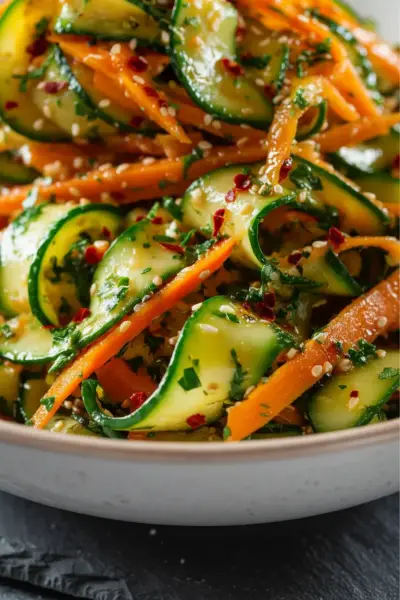
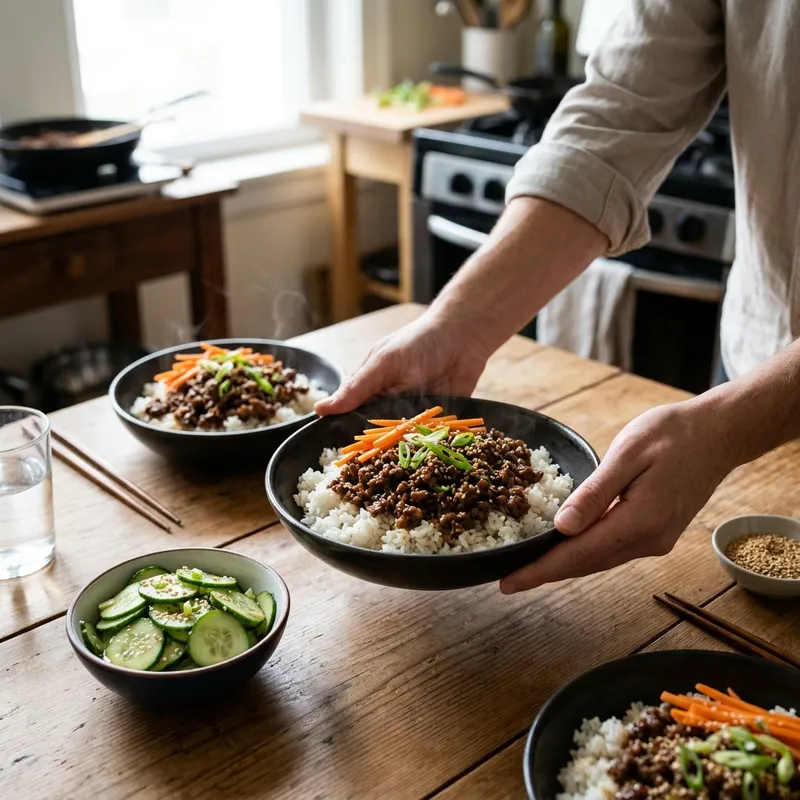
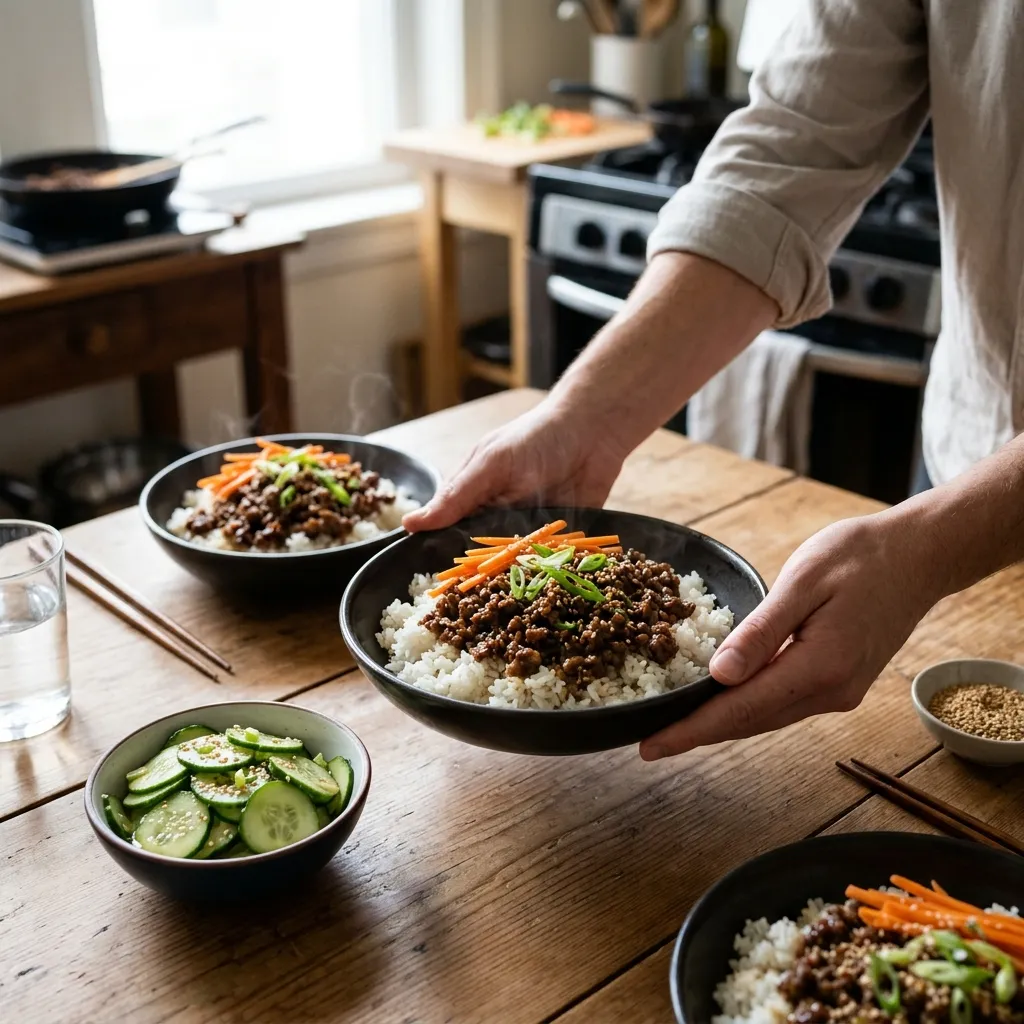
- Serve the bowl hot with a side of pickled cucumber salad.
- Garnish with a few leaves of fresh cilantro for brightness.
- Accompany with a light miso soup for a complete meal.
- Add a dash of extra sesame oil for a fragrant finish.
Allergy information
Contains soy and sesame.
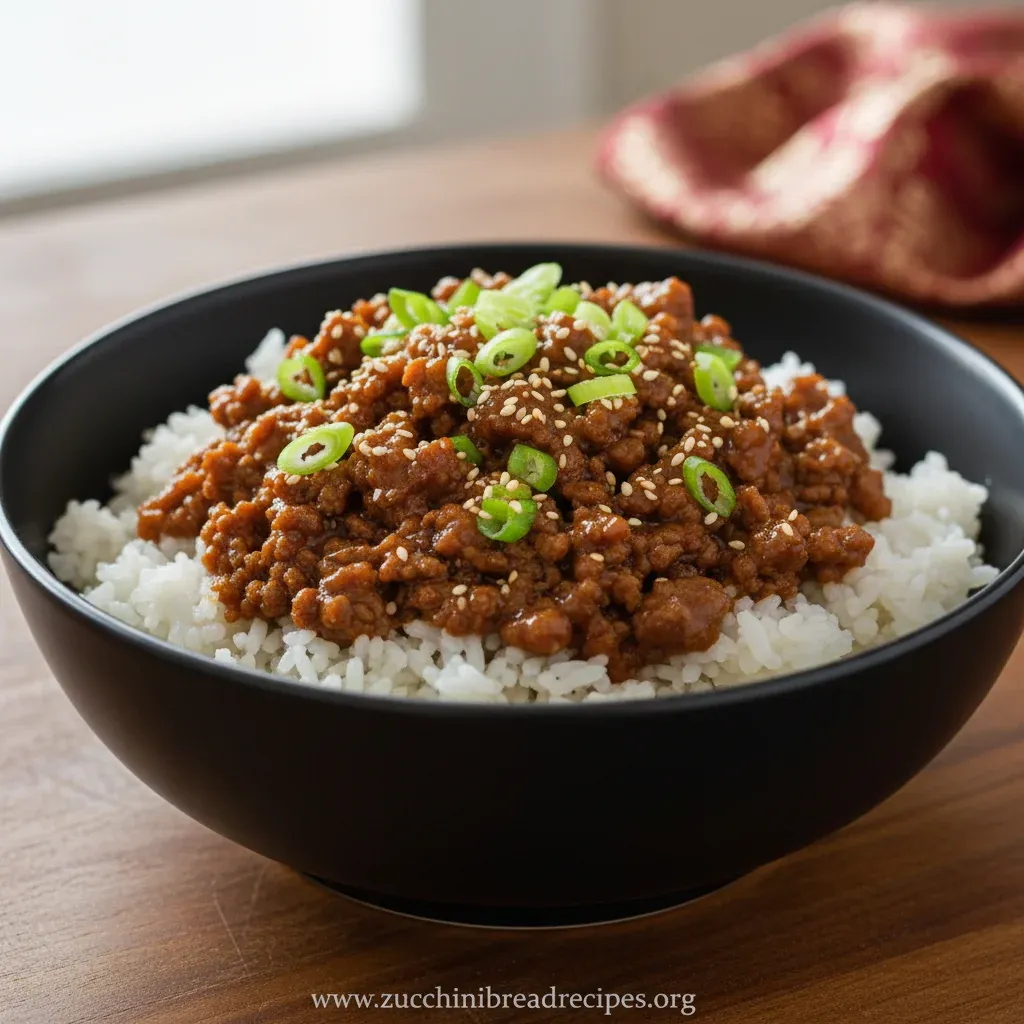
Korean Ground Beef Bowl
Savory ground beef with Korean flavors, veggies, and rice for a fast, satisfying dinner.
- Prep time
- 10 min
- Cook time
- 20 min
- Total time
- 30 min
- Difficulty
- Easy
- Cuisine
- Korean
- Course
- Main Course
Ingredients
Main Ingredients
For the Sauce
Instructions
- 1
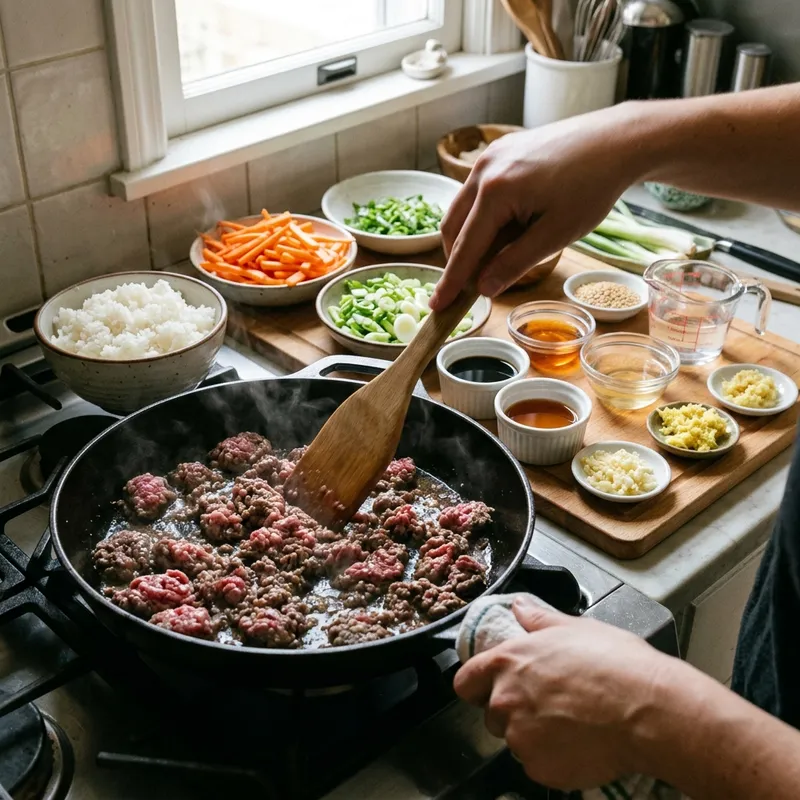
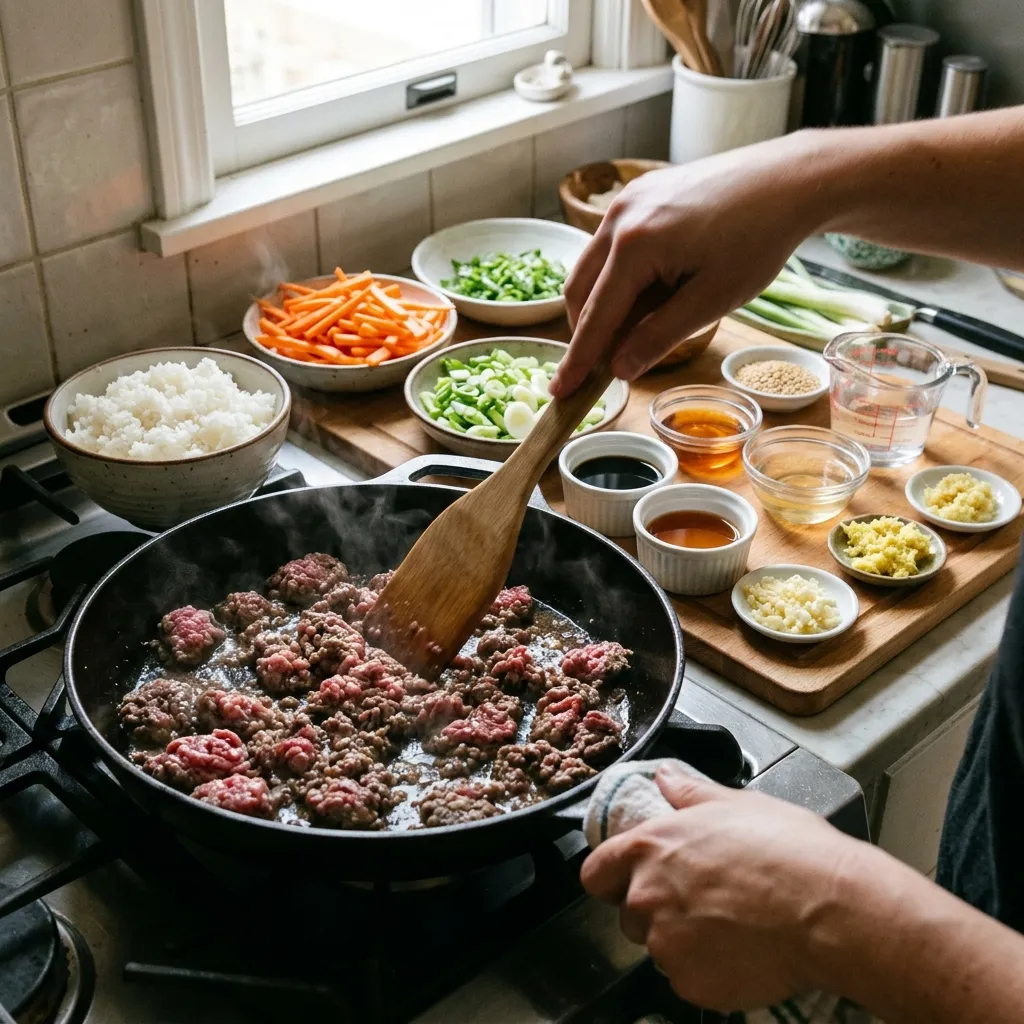
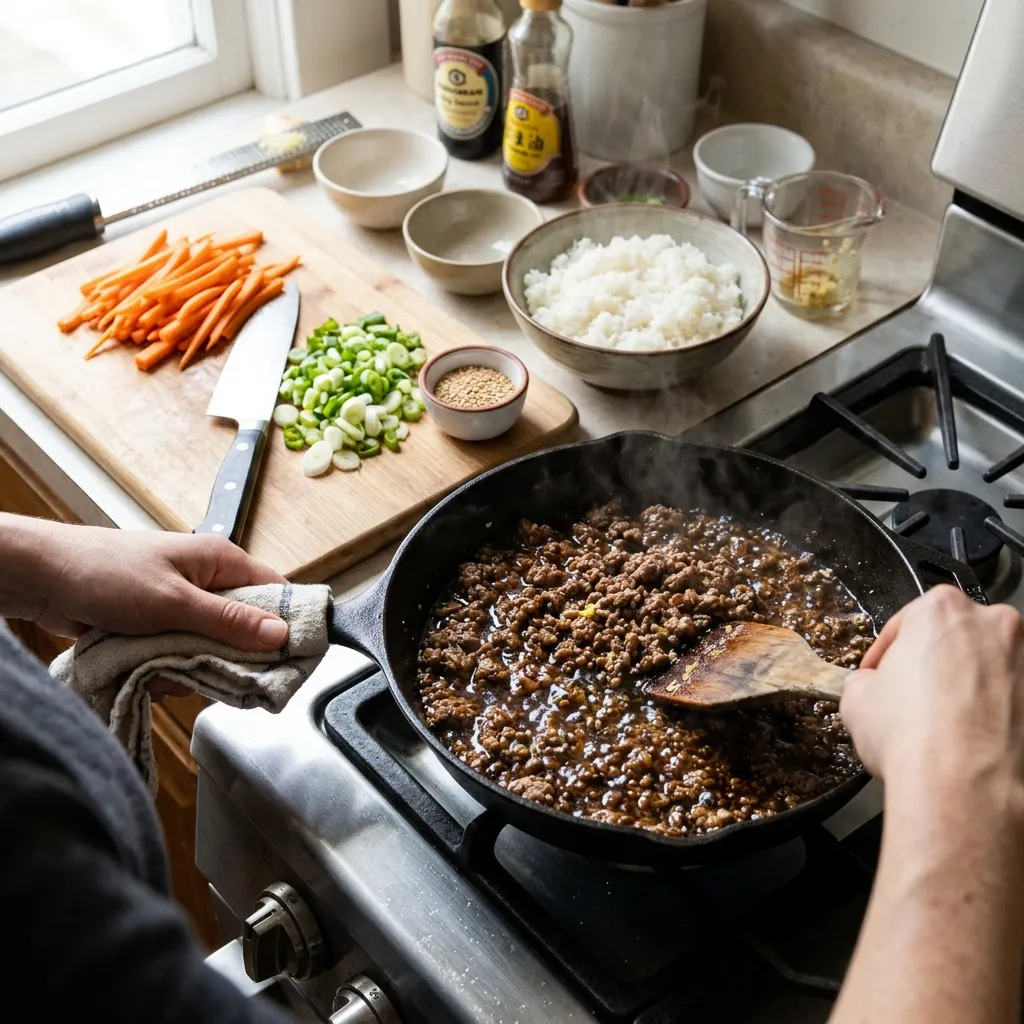
Heat a large skillet over medium‑high heat; add the ground beef and cook, breaking it up, until browned and cooked through, about 5‑6 minutes.
- 2
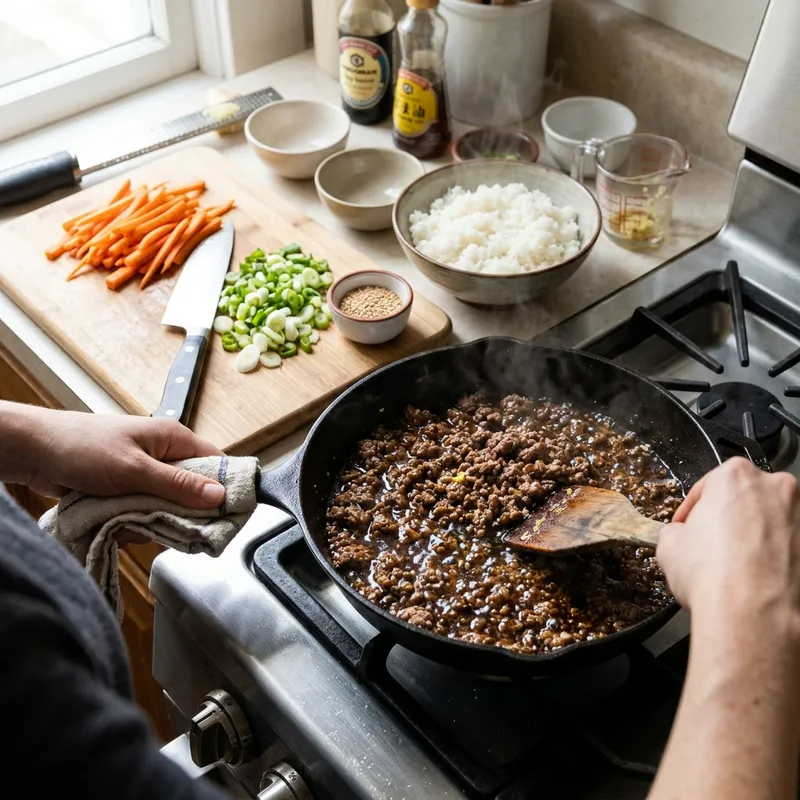
Stir in the minced garlic and grated ginger; sauté for 30 seconds until fragrant, then pour in the sauce ingredients and water. Let the mixture simmer, stirring, until it thickens slightly, about 3‑4 minutes.
- 3
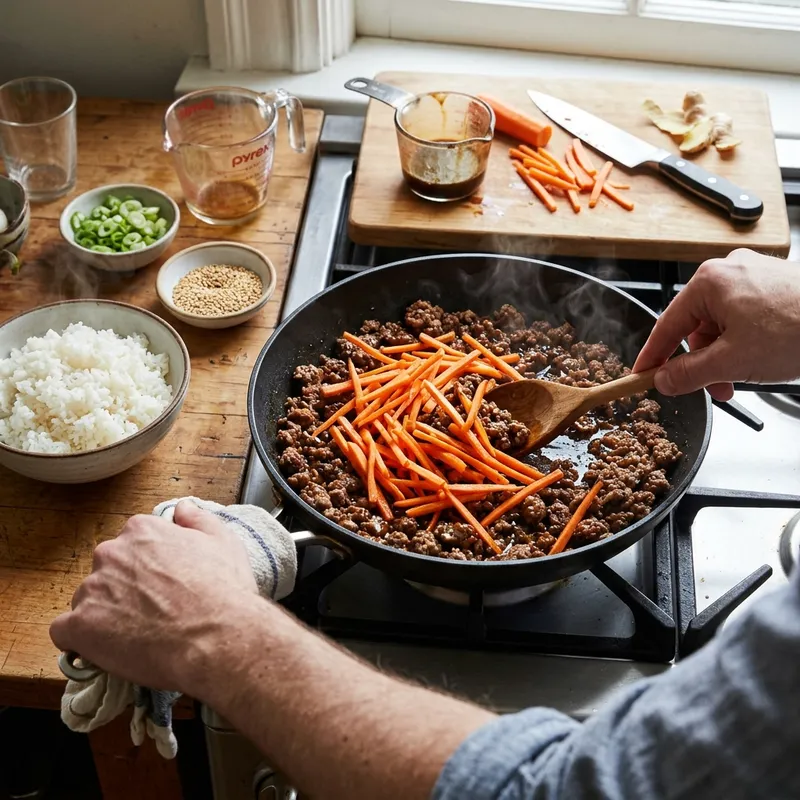
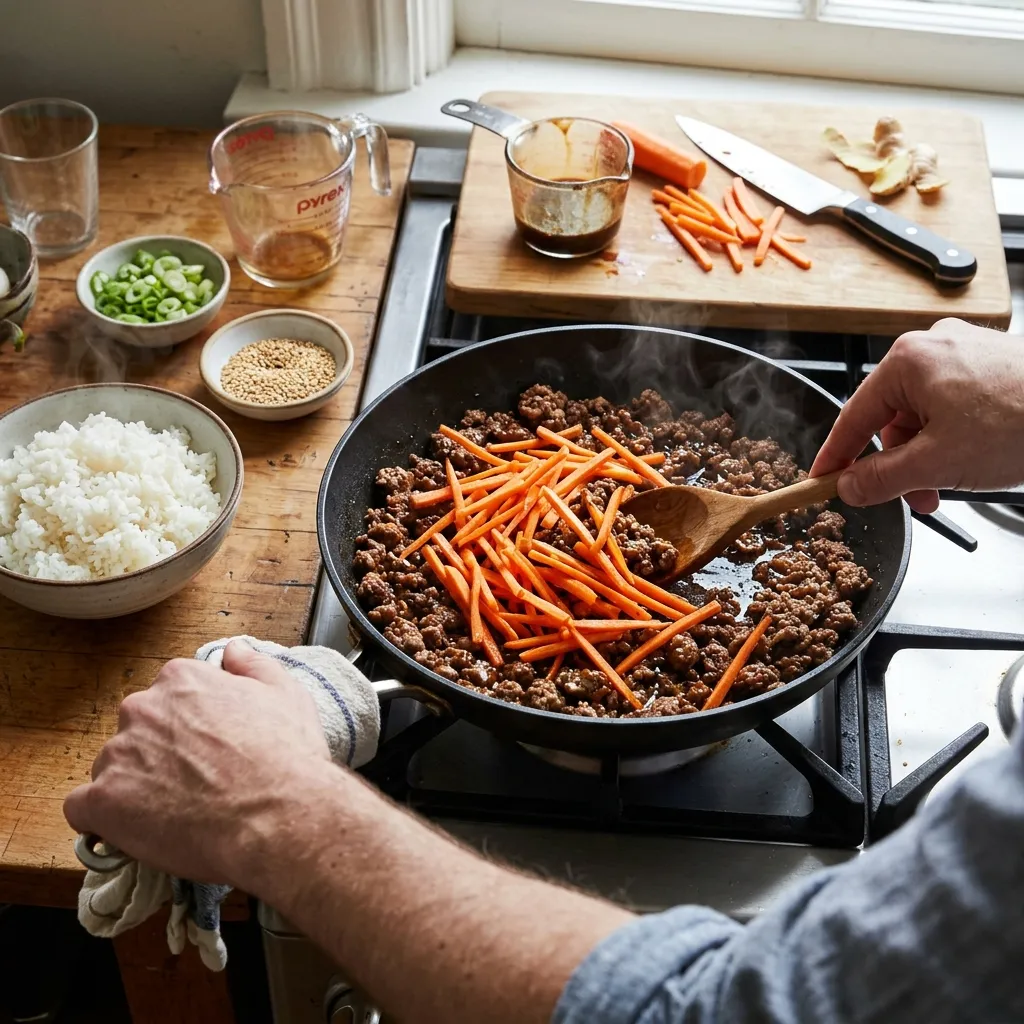
Add the julienned carrot to the skillet and toss for 1‑2 minutes, just until it brightens while staying crisp.
- 4
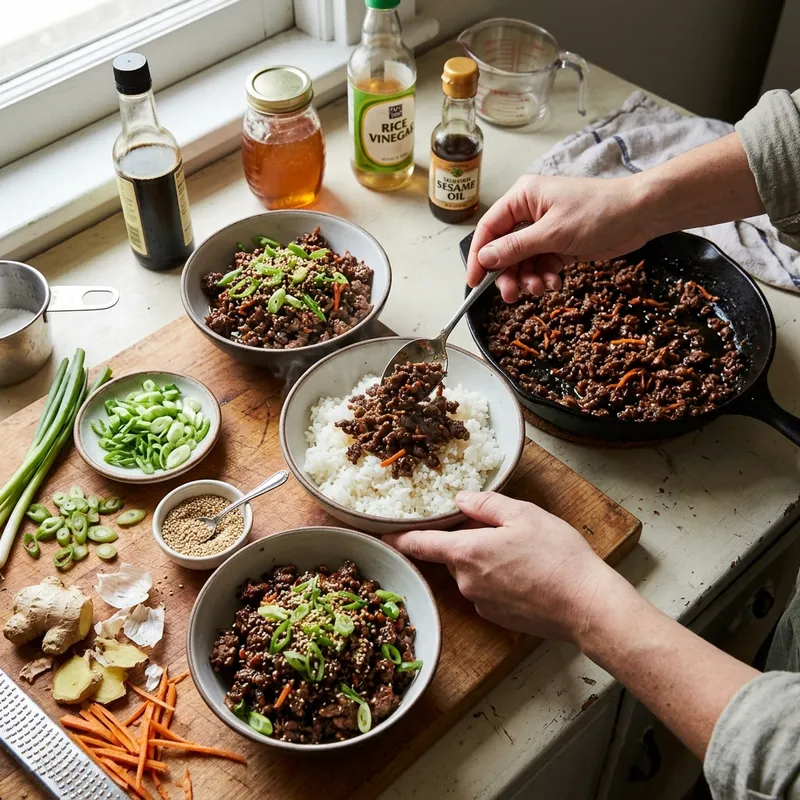
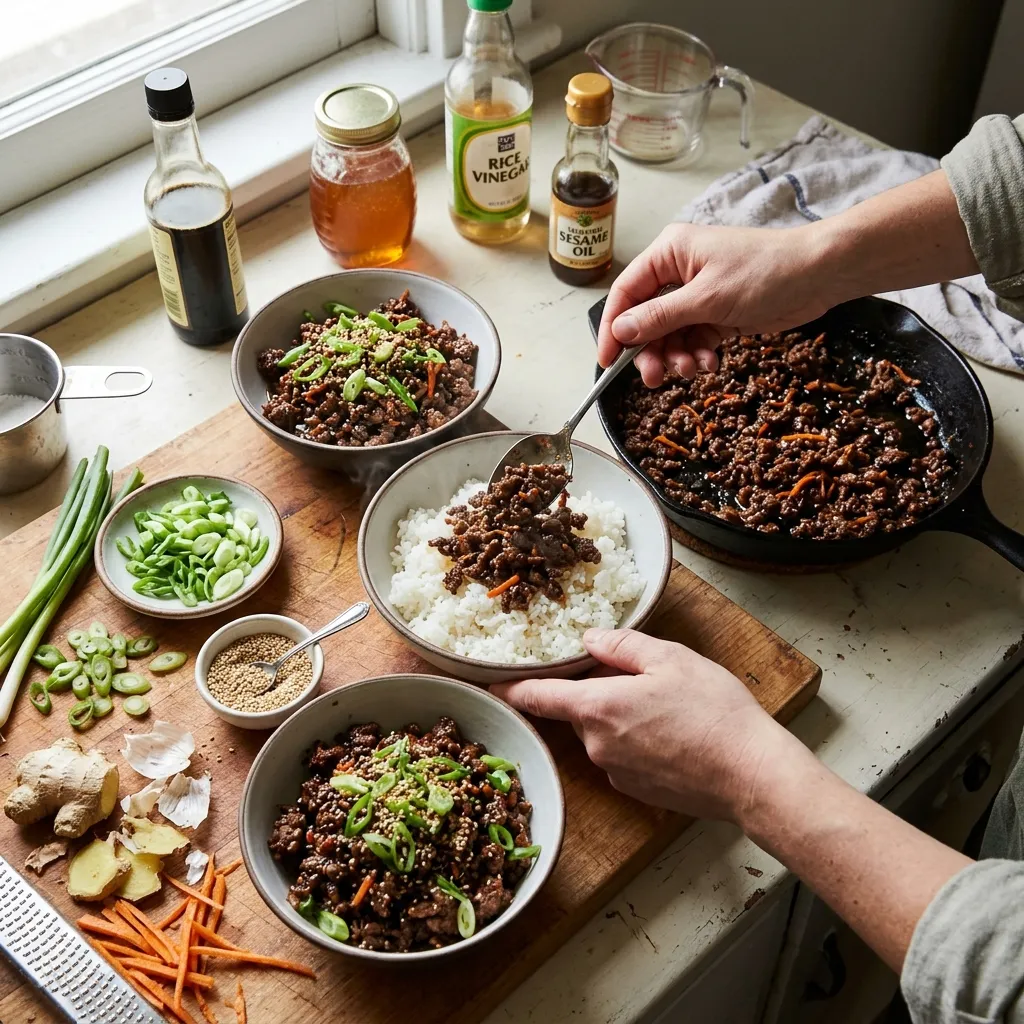
Divide cooked rice among bowls, top with the savory beef mixture, then garnish with sliced scallions, sesame seeds, and a drizzle of sesame oil.
- 5
Serve immediately, perhaps alongside a refreshing cucumber salad for contrast.
Nutrition per serving
- 420 kcal
- Calories
- 22 g
- Protein
- 38 g
- Carbs
- 22 g
- Fat
Tips & notes
- If the sauce becomes too thick, add a splash more water. - For extra depth, sprinkle a little toasted seaweed flakes before serving. - Feel free to swap carrots for thinly sliced zucchini for seasonal variation.
Frequently asked questions
Can I use turkey mince instead of beef?
Yes, turkey works well; just add a bit more oil to keep it moist.
What rice works best?
Short‑grain or medium‑grain rice gives a stickier texture that holds the sauce.
How spicy can I make it?
Add a teaspoon of gochujang or red pepper flakes for a gentle heat.
Can I prepare the sauce ahead of time?
Absolutely; store it in a sealed container in the fridge for up to three days.
Is this dish freezer‑friendly?
Yes, keep the cooked beef and sauce separate from rice; reheat gently.
How do I make it vegetarian?
Swap the beef for firm tofu or tempeh and follow the same sauce.

Ava Brooks
⏱️🥄 Busy baker, one-bowl expert, and mini-loaf maker. Fast recipes with maximum yum 😋🔥.