Honestly, when I think of orange chicken, I remember the first time I tasted the zing of a orange juice cake at a family gathering. The aroma of citrus and caramelized glaze instantly makes the kitchen feel warm, and this recipe captures that feeling in every bite.
The essence of the dish
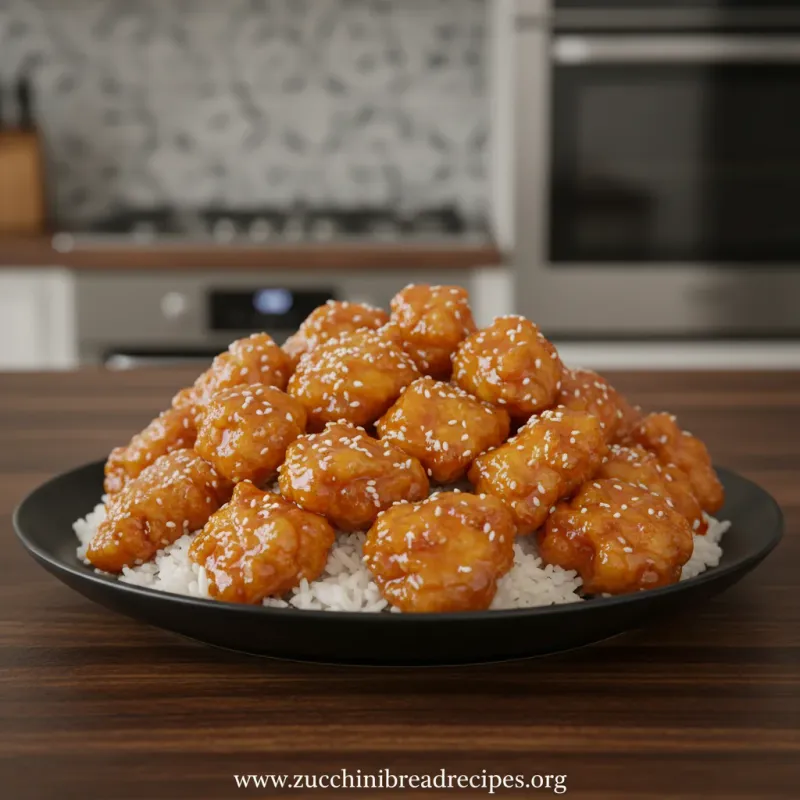
It’s the marriage of a glossy, citrusy glaze with a satisfyingly crisp chicken bite that makes orange chicken unforgettable.
A fun fact or historical angle
During the 1970s, orange chicken surged in popularity after being featured on a TV cooking segment, sparking a nationwide craving for the tangy‑sweet flavor.
Flavor or sensory focus
You’ll notice the bright aroma of orange peel, a gentle caramel sweetness, and a whisper of soy‑salt that rounds out the palate.
You Must Know
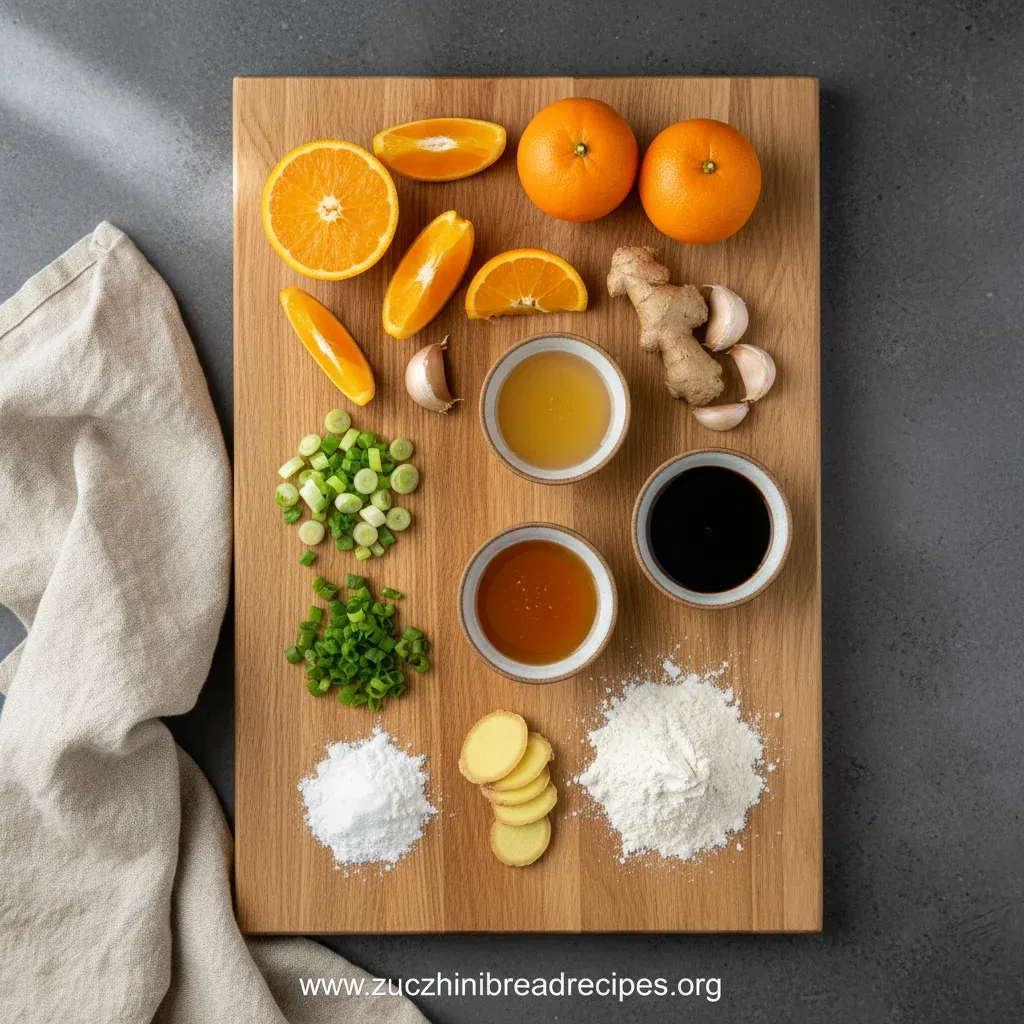
- Use fresh orange zest, not pre‑grated
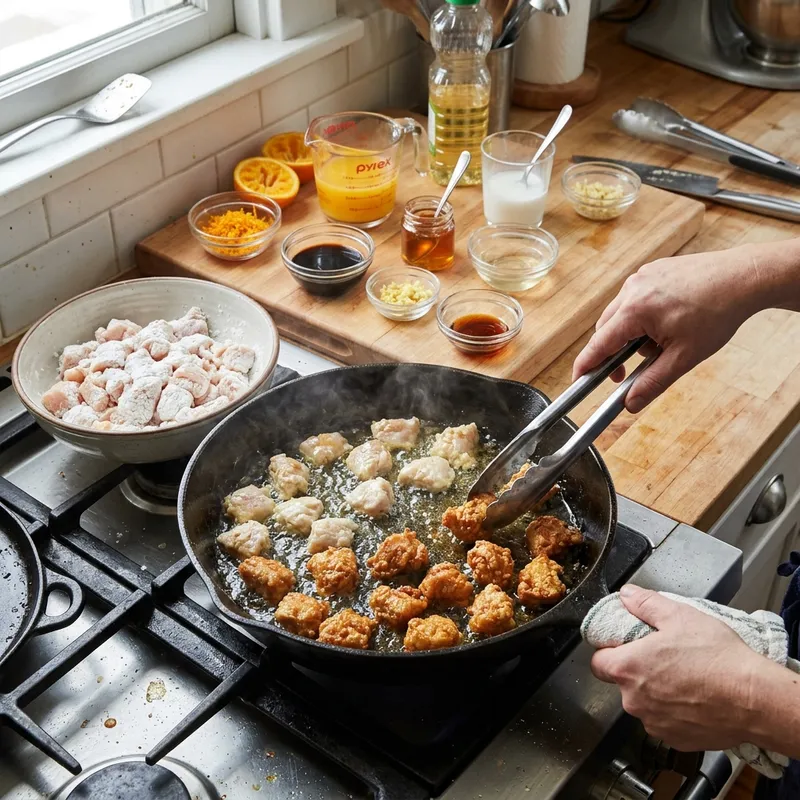
- Don’t overcrowd the pan
- Finish with a small knob of butter
If you’d like a cooler contrast, try a side of orange creamsicle sorbet. It brightens the meal without adding heaviness.
The story behind it
Orange chicken traces its roots to the bustling kitchens of early 20th‑century Chinese American eateries, where cooks blended familiar soy‑based sauces with the imported zest of oranges arriving on the West Coast. The result was a dish that married sweet, sour, and savory, quickly becoming a staple in diners across the country. It reflects a cultural exchange that turned a simple fruit into an iconic comfort food.
Why You'll Love It
- The glaze balances sweet and tangy without overwhelming
- Crispy coating stays crunchier longer
- Quick enough for weeknight dinners
- Bright orange color lifts the table
Tips for success
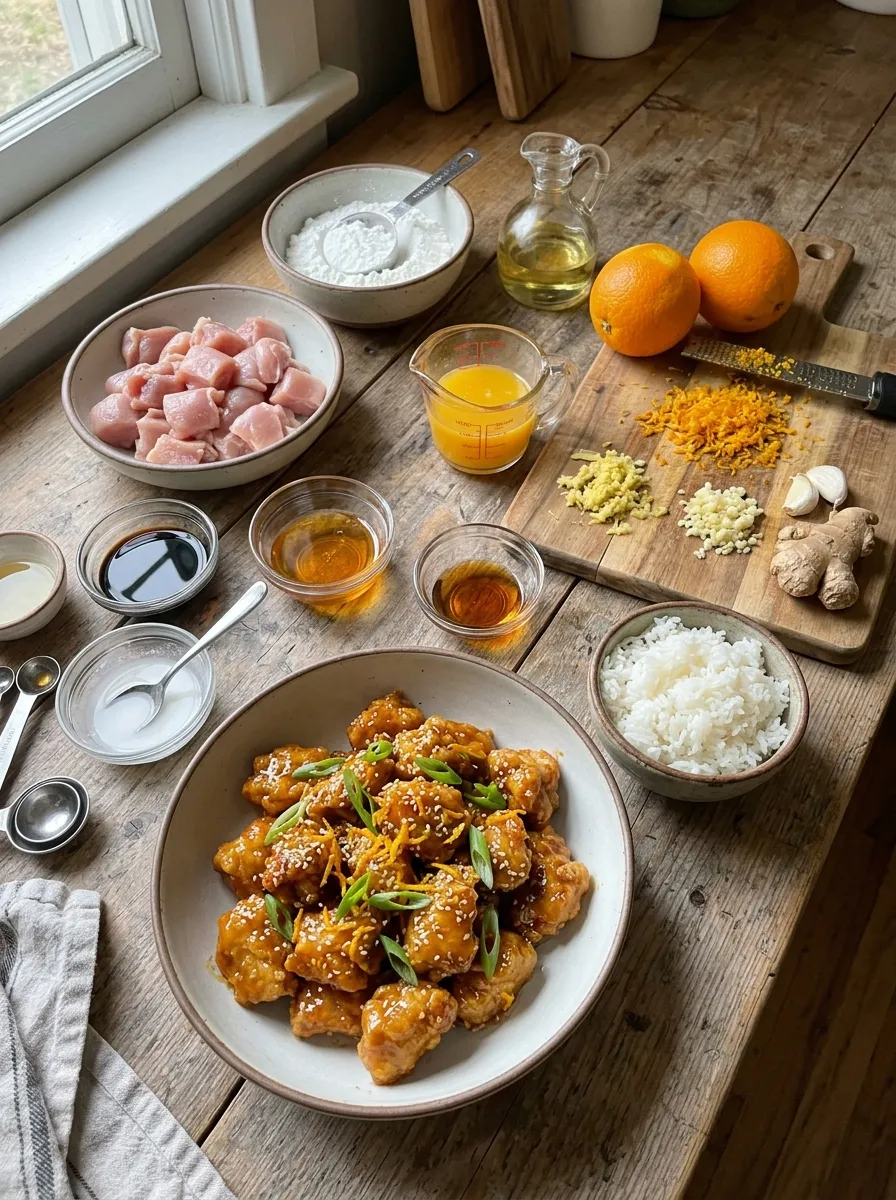
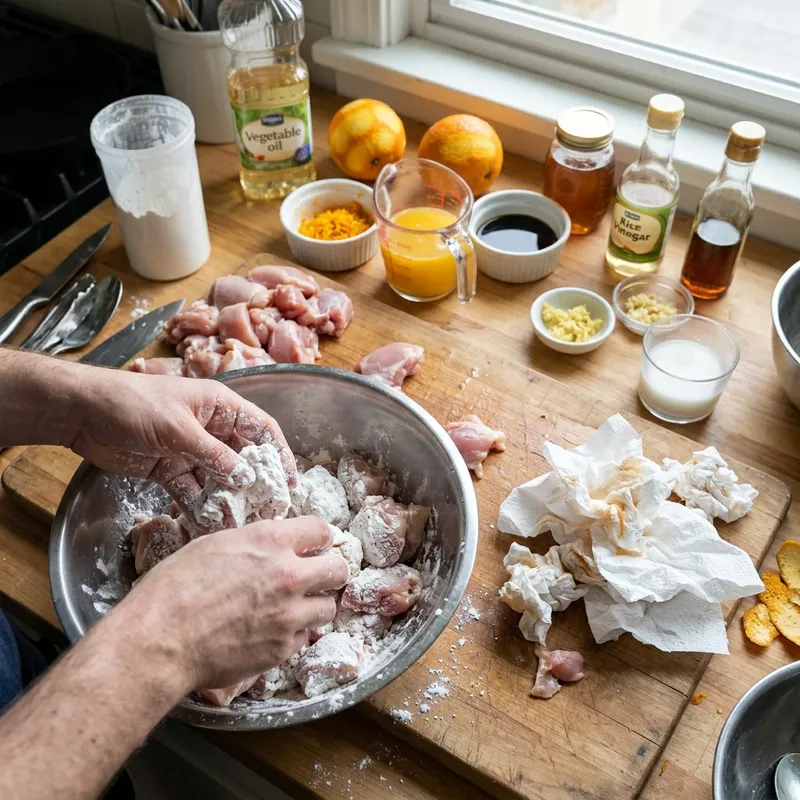
- Dry the chicken thoroughly before coating, it prevents soggy crust.
- Keep oil temperature steady; too low makes the coating absorb oil.
- Taste the sauce before adding chicken; adjust sweetness or acidity as needed.
Professional secrets
- Season the cornstarch with a pinch of salt for deeper flavor.
- Finish with a dash of sesame oil for aromatic richness.
- Use freshly zested orange for the brightest aroma.
Common mistakes to avoid
- Overcrowding the pan, which steams rather than crisps the chicken.
- Adding the sauce too early before the chicken is browned.
- Using too much cornstarch in the coating, making it gummy.
Substitutions
- Chicken thighs: Turkey thigh meat or firm tofu. Adjust cooking time for tofu – press well and fry until golden.
- Honey: Maple syrup. Maple adds a milder flavor; reduce by half a teaspoon.
Variations
- Spicy Version: Add ½ tsp red pepper flakes and a drizzle of sriracha to the glaze for a gentle kick.
- Mediterranean Style: Swap orange juice for lemon juice, add chopped olives and a sprinkle of feta before serving.
Storage
Store leftovers in an airtight container in the fridge for up to 2 days; reheat gently in a skillet to revive crispness.
Make ahead
You can marinate the chicken in a light soy‑orange mixture for up to 24 hours; keep refrigerated and coat just before frying.
Leftovers
Reheat gently in a skillet over medium heat, adding a splash of orange juice to revive the glaze.
Serving ideas
- Serve over steamed jasmine rice with a side of sautéed bok choy.
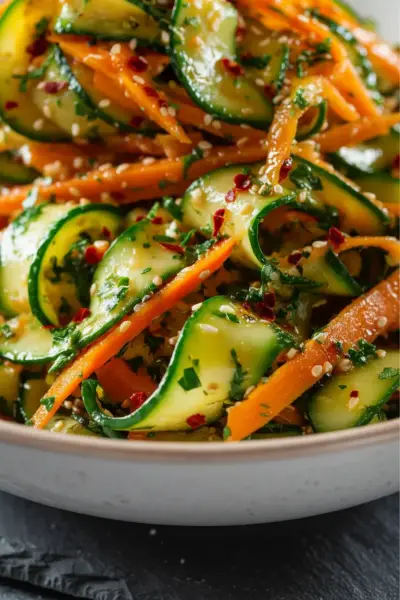
- Pair with a light cucumber salad dressed in rice vinegar.
- Garnish with sliced green onions and extra orange zest for brightness.
- Add a sprinkle of toasted sesame seeds for texture.
Allergy information
Contains soy, sesame, and honey.
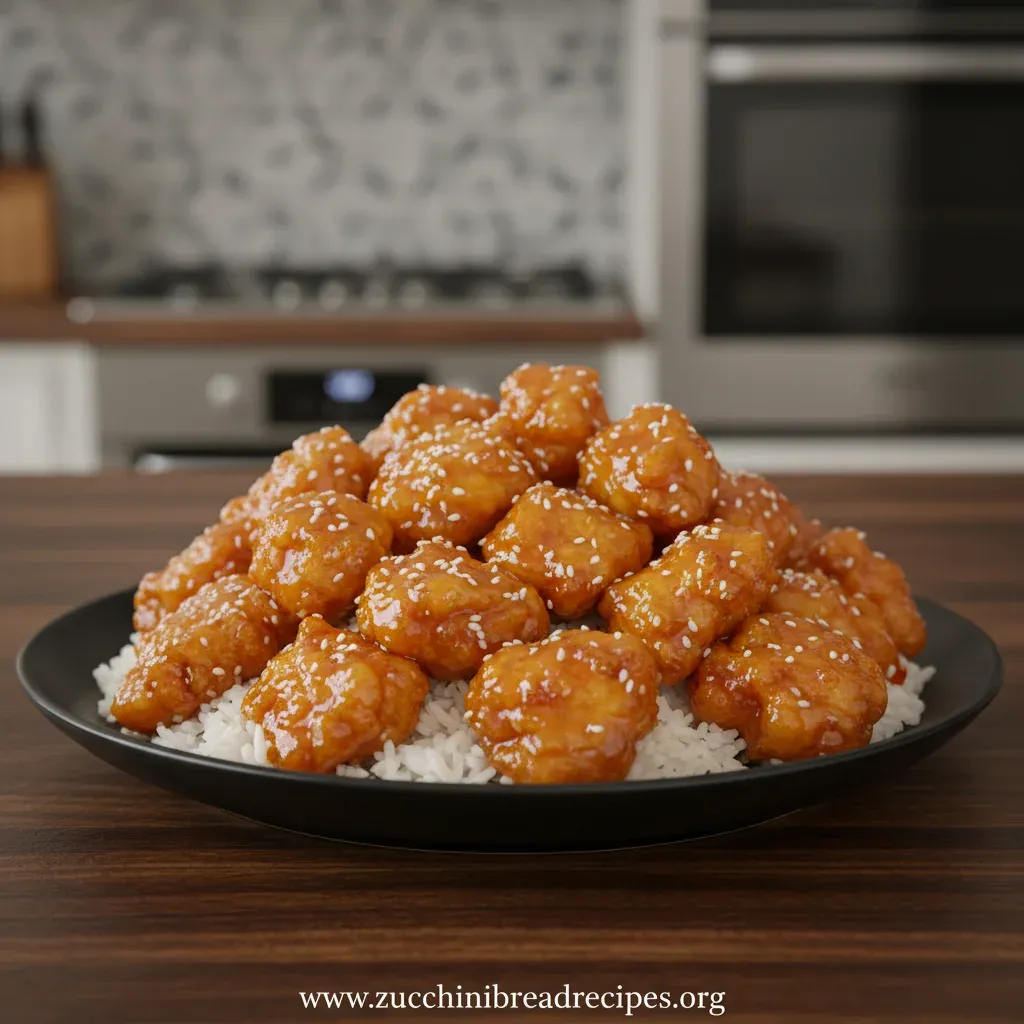
Orange Chicken – Crispy Tangy Sauce
Crispy orange chicken with a glossy, sweet‑tangy sauce—quick, satisfying, and classic.
- Prep time
- 15 min
- Cook time
- 20 min
- Total time
- 35 min
- Difficulty
- Medium
- Cuisine
- Chinese
- Course
- Main Course
Ingredients
Main Ingredients
For the Sauce
Instructions
- 1
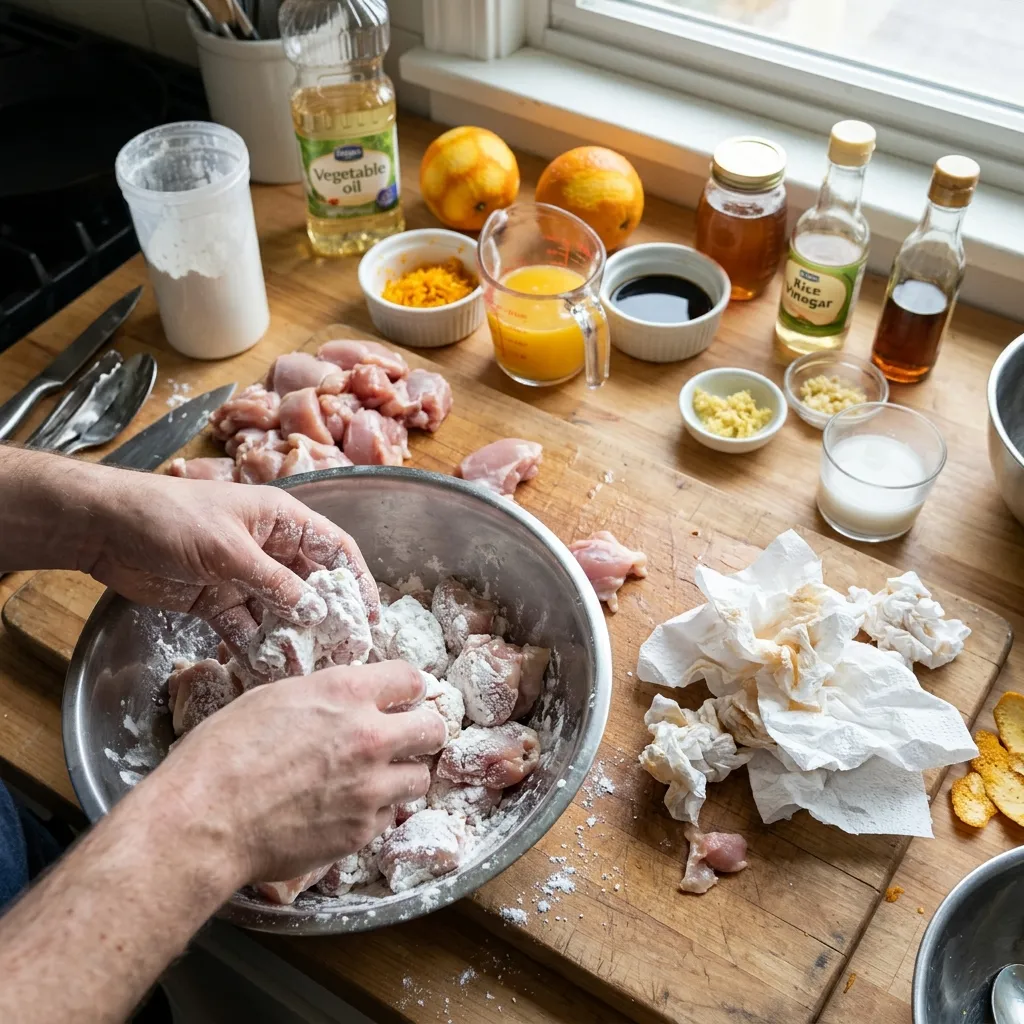
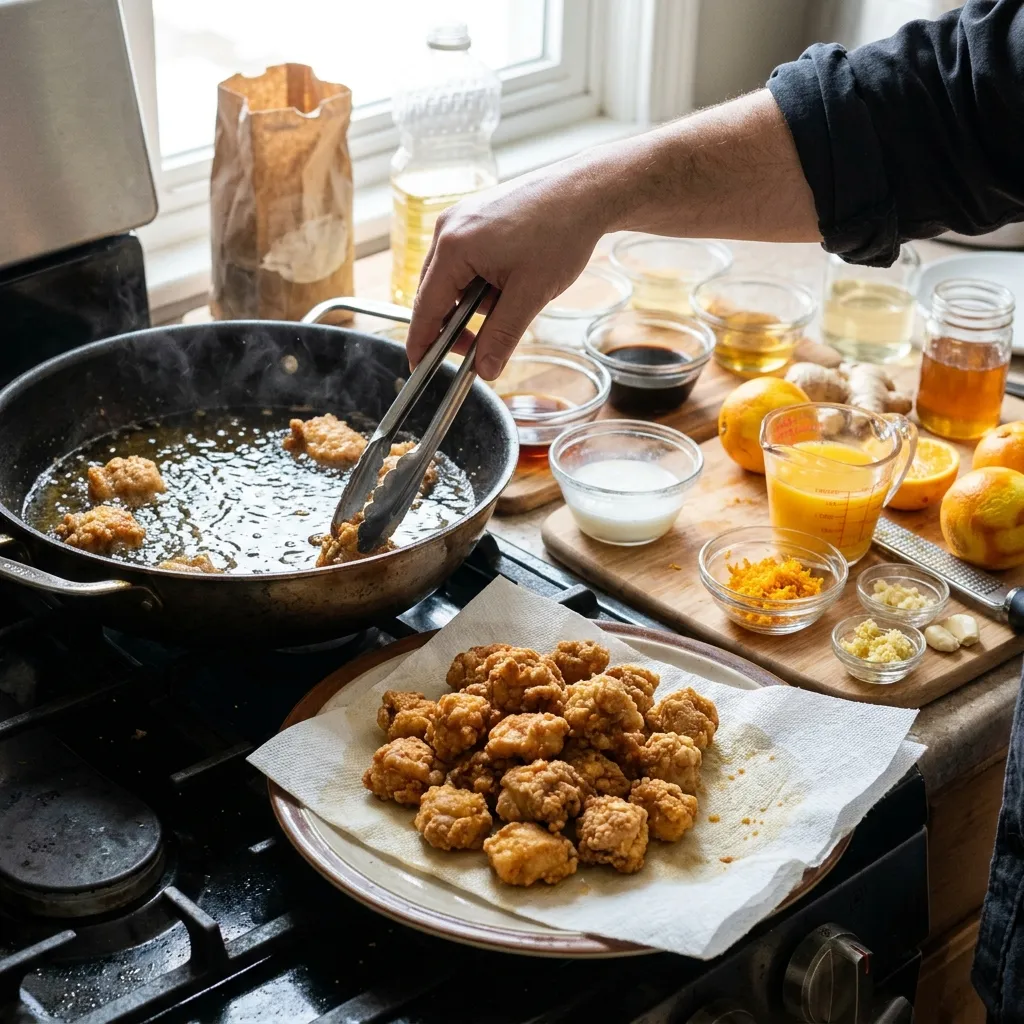
Pat the chicken pieces dry with paper towels; toss them in cornstarch until evenly coated.
- 2
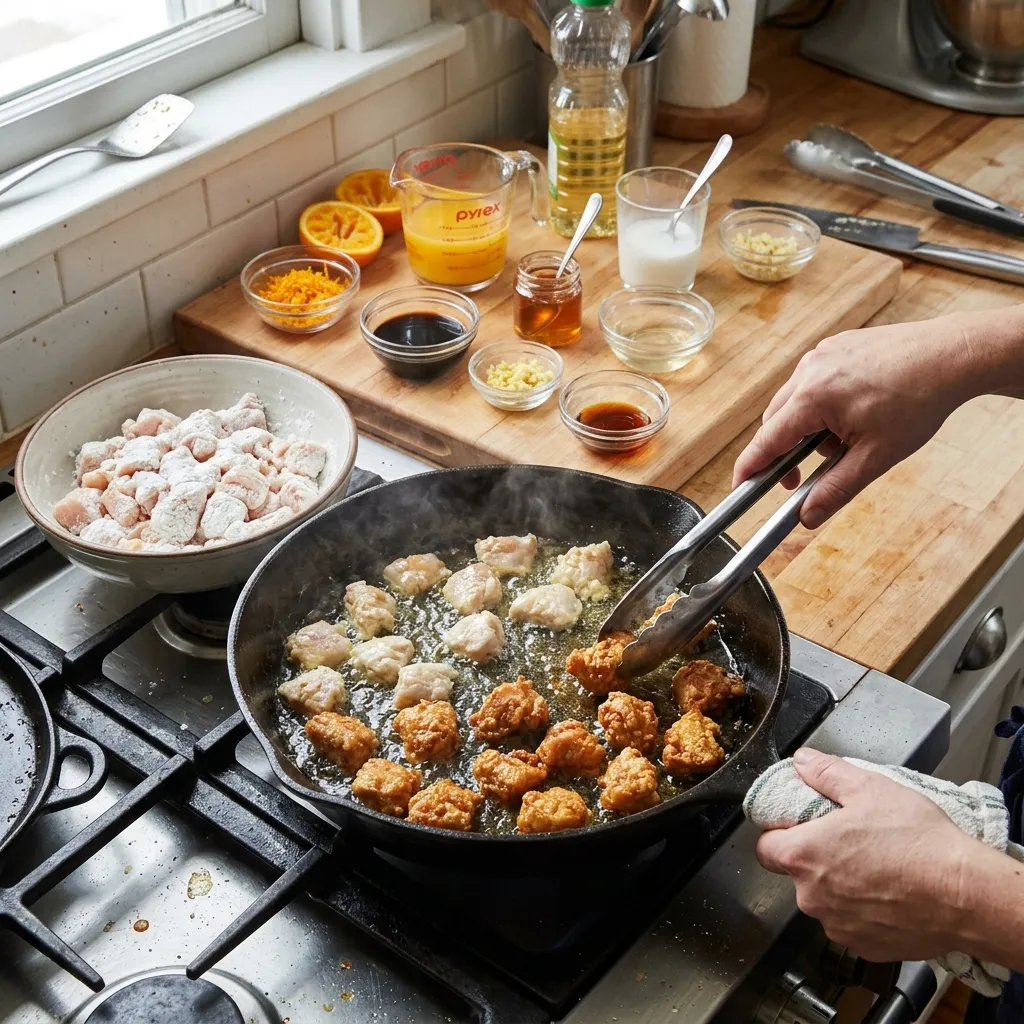
Heat the oil in a large skillet over medium‑high heat until shimmering, then fry the chicken in batches until golden and crisp, about 3‑4 minutes per side.
- 3
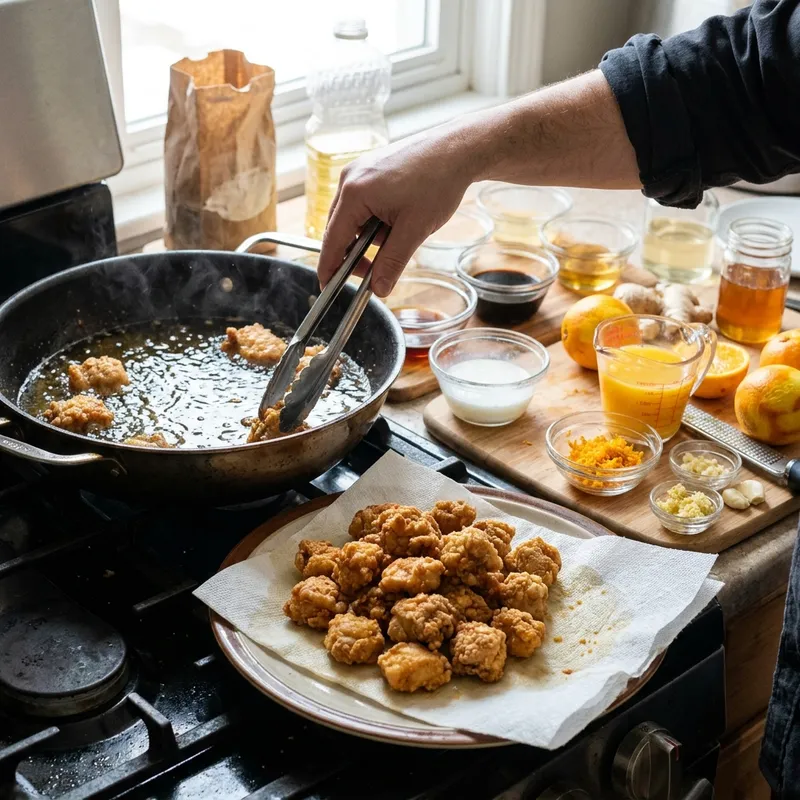
Remove chicken to a paper‑towel lined plate; keep the oil in the pan.
- 4
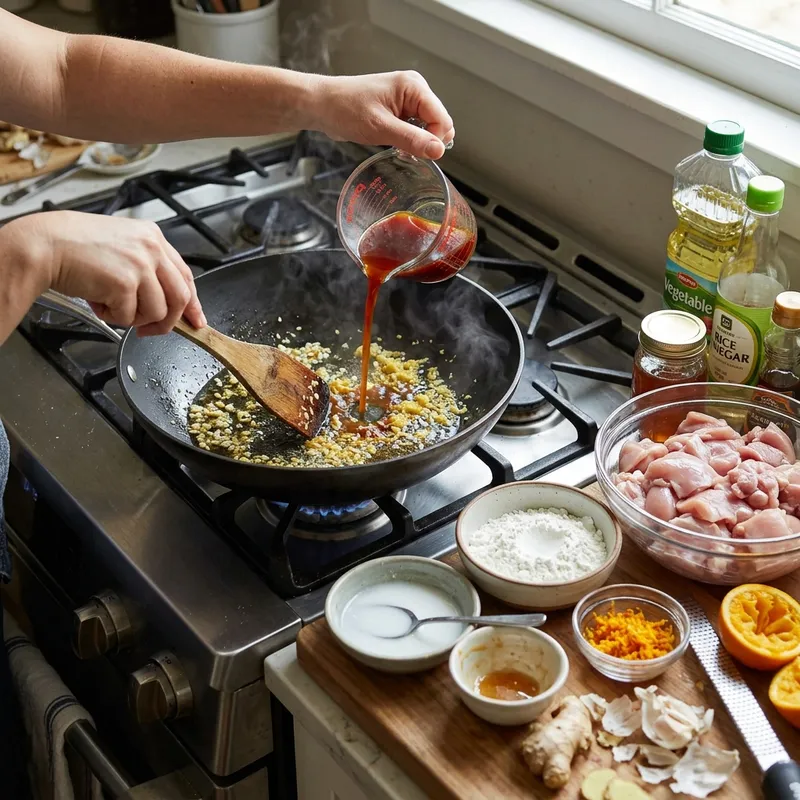
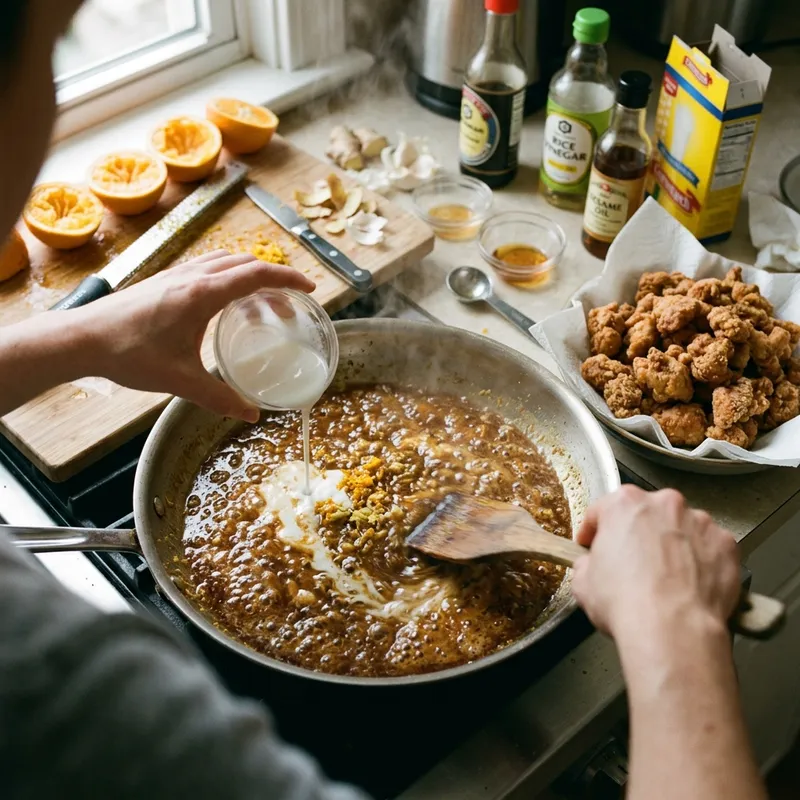
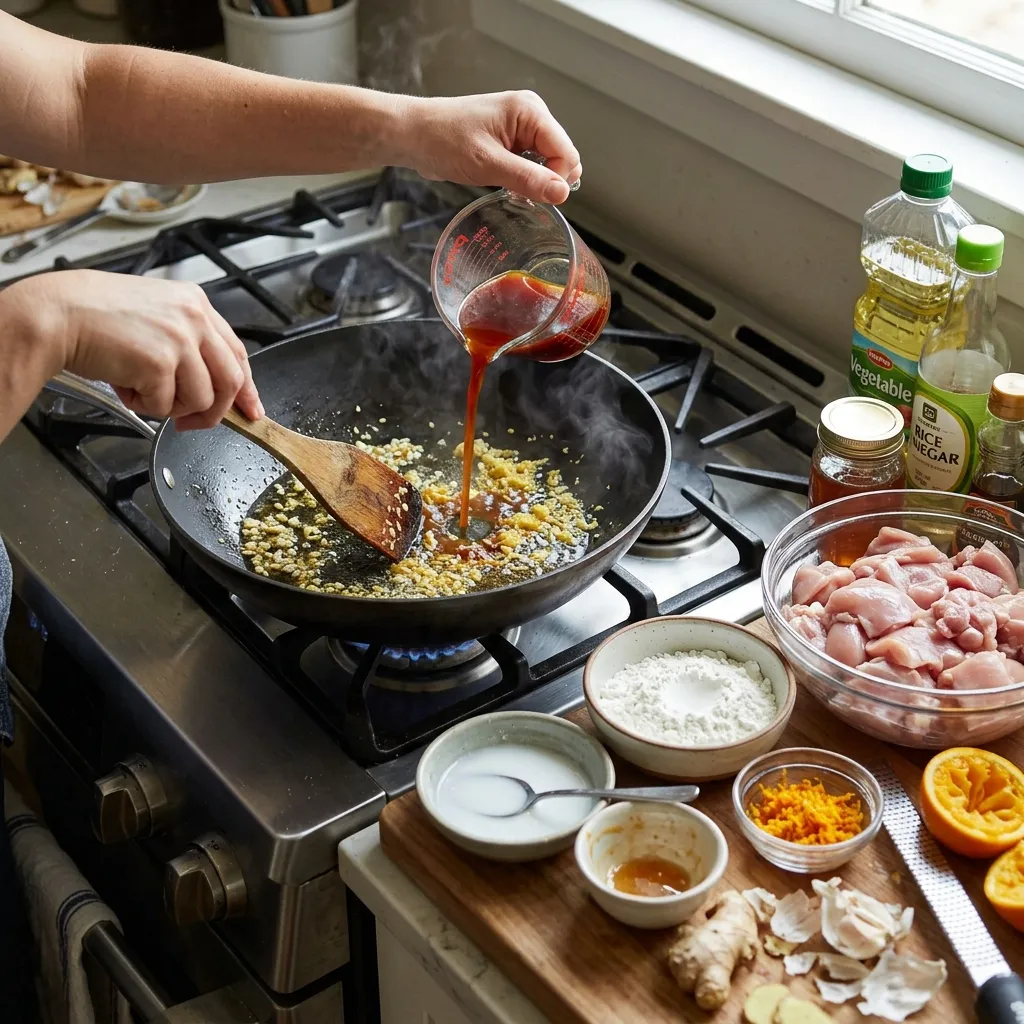
Add garlic and ginger to the hot oil, sauté for 30 seconds, then pour in orange juice, soy sauce, honey, and rice vinegar; stir gently.
- 5
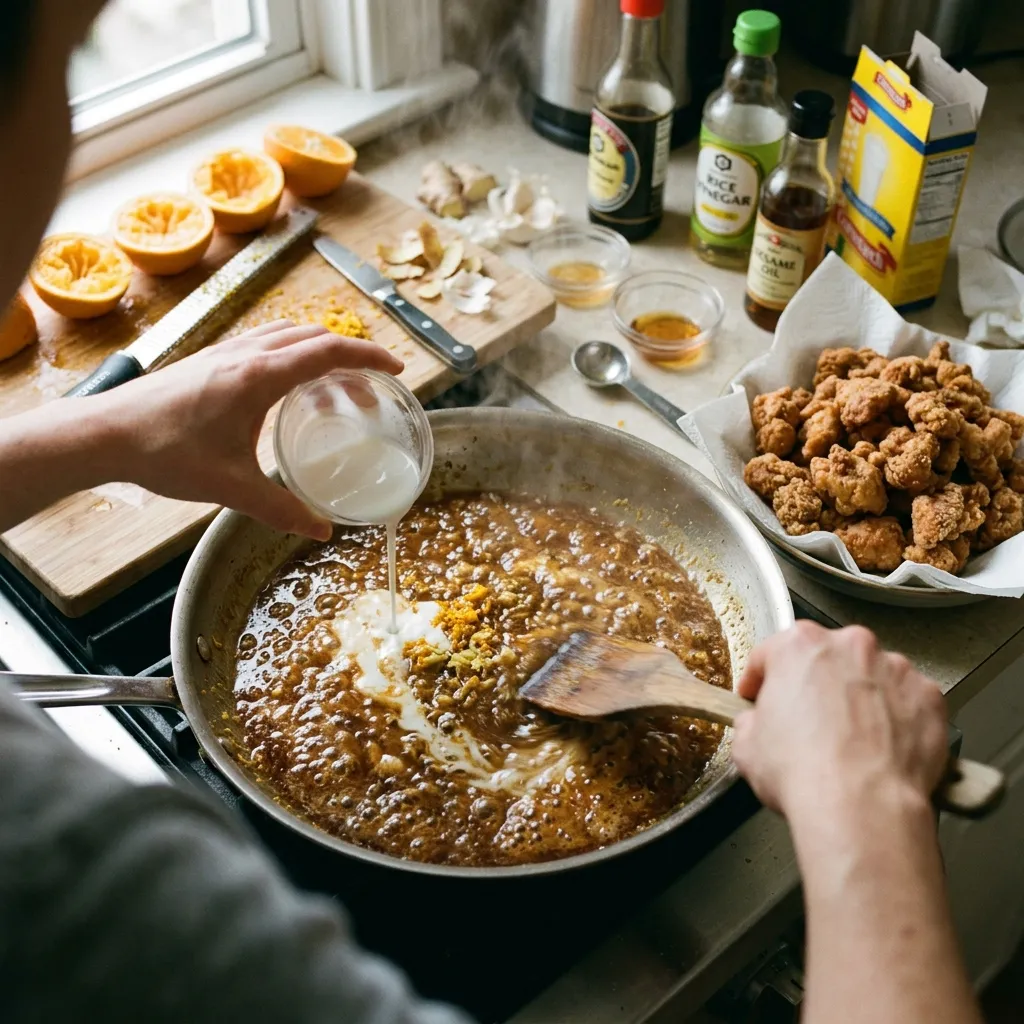
When the mixture bubbles, stir in the cornstarch slurry, cooking until the glaze thickens and coats the pan.
- 6
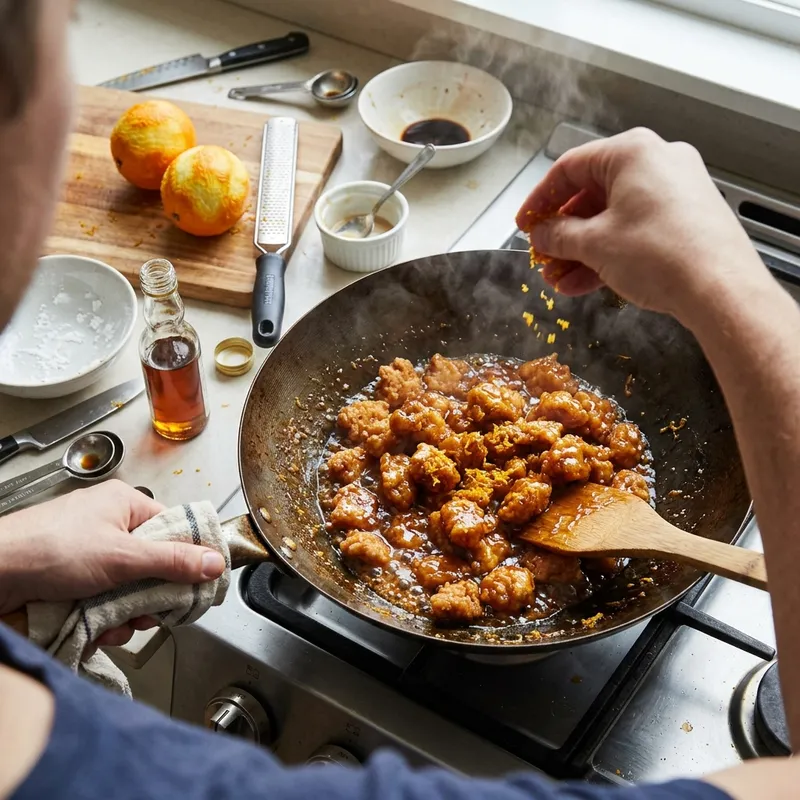
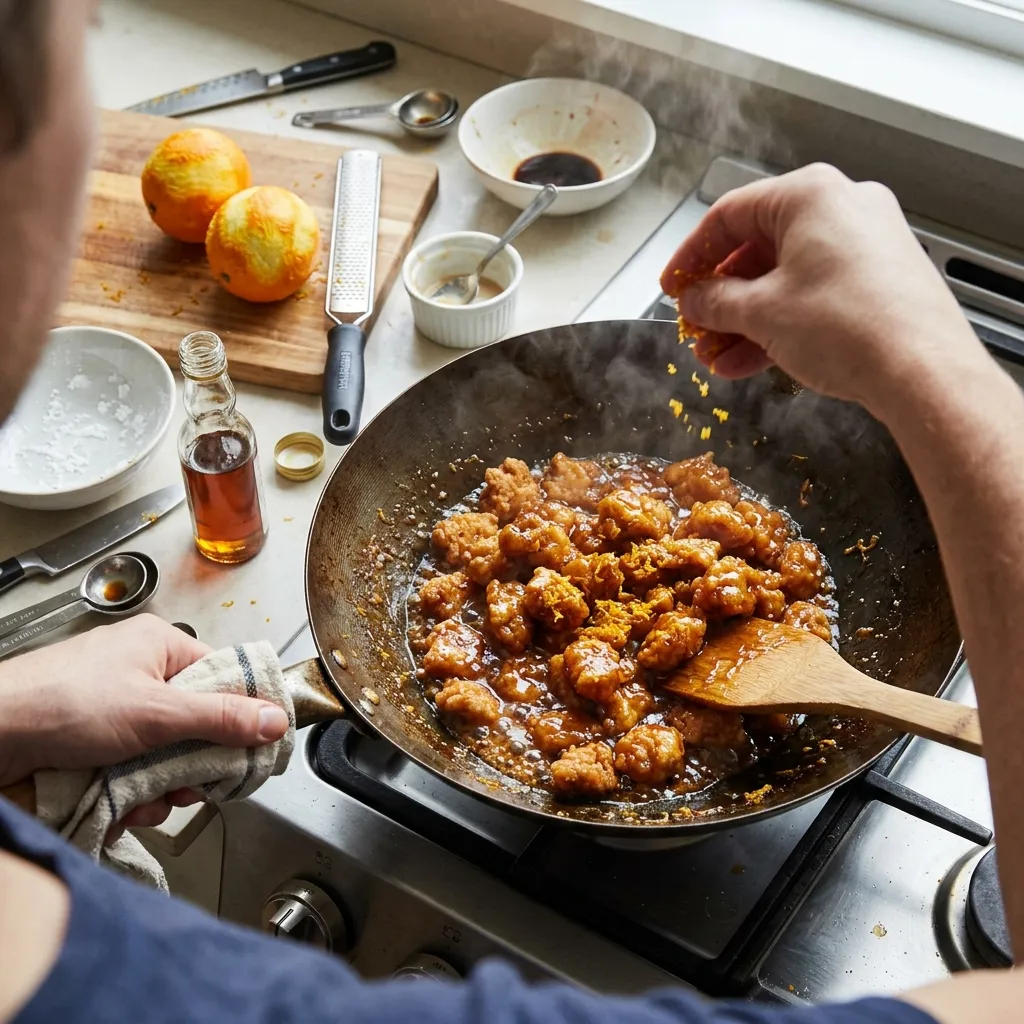
Return the fried chicken to the pan, toss to coat with the sauce, finish with orange zest and a drizzle of sesame oil; serve immediately.
Nutrition per serving
- 420 kcal
- Calories
- 28 g
- Protein
- 32 g
- Carbs
- 18 g
- Fat
Tips & notes
- If the sauce thickens too quickly, add a splash of water to reach desired consistency. - For extra shine, finish with a small knob of butter just before serving. - Refresh the pan between batches to maintain crispness.
Frequently asked questions
Can I use chicken breast instead of thighs?
Yes, but breast can dry out quicker; consider brining it for 30 minutes before coating.
What if I don’t have fresh oranges?
A high‑quality bottled orange juice works, but add a strip of zest for aroma.
How do I keep the coating crispy?
Make sure the oil is hot enough before adding chicken and avoid stirring too often.
Can this be made vegetarian?
Swap the chicken for firm tofu, double‑coat with cornstarch, and follow the same frying steps.
Is frozen orange chicken a good shortcut?
It can be, but the texture may be softer; re‑fry briefly for extra crispness.
What sides pair best?
Steamed jasmine rice, sautéed bok choy, or a light cucumber salad work wonderfully.

Emma Harper
🥖✨ Lover of timeless recipes, cozy kitchens, and golden loaves. Always baking memories with love ❤️🍽️.