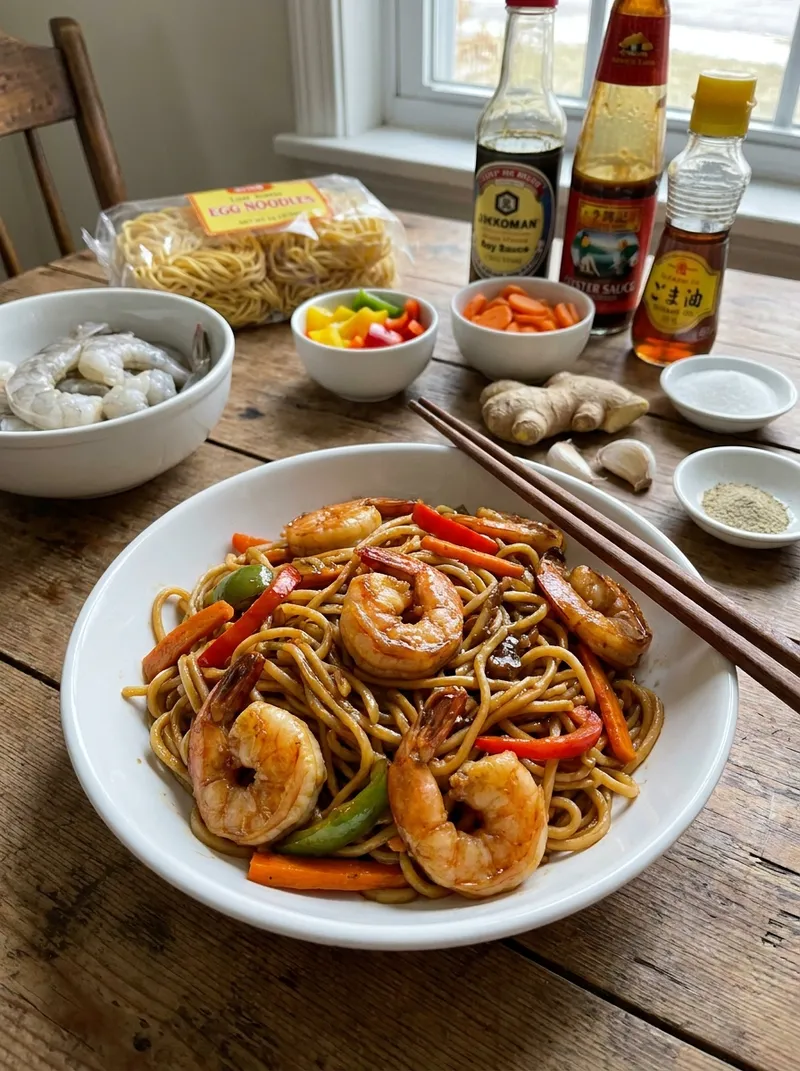
Honestly, there’s something comforting about the sizzle of a wok and the aroma of soy mingling with ginger. I like to think of this dish as a little kitchen hug, and if you’re looking for a quick stir‑fry, you’ll love how the flavors come together. For a similar noodle adventure, check out yaki udon – it’s just as satisfying.
The essence of the dish
It’s all about balance—sweet shrimp, savory sauce, and the satisfying chew of noodles, all wrapped in a gentle heat that feels like a warm kitchen blanket.
A fun fact or historical angle
Lo mein literally means “stir‑fried noodles” in Cantonese, and it became a staple in American Chinese diners during the 1950s when takeout culture exploded.
Flavor or sensory focus
You’ll notice the umami depth from soy, the bright zing of ginger, and a whisper of sesame that lingers on the palate.
You Must Know
- Use high‑heat to seal shrimp quickly
- Don’t overcook the noodles
- Season in layers for depth
So, when you’re at the stove, think of each step as a gentle conversation with the ingredients. The shrimp will speak with a soft snap, the vegetables will whisper crunch, and the sauce will tie everything together like a familiar story. It’s not about perfection; it’s about comfort and a little bit of love. creamy garlic shrimp offers a similarly soothing vibe, and you’ll find the same calm in this lo mein.
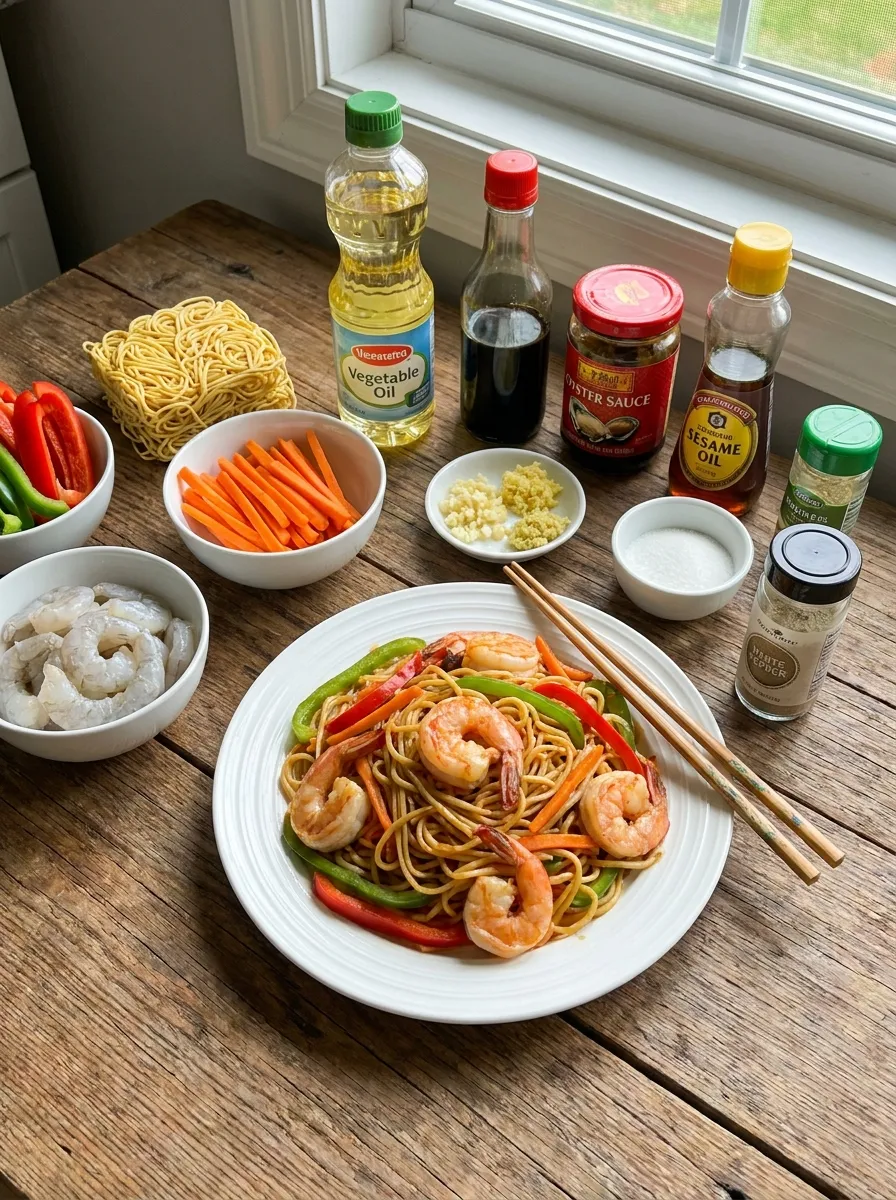
The story behind it
The origins of lo mein trace back to early Chinese railway workers who needed a hearty, portable meal. Over time, the dish journeyed to the West, where it became a staple of American Chinese restaurants. Its simplicity—boiled noodles tossed with sauce and vegetables—made it perfect for quick service, and today it remains a beloved comfort food that bridges cultures without pretension.
Why You'll Love It
- Ready in under 30 minutes, perfect for busy evenings
- Fresh shrimp give a sweet, briny snap
- Crispy vegetables add a subtle crunch
- The sauce is balanced, neither too salty nor too sweet
Tips for success
- Don’t overcrowd the wok; cook in batches if needed.
- Pat shrimp dry to avoid steaming instead of searing.
- Taste the sauce before adding; adjust salt or sweetness as desired.
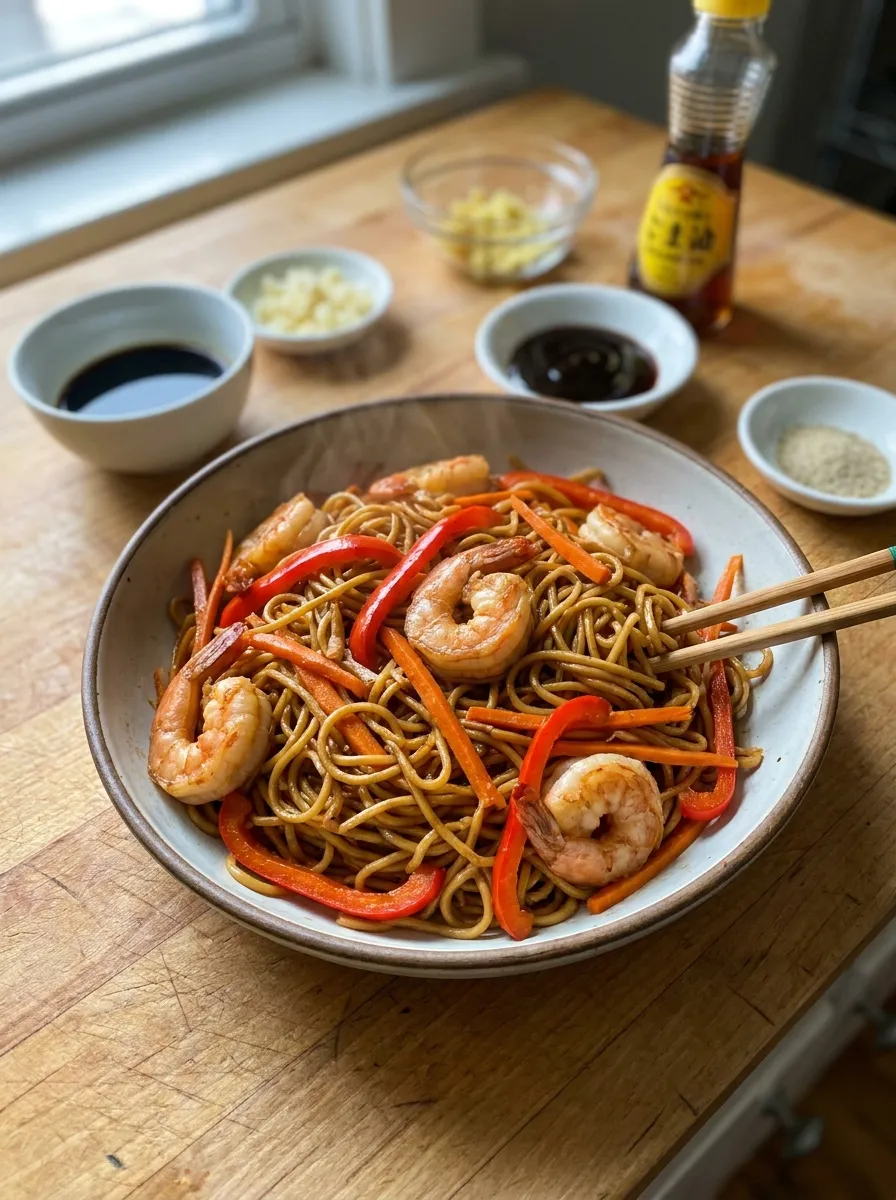
Professional secrets
- High heat locks in shrimp juices.
- A quick splash of rice vinegar brightens the sauce.
- Toast sesame seeds just before serving for maximum aroma.
Common mistakes to avoid
- Overcrowding the wok, leading to steamed rather than seared shrimp.
- Cooking noodles too long, causing them to become mushy.
- Adding vegetables too early, making them lose crispness.
Substitutions
- Shrimp: Firm tofu or chicken breast. If using tofu, press and cube; cook a minute longer for a golden crust.
- Soy sauce: Coconut aminos. Milder sweetness; you may reduce added sugar slightly.
Variations
- Spicy Version: Add 1 tsp chili garlic sauce and a sprinkle of crushed red pepper for a gentle kick.
- Mediterranean Style: Swap soy sauce for lemon‑herb vinaigrette, add olives and feta for a bright twist.
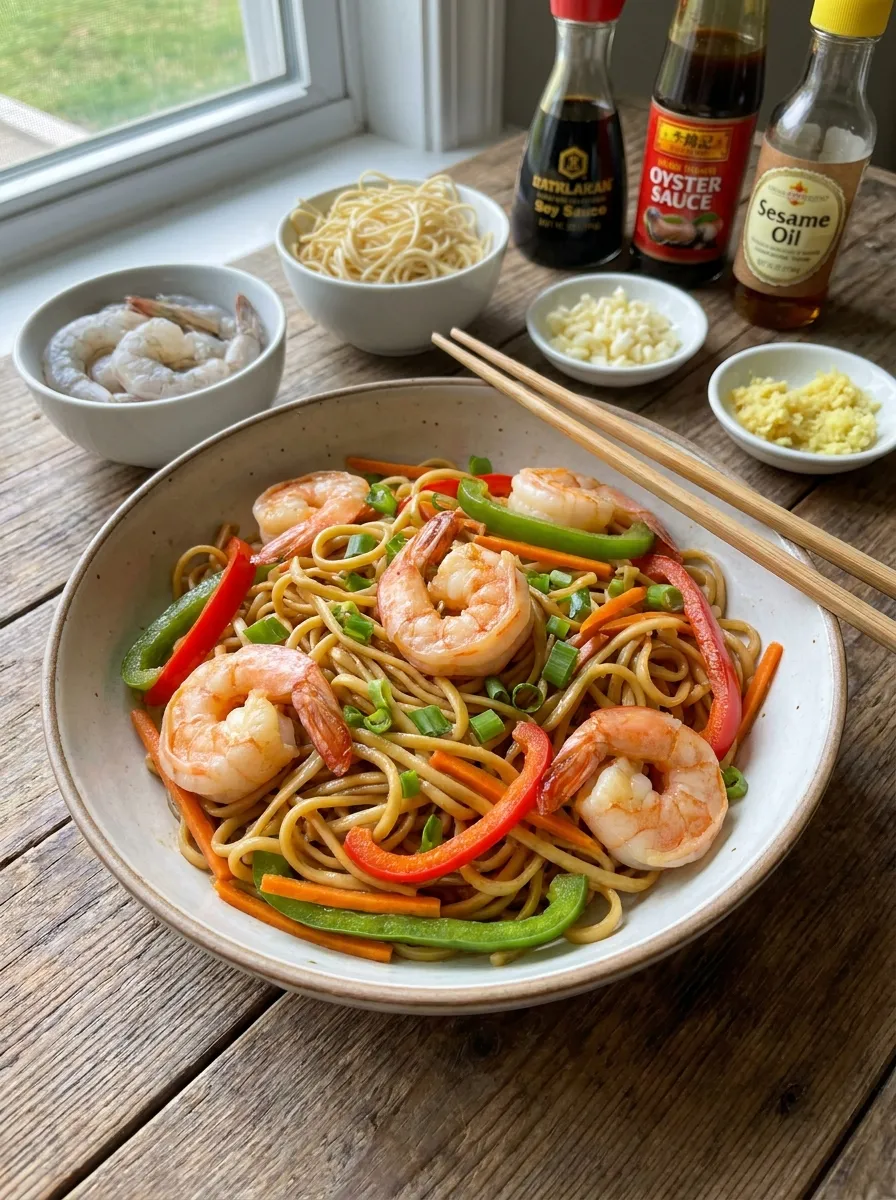
Storage
Store leftovers in an airtight container in the refrigerator for up to 2 days; reheat gently in a skillet.
Make ahead
Marinate the shrimp in a little soy sauce and ginger for up to 24 hours; keep refrigerated and bring to room temperature before cooking.
Leftovers
Reheat gently in a non‑stick skillet with a splash of water to revive the noodles.
Serving ideas
- Serve directly from the wok to keep it hot.
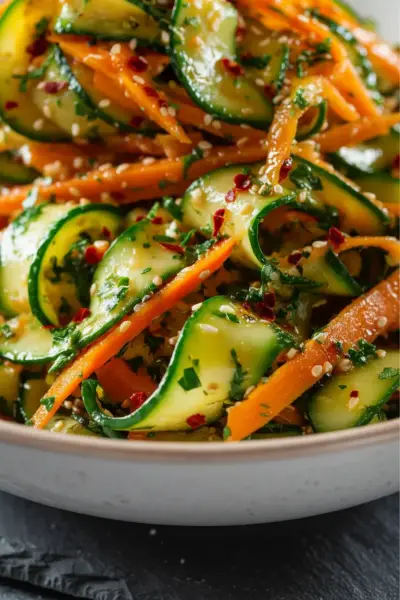
- Pair with a simple cucumber salad dressed in rice vinegar.
- Garnish with toasted sesame seeds and a wedge of lime.
- Offer extra soy sauce on the side for those who like more depth.
Allergy information
Contains shellfish, soy, and sesame.
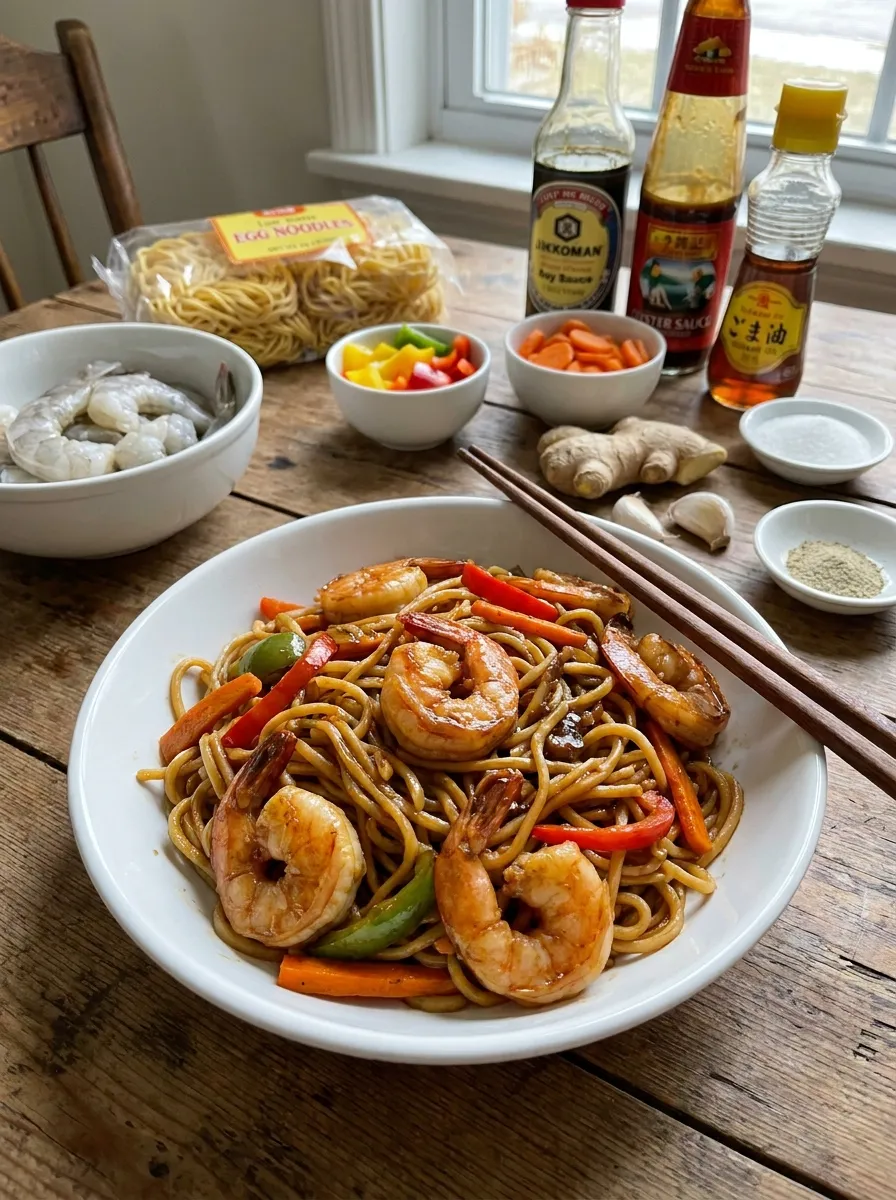
Shrimp Lo Mein Recipe – Quick Takeout Style
A fast, restaurant‑inspired shrimp lo mein that brings takeout comfort to your kitchen.
- Prep time
- 15 min
- Cook time
- 20 min
- Total time
- 35 min
- Difficulty
- Easy
- Cuisine
- Chinese
- Course
- Main Course
Ingredients
Main Ingredients
For the Sauce
Instructions
- 1
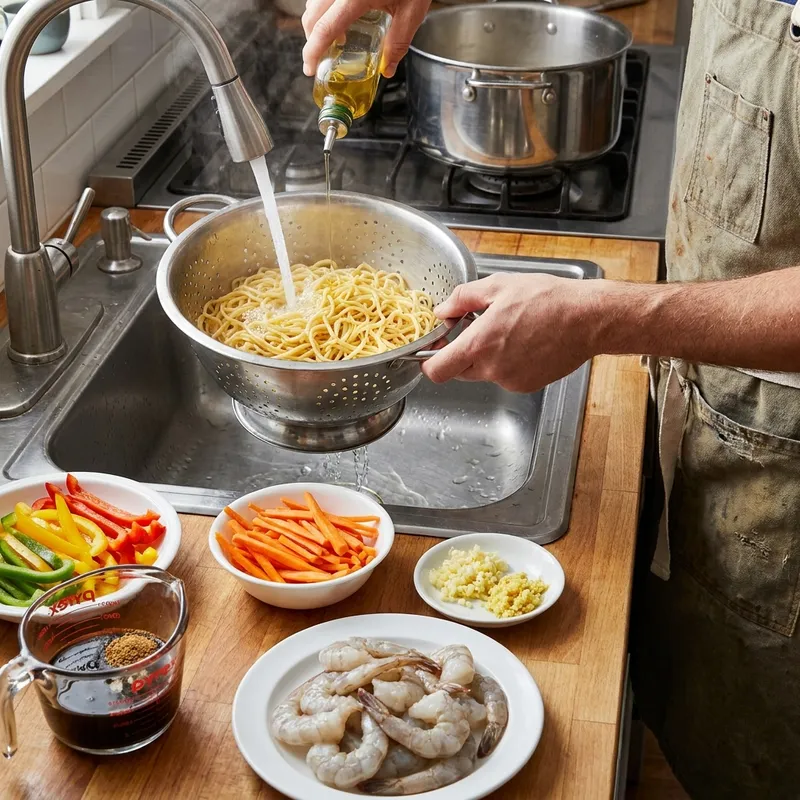
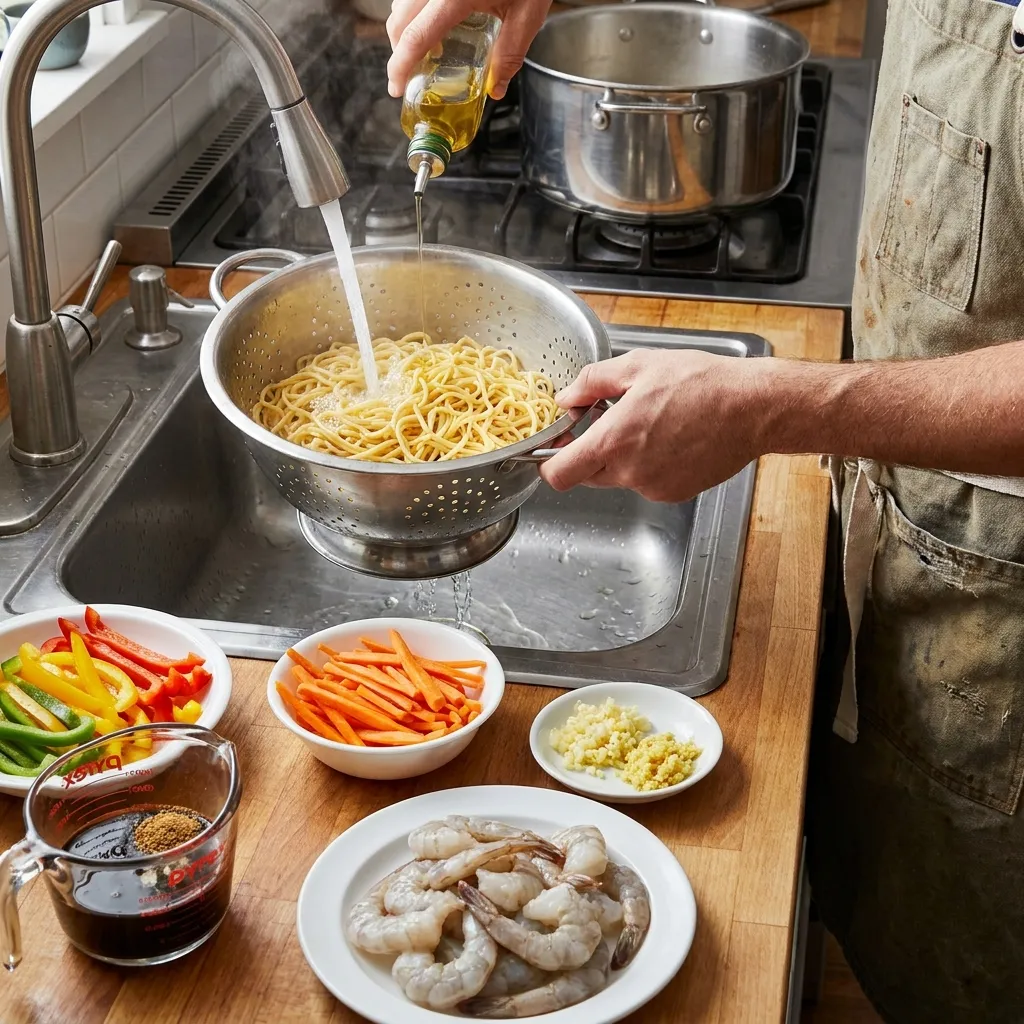
Bring a pot of water to a boil, cook the noodles until just al dente, drain, rinse under cold water, and toss with a drizzle of oil.
- 2
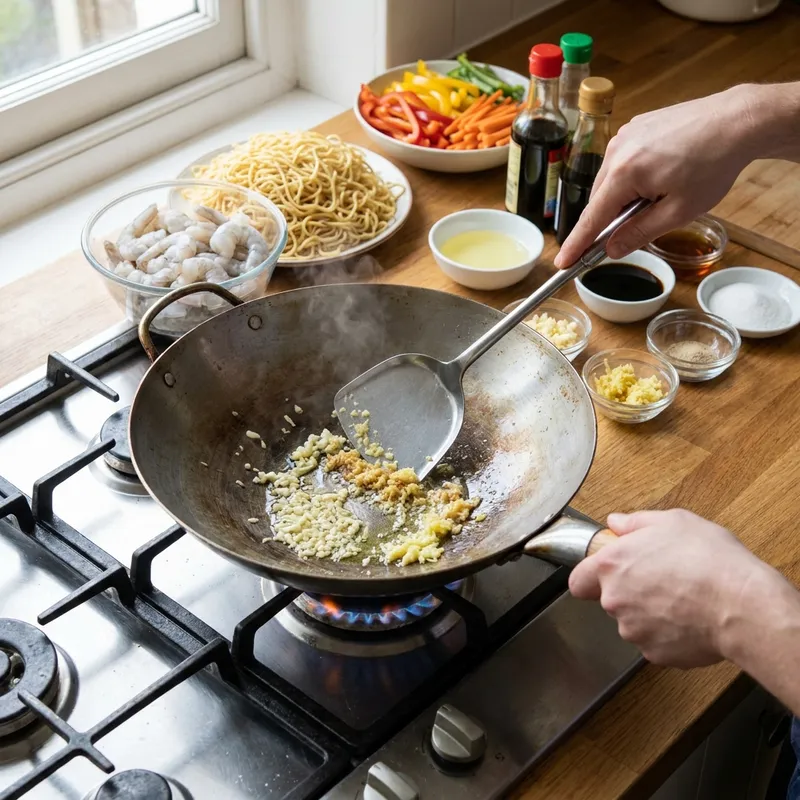
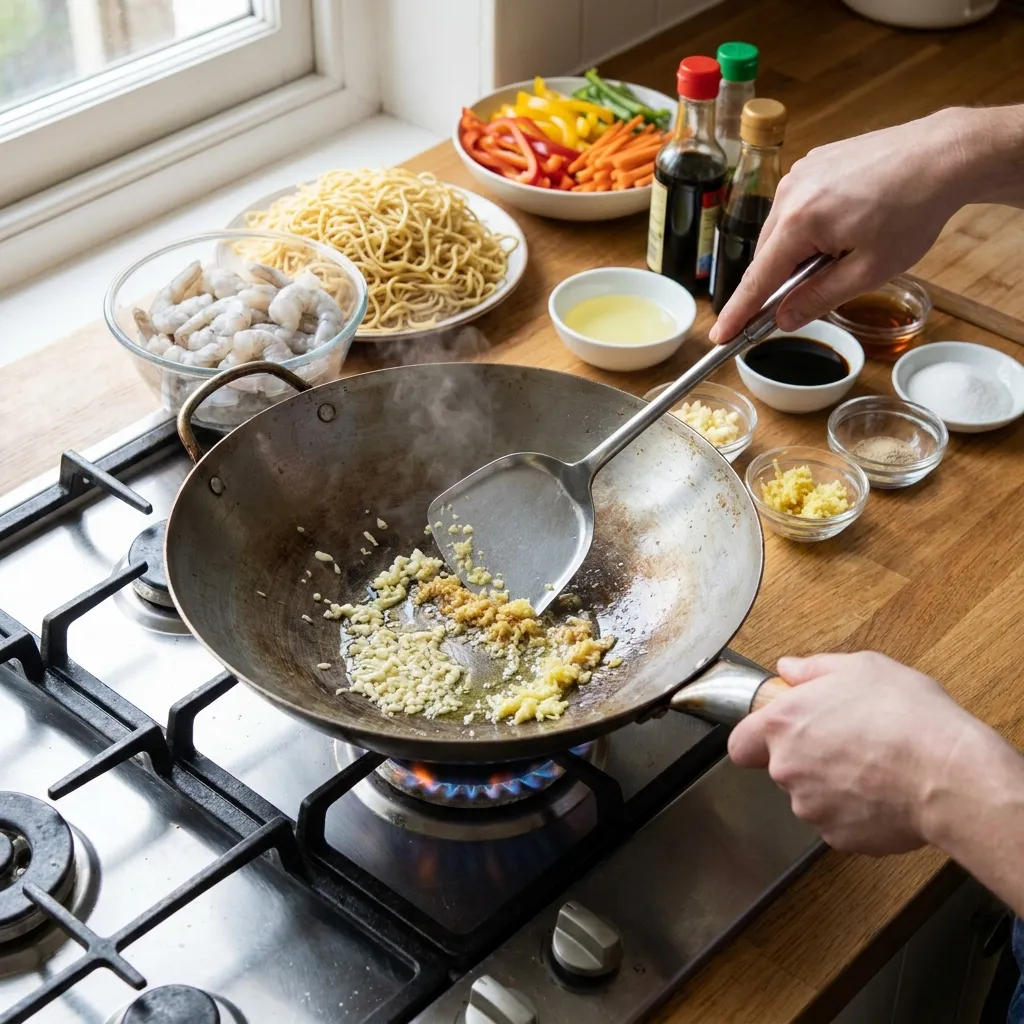
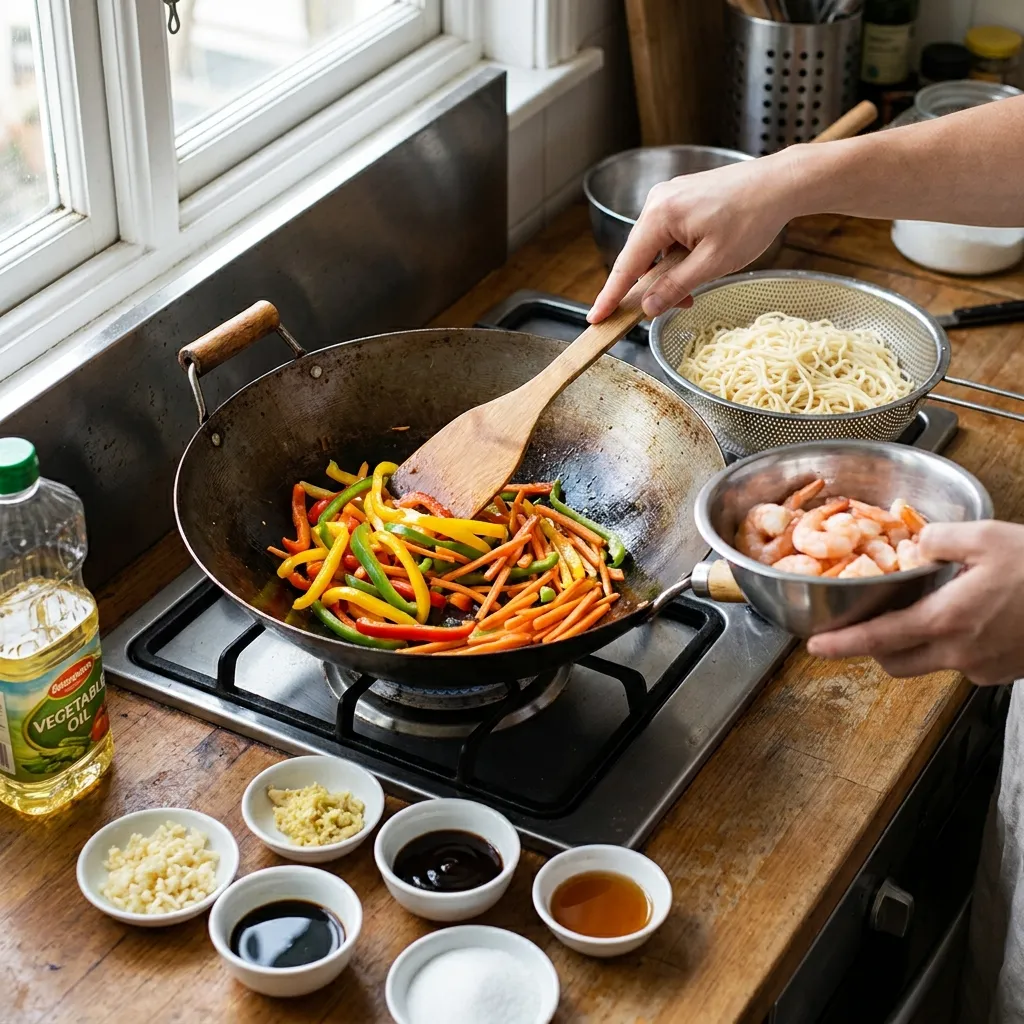
Heat the wok over medium‑high, add oil, then stir‑fry garlic and ginger until fragrant, about 30 seconds.
- 3
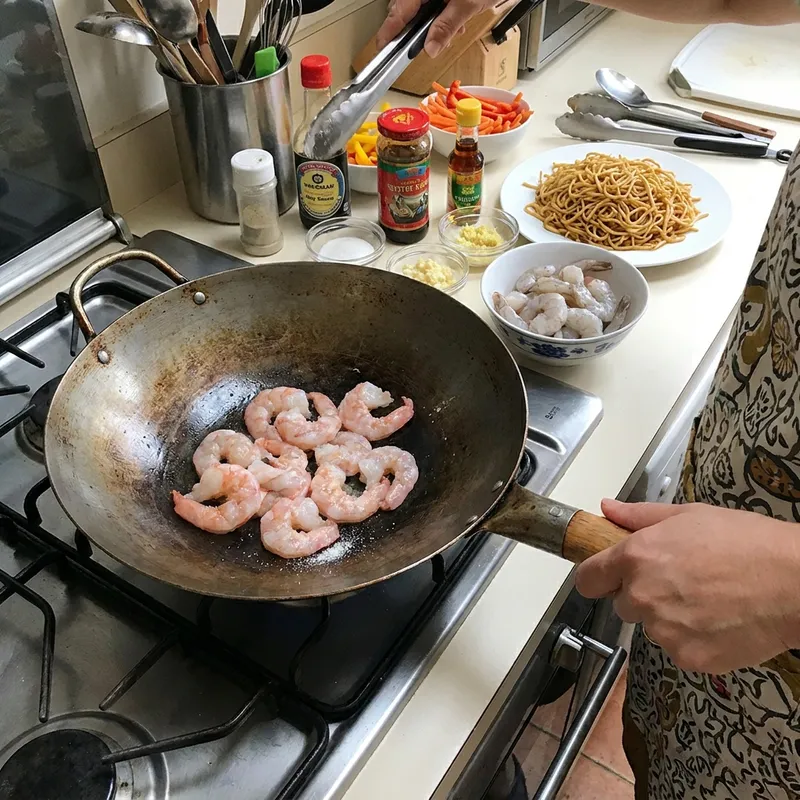
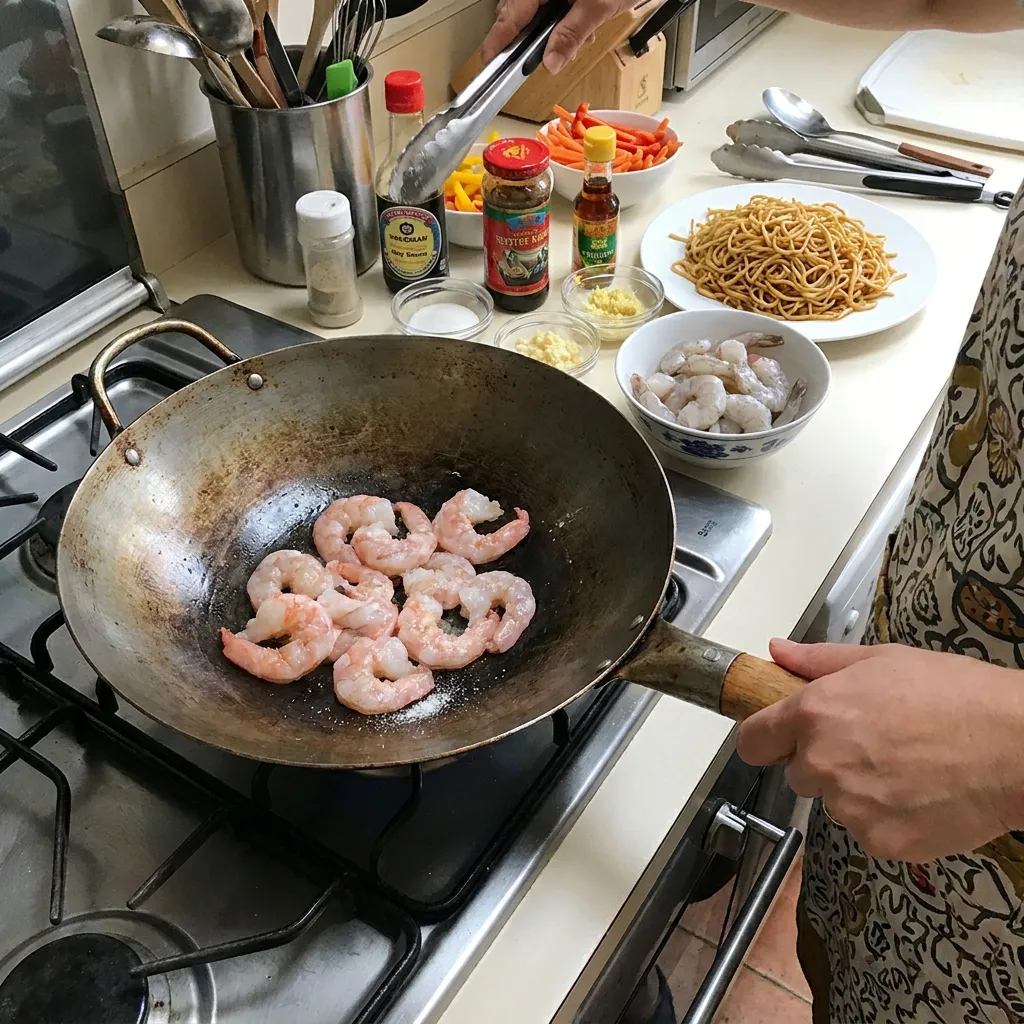
Add shrimp, season lightly with salt, and cook until pink, roughly 2 minutes per side; set aside.
- 4
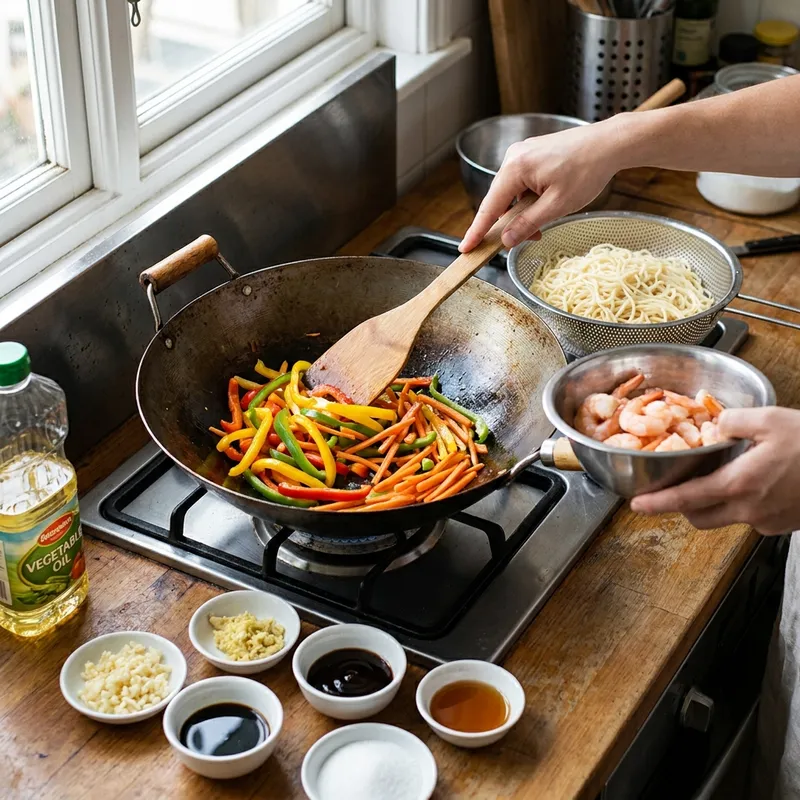
Throw in the bell peppers and carrots, stir‑fry for 2‑3 minutes so they stay crisp, then return the shrimp to the wok.
- 5
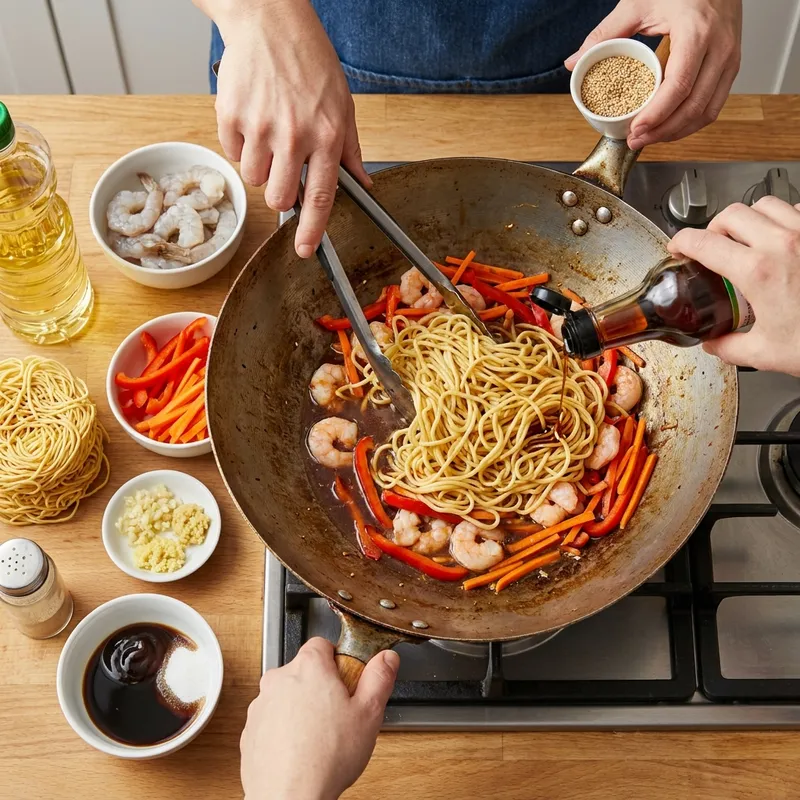
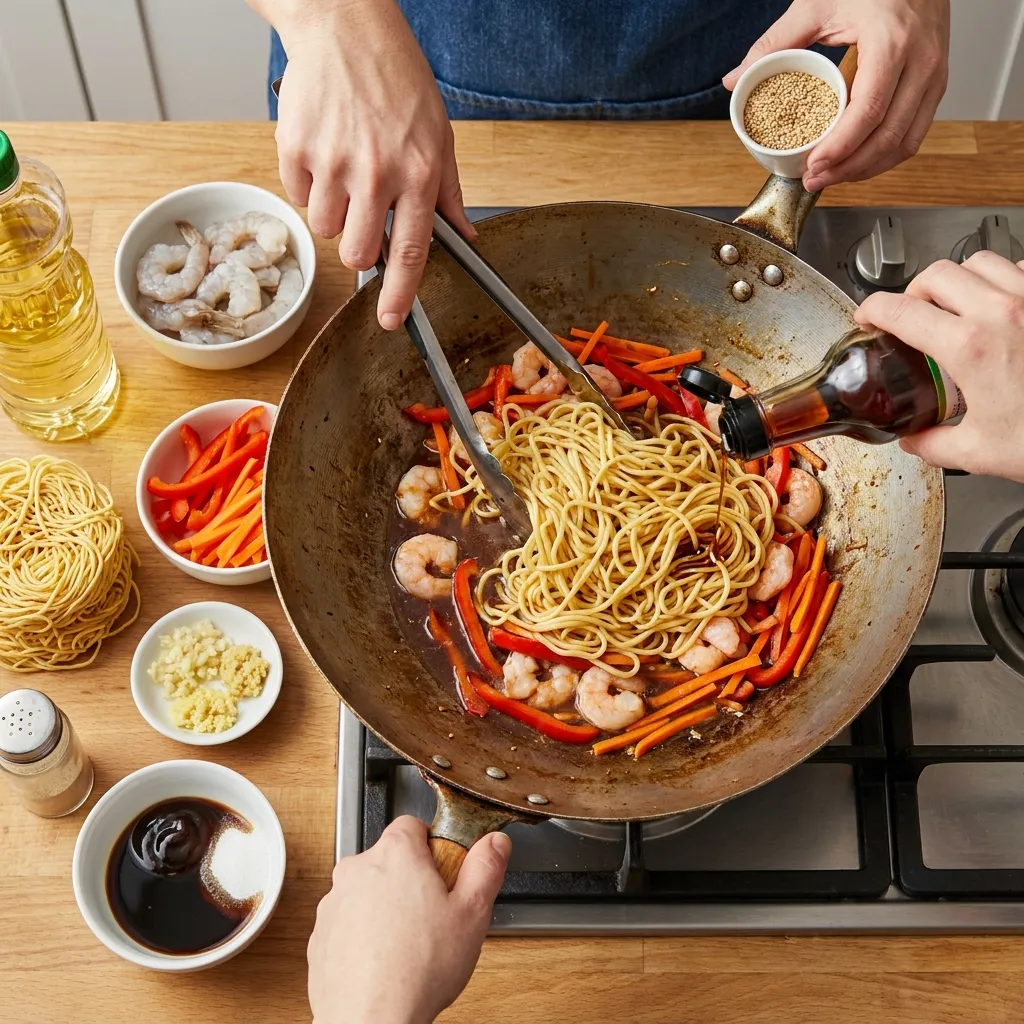
Stir in the noodles and sauce mixture, toss everything gently until coated and heated through, finish with a drizzle of sesame oil and toasted sesame seeds.
Nutrition per serving
- 420 kcal
- Calories
- 28 g
- Protein
- 45 g
- Carbs
- 14 g
- Fat
Tips & notes
- Use a hot wok to get that quick sear; it keeps the shrimp tender. - If you like a little heat, sprinkle a pinch of red pepper flakes just before serving. - For extra freshness, add a splash of lime juice at the end.
Frequently asked questions
Can I use frozen shrimp?
Yes, just thaw them completely and pat dry before cooking; this keeps the texture firm.
What noodle substitute works best?
Spaghetti or linguine can replace lo mein noodles; just cook al dente and rinse.
Is there a vegetarian version?
Swap shrimp for tofu or tempeh and follow the same steps; adjust cooking time accordingly.
How do I avoid soggy noodles?
Rinse the cooked noodles in cold water and toss them with a little oil before adding to the wok.
Can I make the sauce ahead?
Absolutely; store it in a sealed jar in the fridge for up to three days and give it a quick stir before use.
What side dish pairs well?
A light cucumber salad or steamed edamame complements the richness without overwhelming the palate.

Ava Brooks
⏱️🥄 Busy baker, one-bowl expert, and mini-loaf maker. Fast recipes with maximum yum 😋🔥.