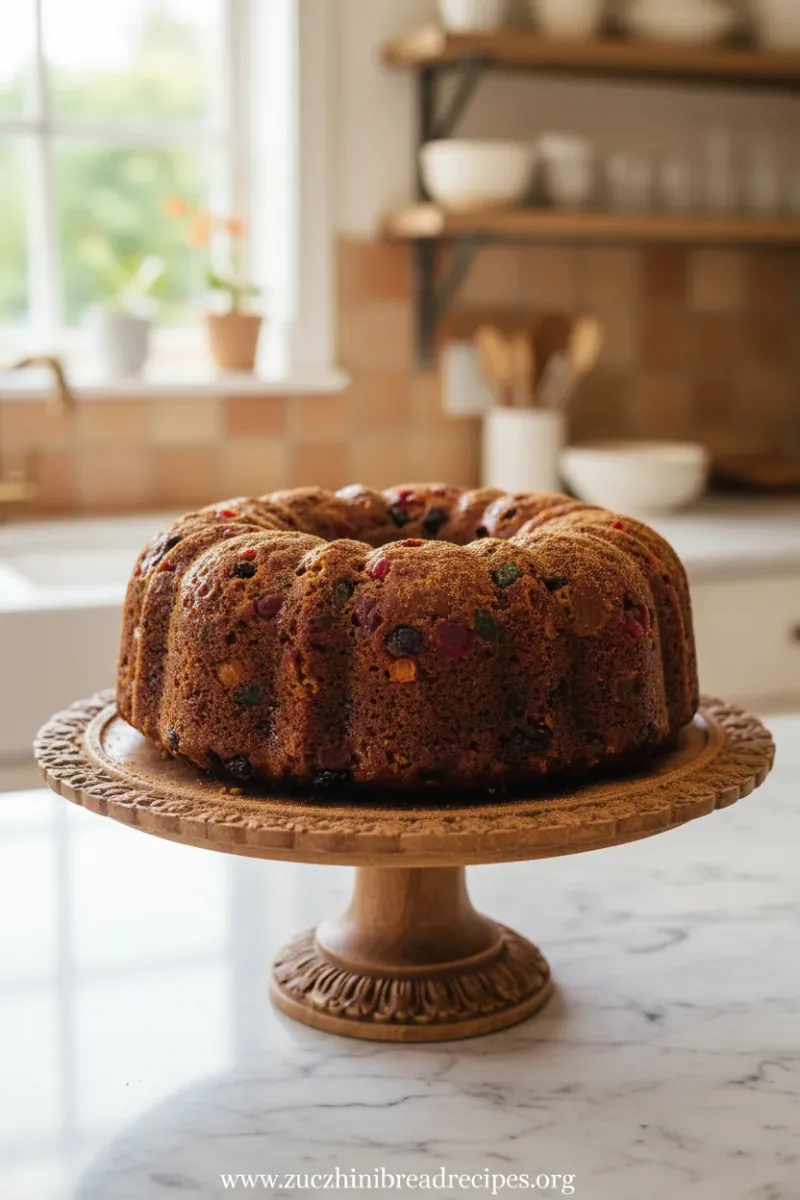
Honestly, when I first saw the golden hue of this cake I thought, wow, it must be something special. I remember making it on a chilly December afternoon, the kitchen filled with the scent of cinnamon and clove. So, let’s gather the ingredients and create a memory together.
The essence of the dish
A rich, buttery base that cradles a chorus of sweet, plumped fruit, all brightened by warm spices and a hint of citrus.
A fun fact or historical angle
In many German regions, fruit cakes were baked for Christmas and kept for weeks, sometimes even months, allowing flavors to intensify.
Flavor or sensory focus
First bite offers a soft, almost melt‑in‑your‑mouth texture, followed by bursts of sweet raisin and the comforting kiss of cinnamon.
You Must Know
- Do not over‑mix the batter.
- Check doneness with a toothpick—still moist crumbs are okay.
- Cool completely before slicing.
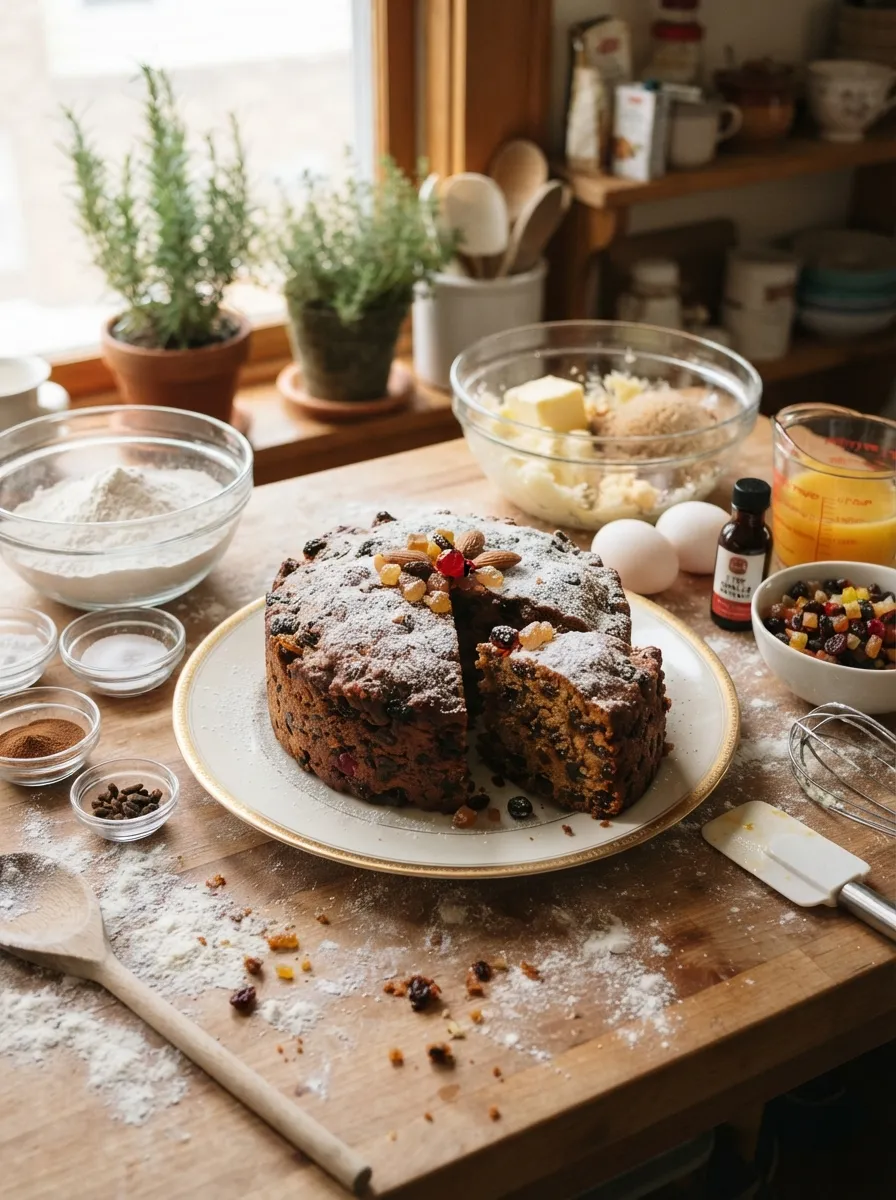
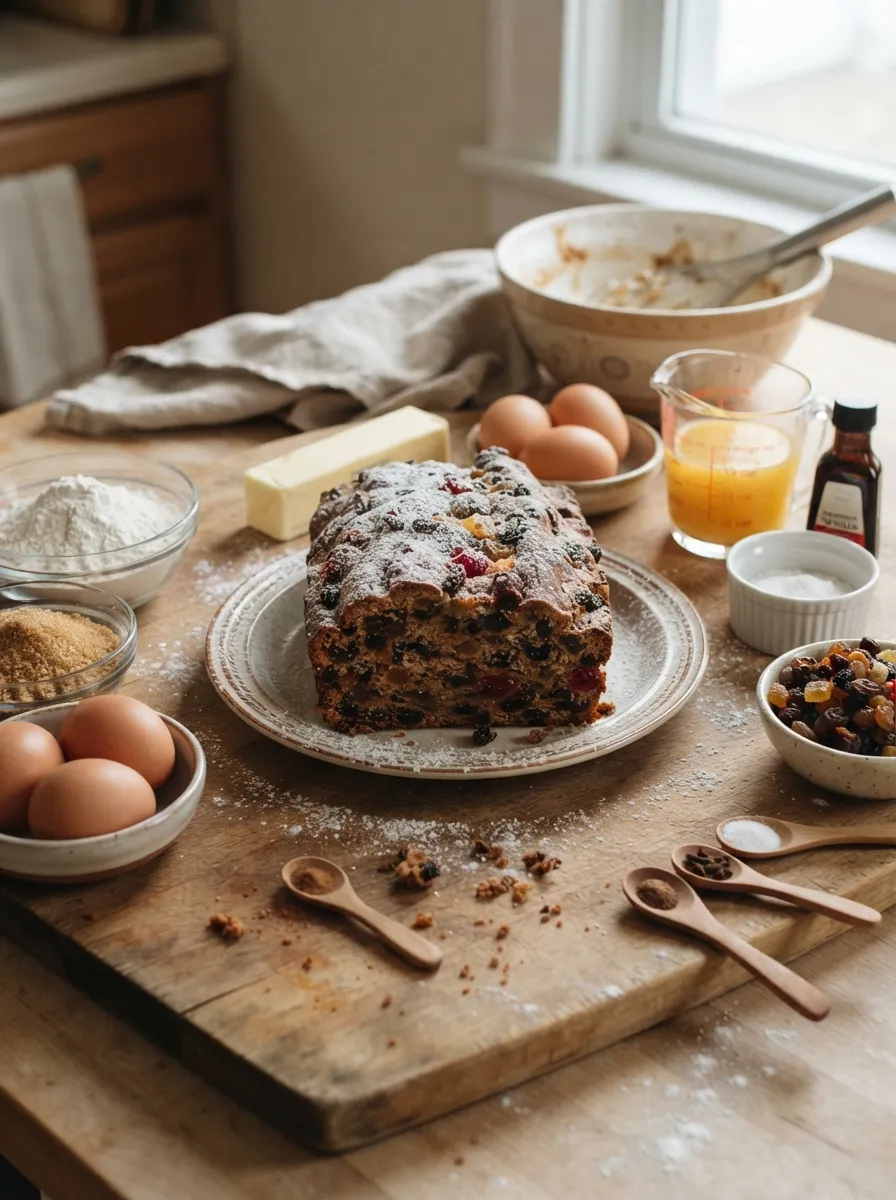
I remember once pulling a cake out too early; it crumbled like dry sand. Yeah, that’s why I always trust the toothpick test. And when you finally slice, you’ll see how the fruit speckles the interior, each piece a tiny jewel. It’s a simple pleasure, and the calm of watching it cool on the rack is a small moment of contentment.
The story behind it
The Old Fashioned German Fruit Cake traces its roots to the centuries‑old traditions of German holiday baking, where dried fruits were preserved through the winter months and infused with warming spices. This cake became a staple at family gatherings, embodying both celebration and comfort without the need for elaborate techniques.
Why You'll Love It
- Grounded in tradition with a comforting texture
- Loads of natural sweetness from dried fruit
- Warm spices that linger on the palate
- Simple steps, no fancy equipment needed
Tips for success
- Don’t over‑mix after adding flour; it can make the cake tough.
- Let the cake rest overnight wrapped in foil; flavors deepen.
- Taste the fruit mixture before adding; adjust sweetness if needed.
Professional secrets
- Room temperature butter emulsifies better, giving a finer crumb.
- Low oven temperature ensures even baking without a dry crust.
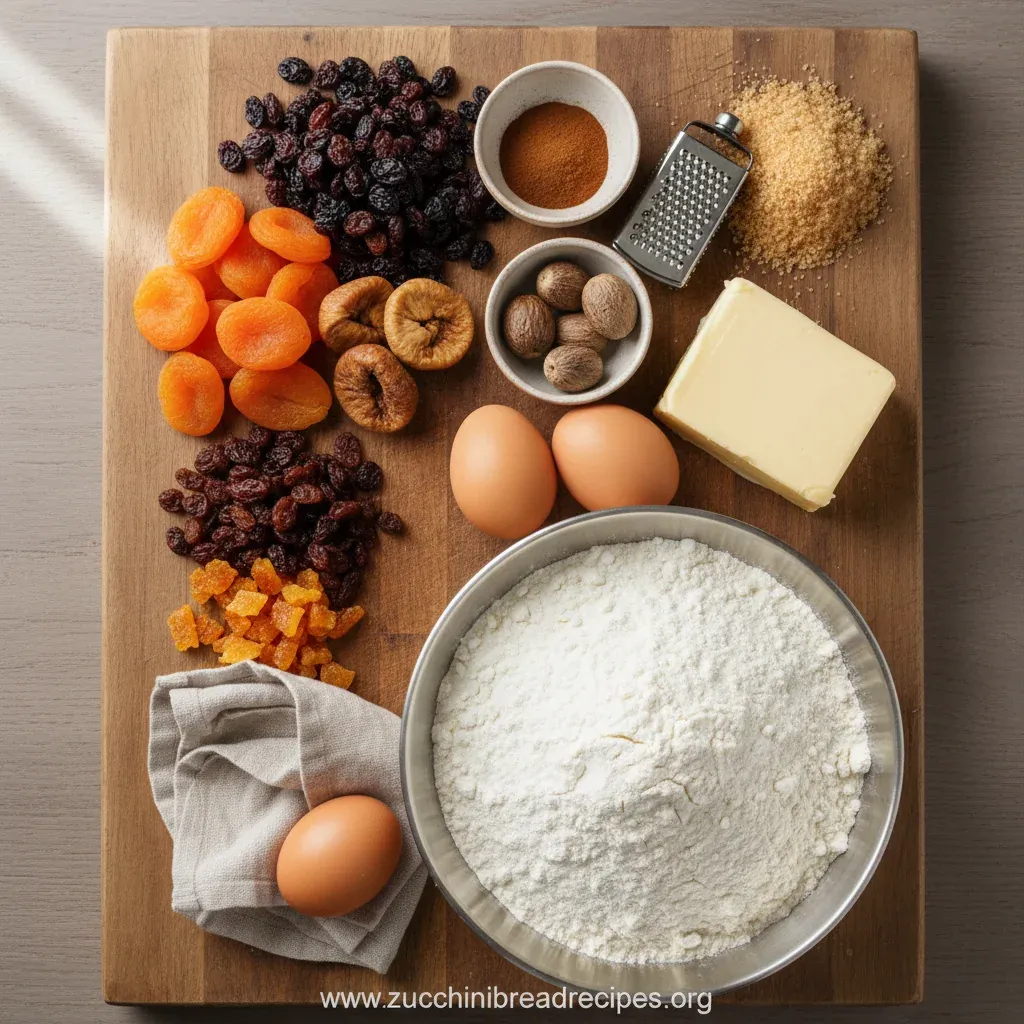
- Soaking fruit in orange juice adds moisture and bright flavor.
Common mistakes to avoid
- Over‑mixing the batter, which can lead to a tough crumb.
- Baking at too high a temperature, causing a dry crust.
- Not allowing the cake to cool fully before slicing.
Substitutions
- Butter: Margarine or plant‑based butter. Use the same amount; flavor will be slightly different.
- Brown sugar: Coconut sugar. Provides a milder sweetness and a hint of caramel.
Variations
- Spicy Version: Add 1 tsp ground ginger and a pinch of cayenne for a subtle heat.
- Mediterranean Style: Incorporate chopped dried apricots, pistachios, and a drizzle of honey.
Storage
Wrap tightly in plastic wrap and store at room temperature for up to two weeks; refrigerate for longer shelf life.
Make ahead
You can soak the fruit in orange juice and refrigerate overnight; the batter can also be prepared a day ahead and kept chilled.
Leftovers
Wrap slices in foil and gently reheat in a low oven (300°F) for 10 minutes before serving.
Serving ideas
- Serve a thick slice with a spoonful of vanilla Greek yogurt.
- Pair with a drizzle of caramel sauce for extra indulgence.
- Accompany with a cup of spiced tea or coffee.
- Garnish with a few fresh orange segments for brightness.
Allergy information
Contains wheat, eggs, dairy, and nuts (if added).
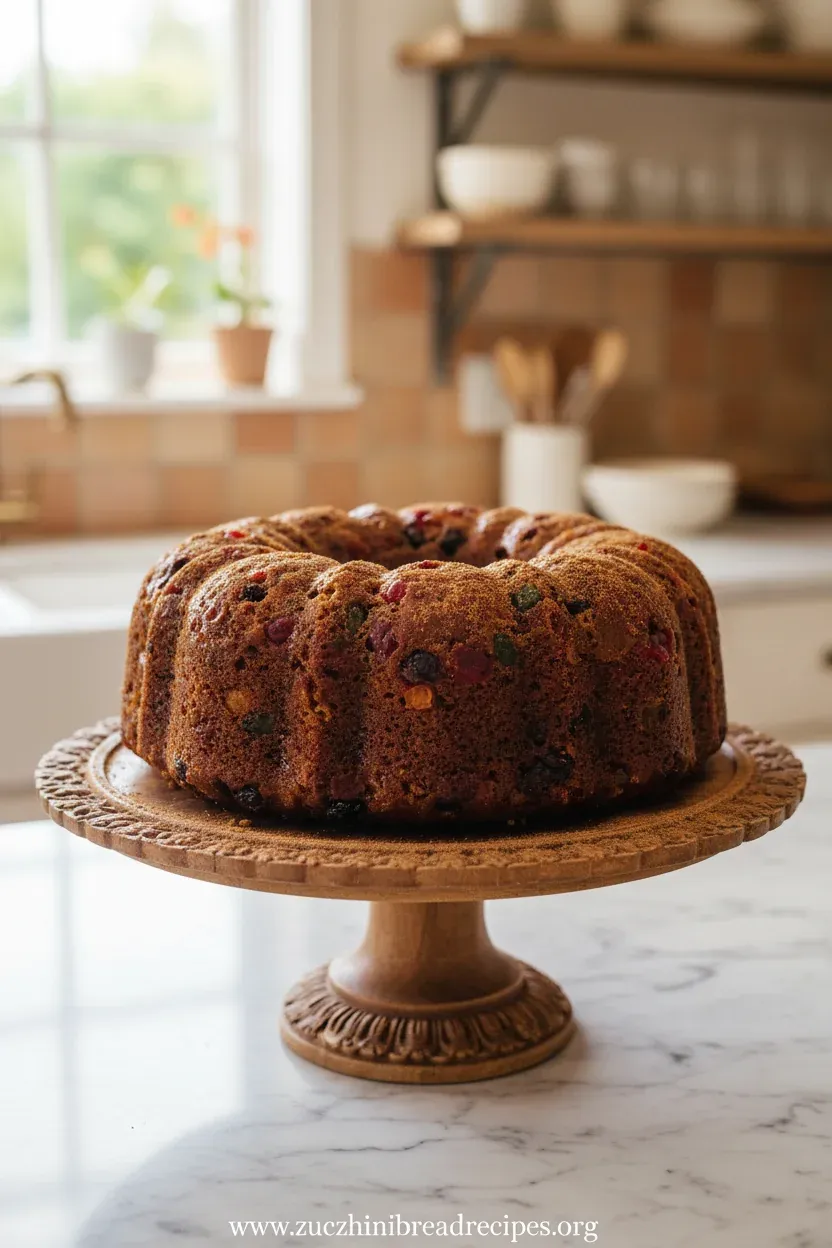
Old Fashioned German Fruit Cake
Rich, buttery German fruit cake loaded with dried fruits and comforting spices.
- Prep time
- 30 min
- Cook time
- 1 h 15 min
- Total time
- 1 h 45 min
- Difficulty
- Medium
- Cuisine
- German
- Course
- Dessert
Ingredients
Cake Base
Fruit Mix
Instructions
- 1
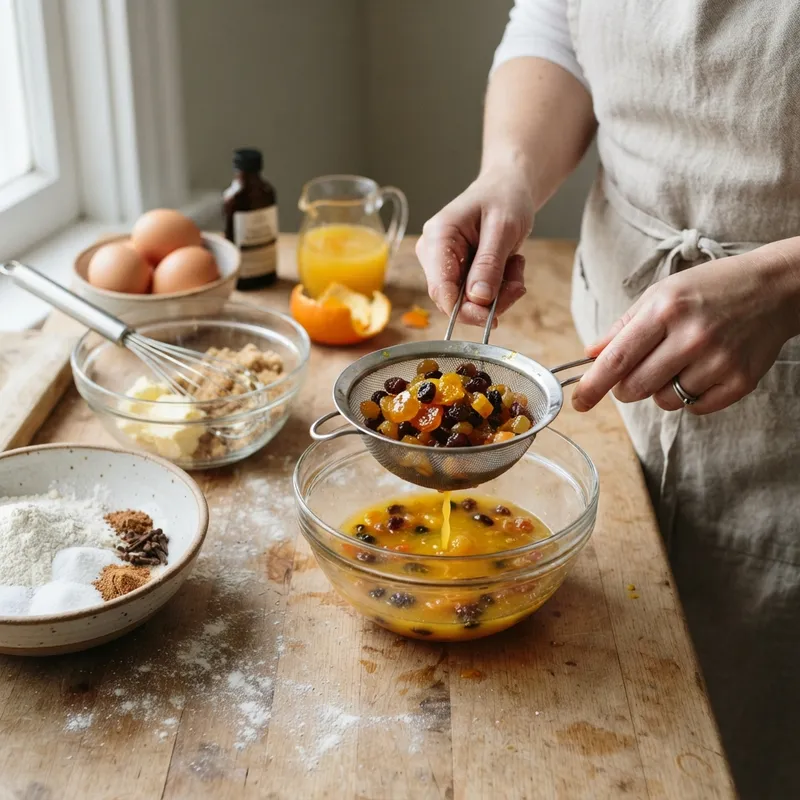
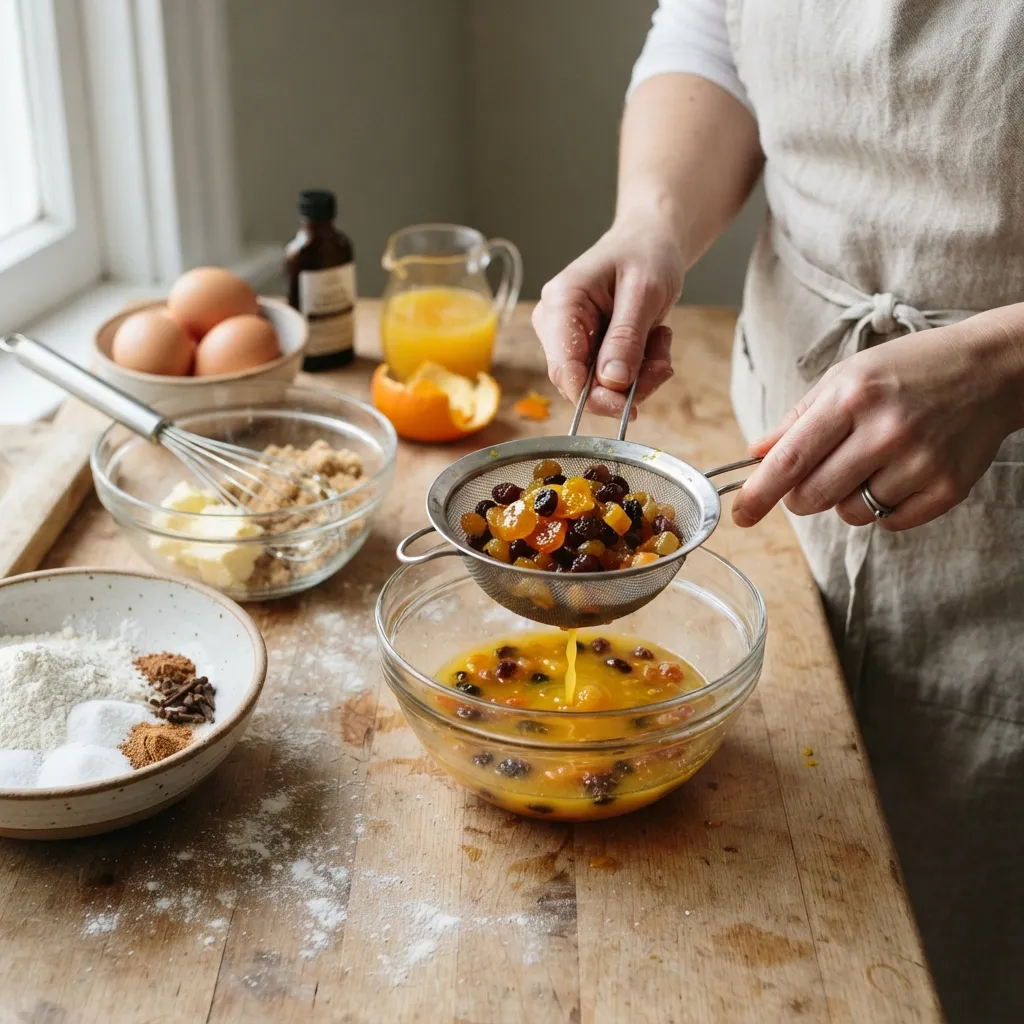
Soak the mixed dried fruit in orange juice and orange zest for at least 1 hour, then drain and set aside.
- 2
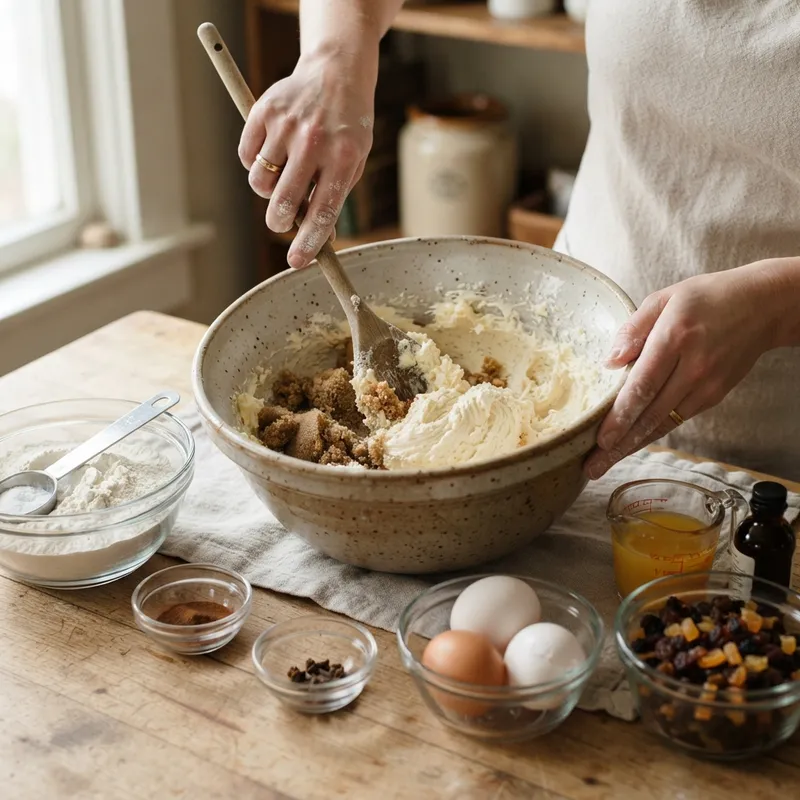
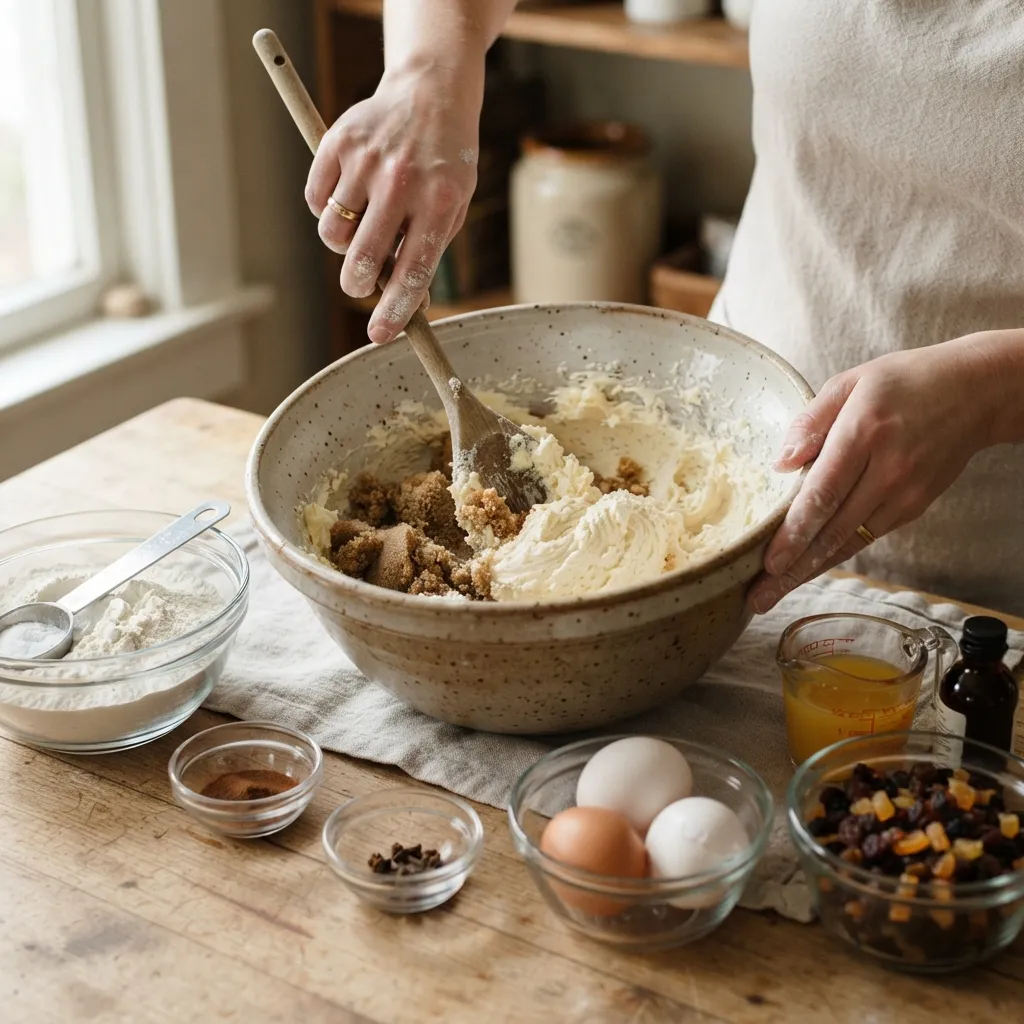
In a large bowl, cream the softened butter with brown sugar until light and fluffy; this may take about 3–4 minutes.
- 3
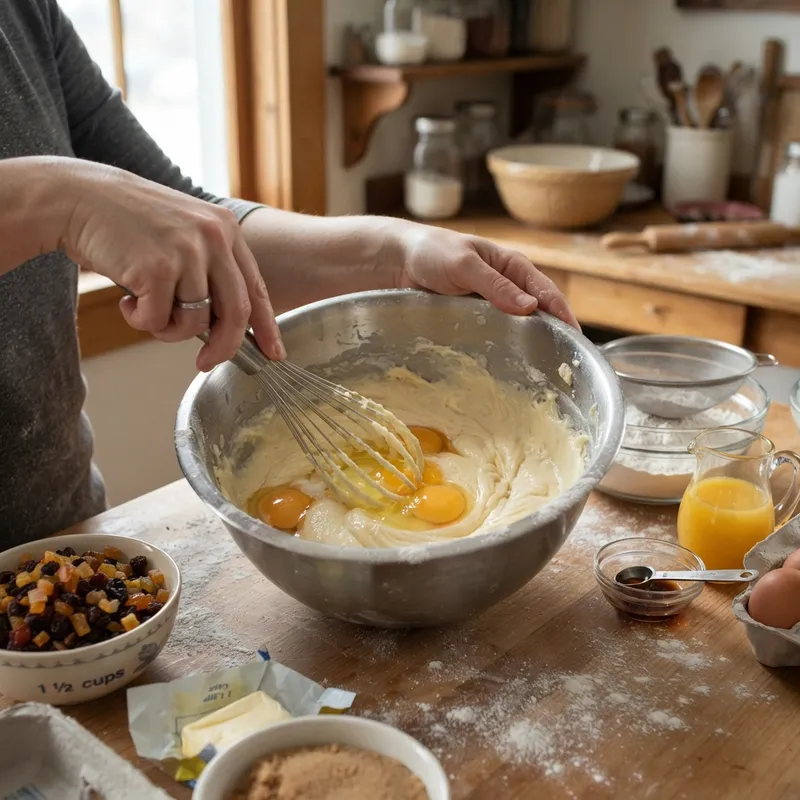
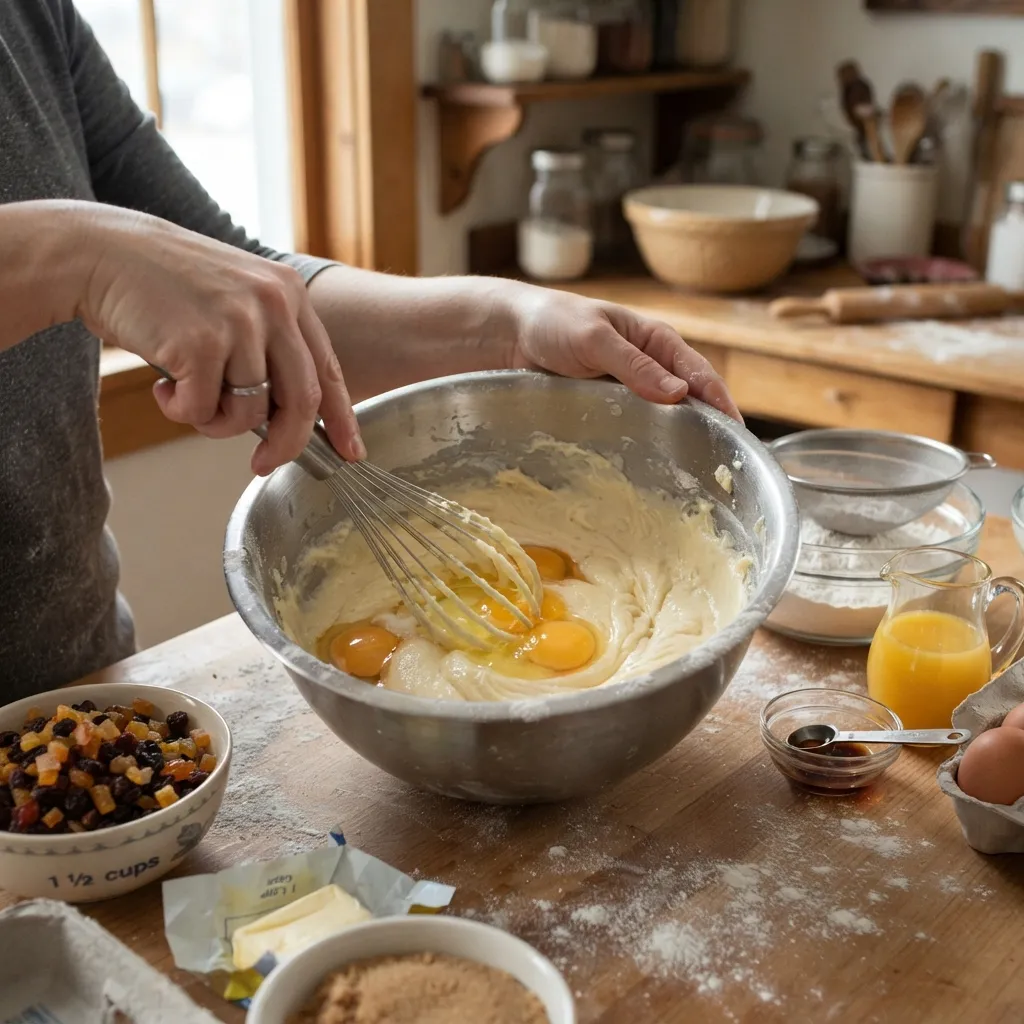
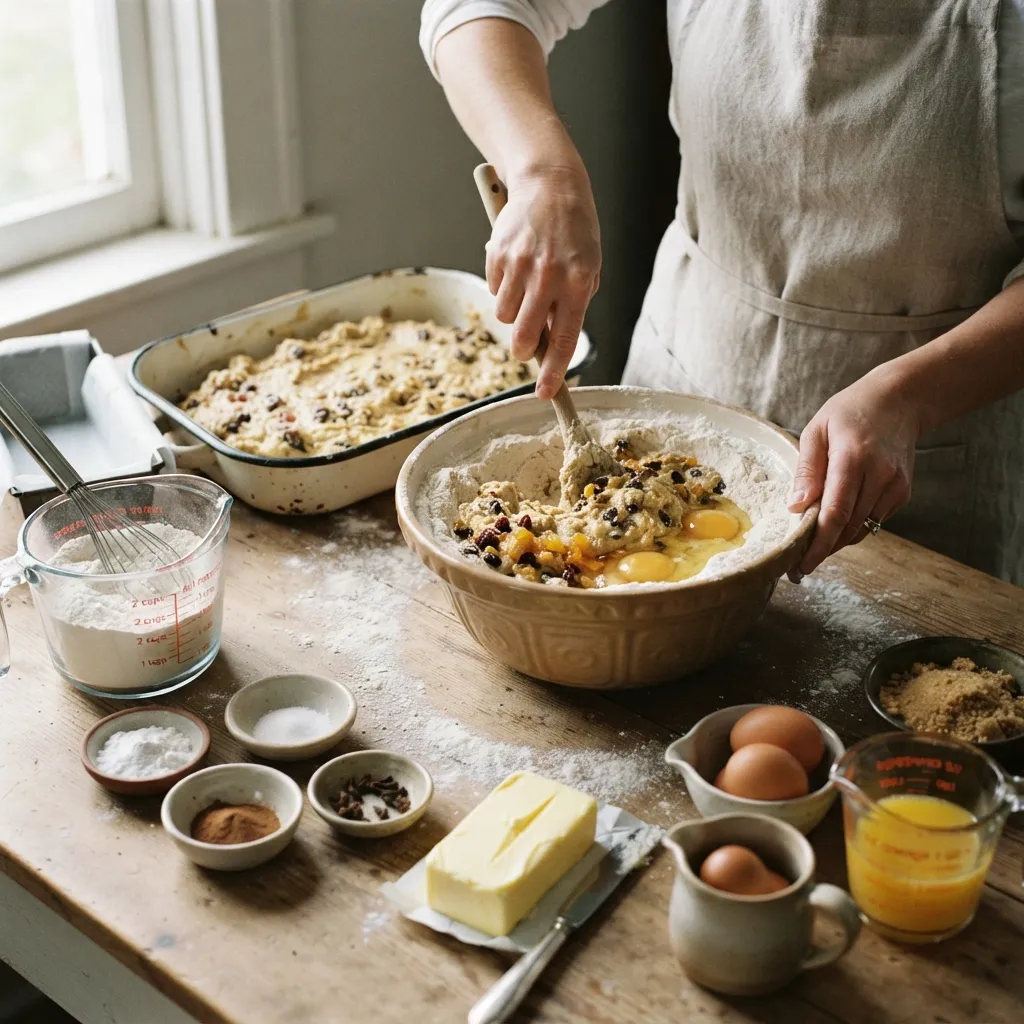
Add eggs one at a time, beating well after each addition, then stir in vanilla extract.
- 4
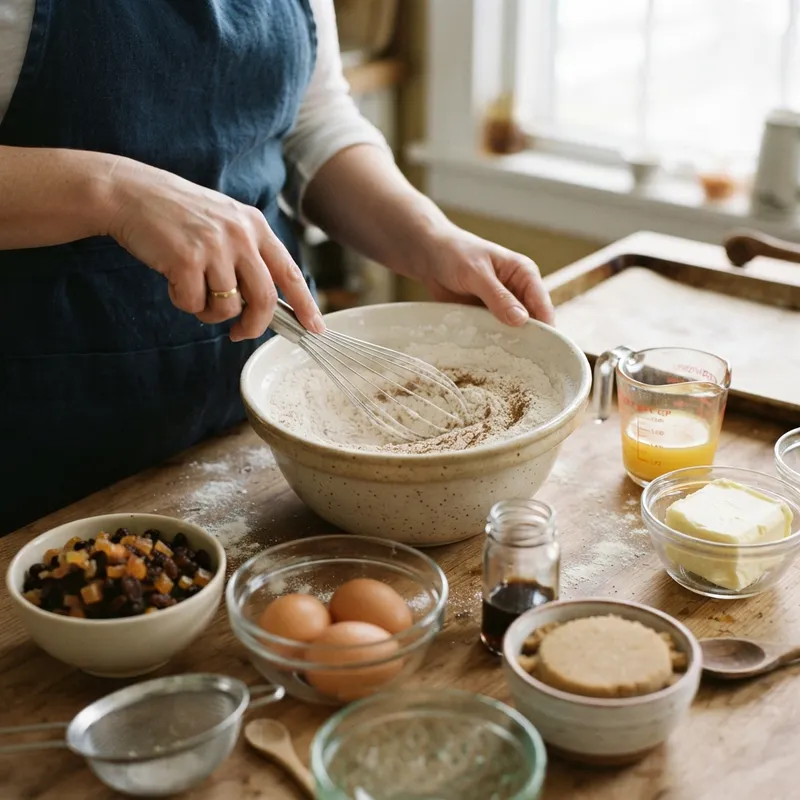
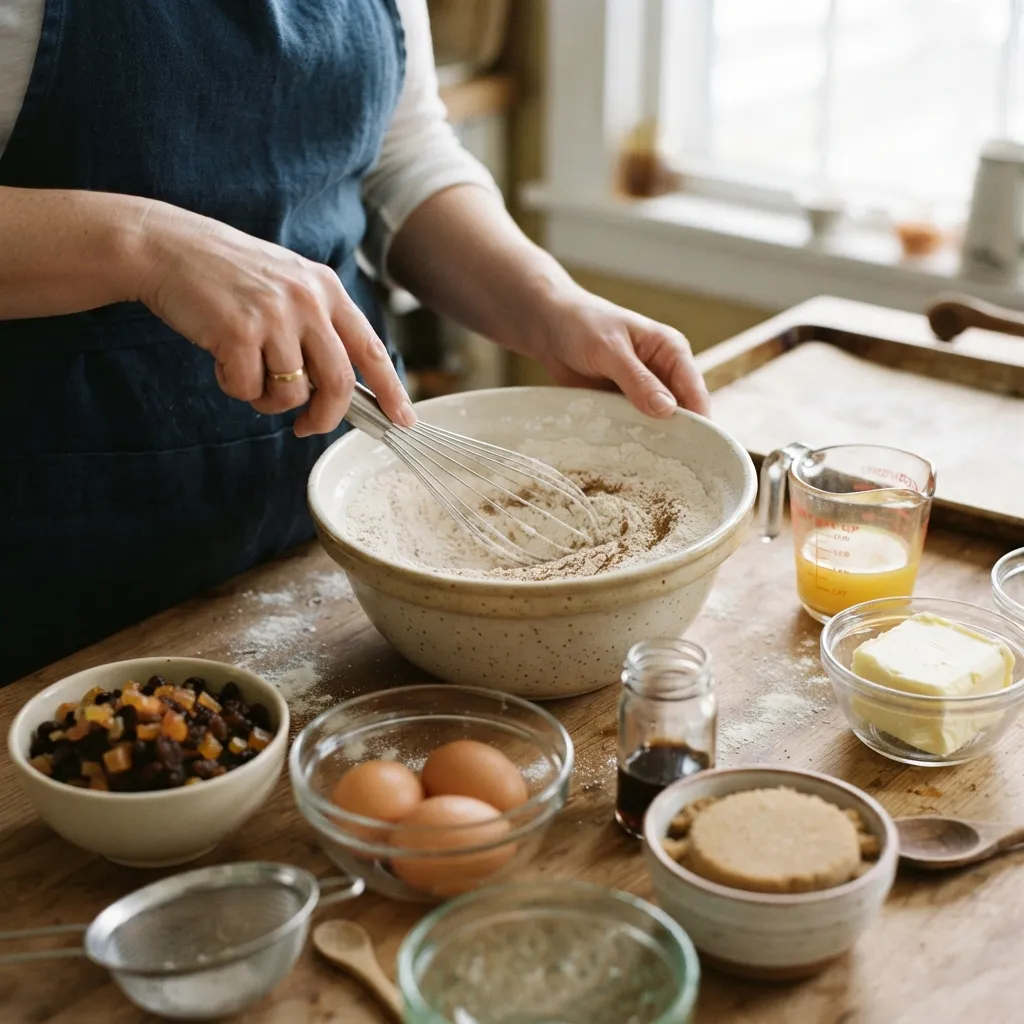
In a separate bowl whisk together flour, baking powder, salt, and the warm spice blend.
- 5
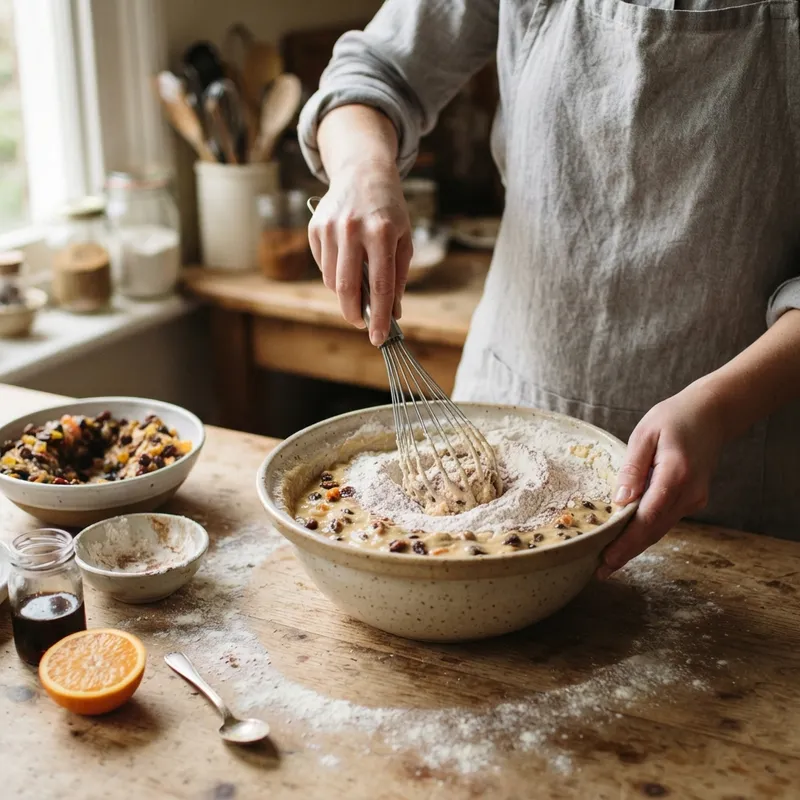
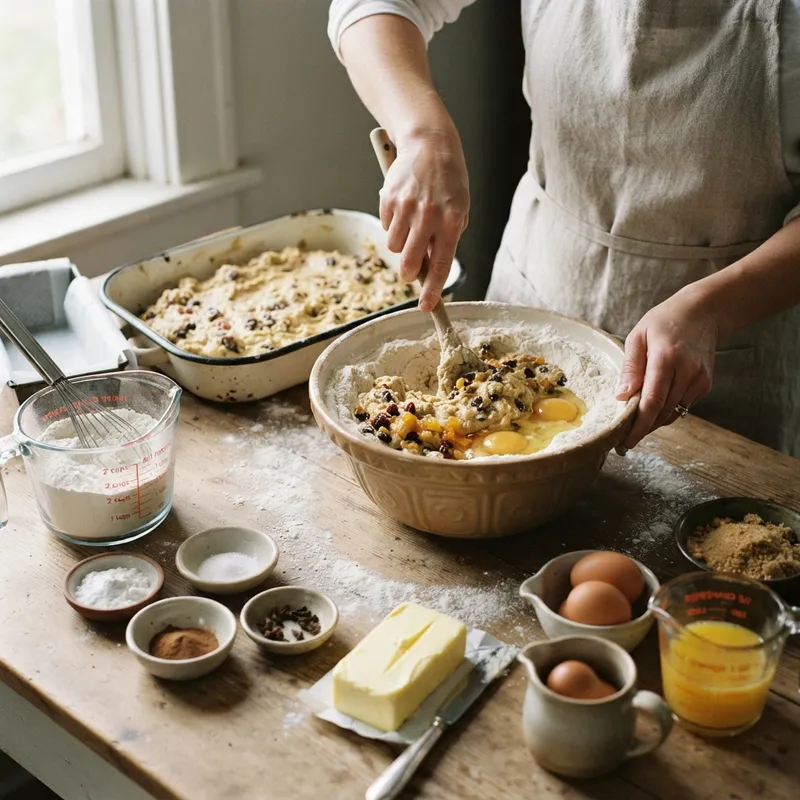
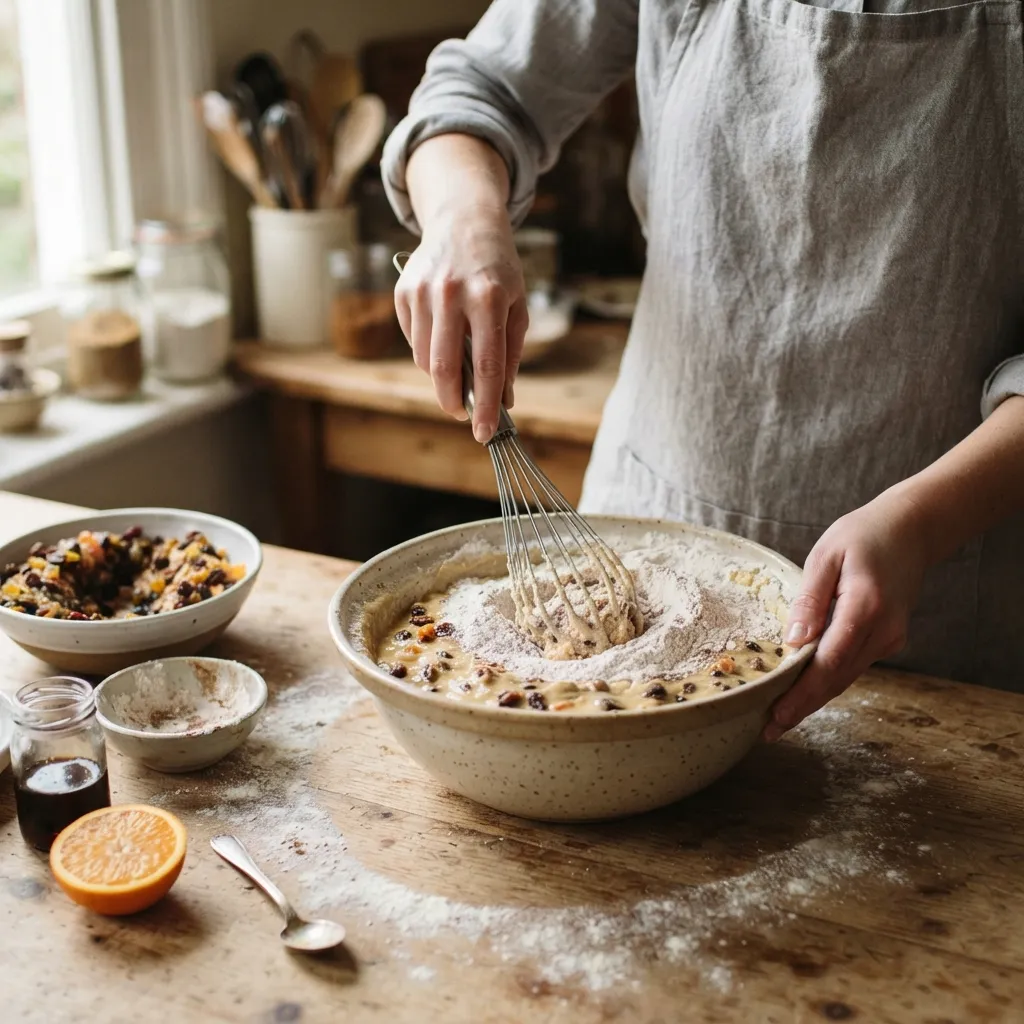
Gradually fold the dry ingredients into the wet mixture, being careful not to over‑mix.
- 6
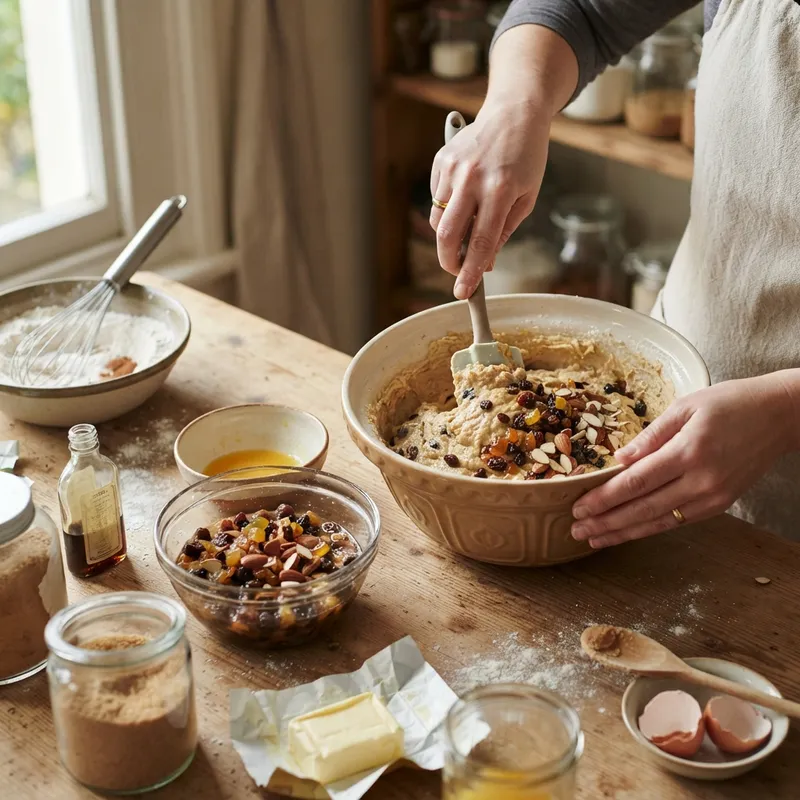
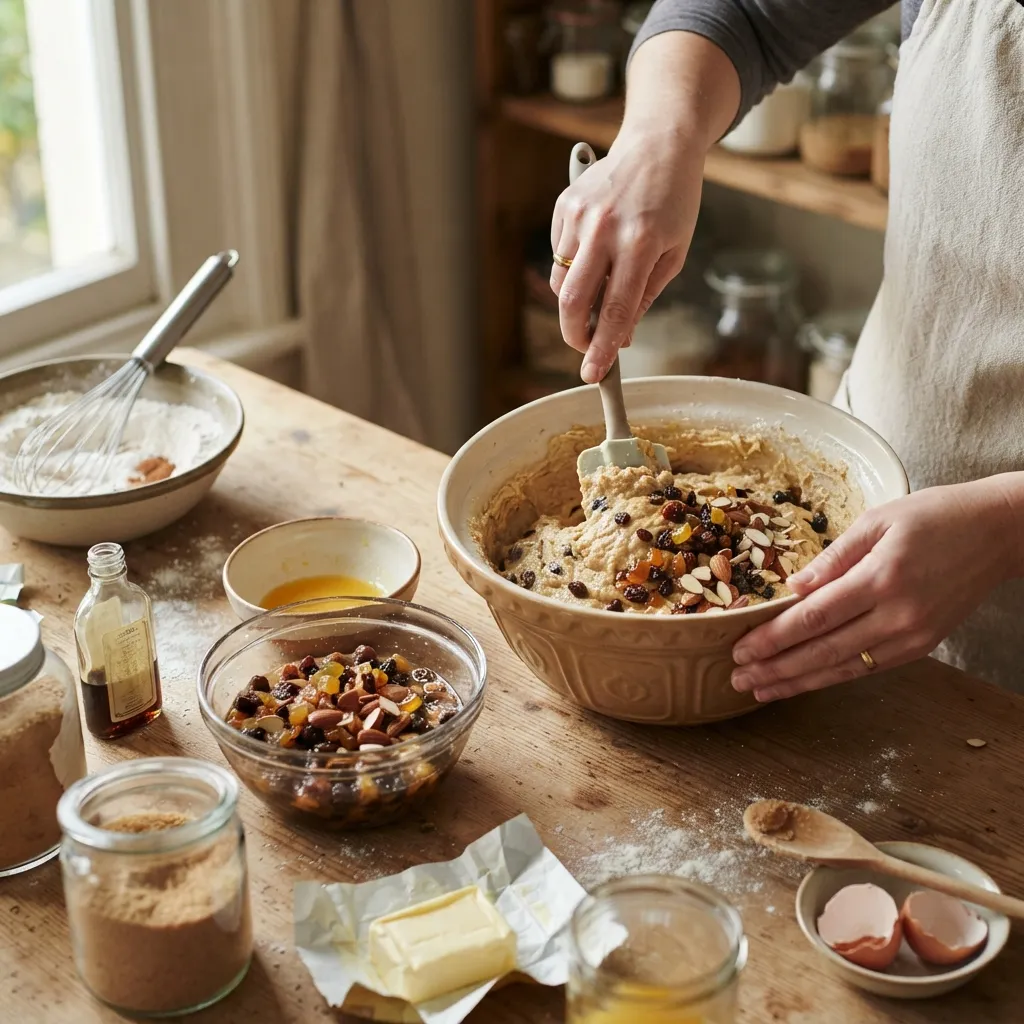
Gently fold in the soaked fruit, almonds if using, and any remaining orange juice.
- 7
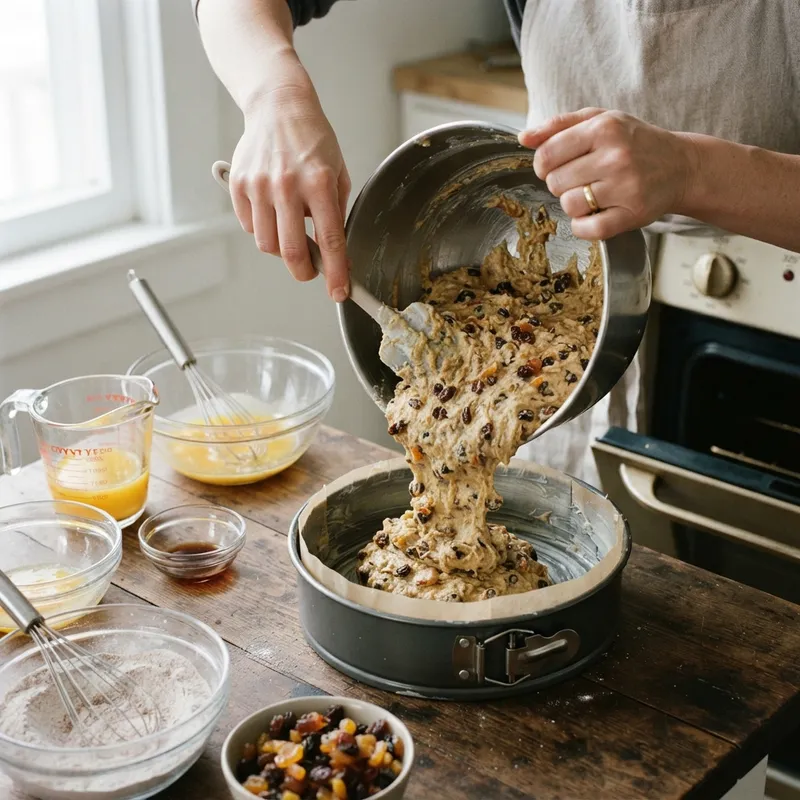
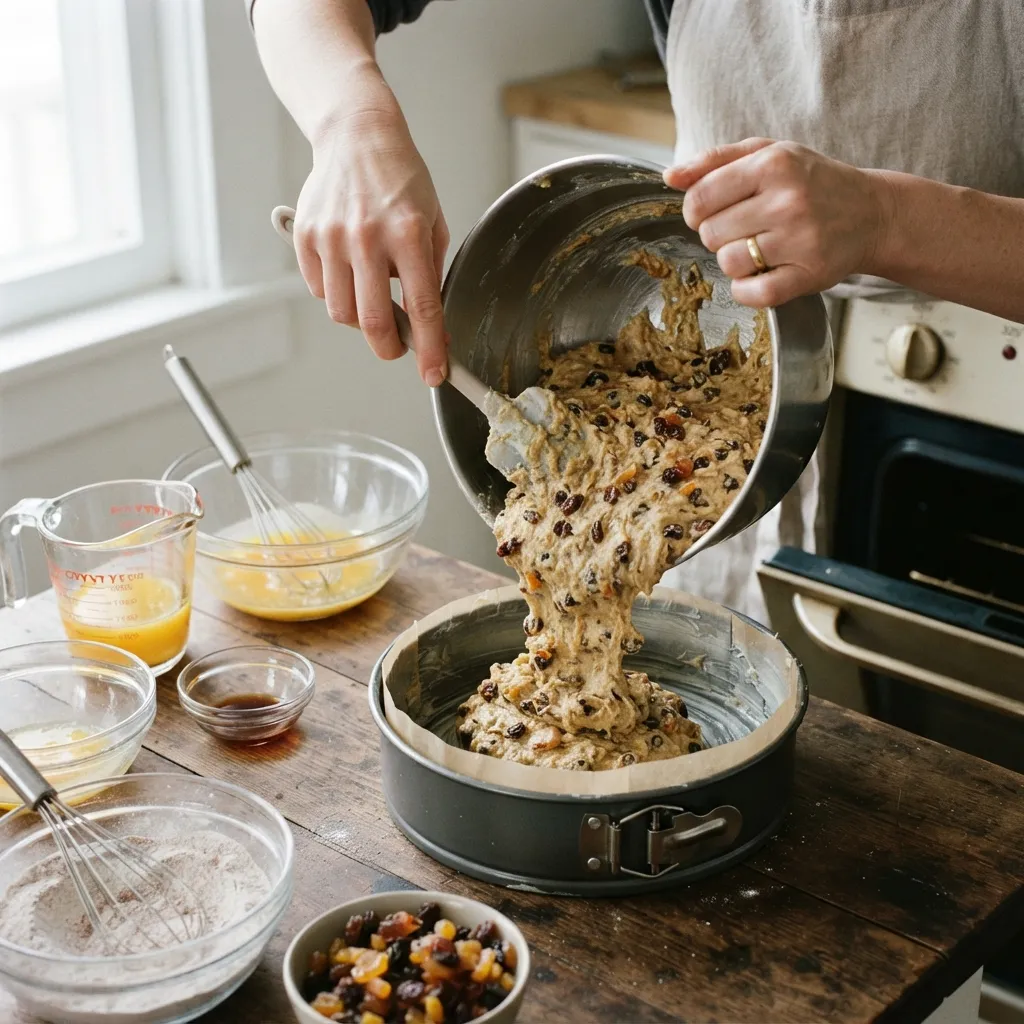
Pour the batter into a greased 9‑inch springform pan, smooth the top, and bake at 325°F (165°C) for 1 hour and 15 minutes, or until a toothpick comes out with just a few moist crumbs.
- 8
While the cake bakes, you can explore a related breakfast treat: German pancakes for a cozy brunch.
- 9
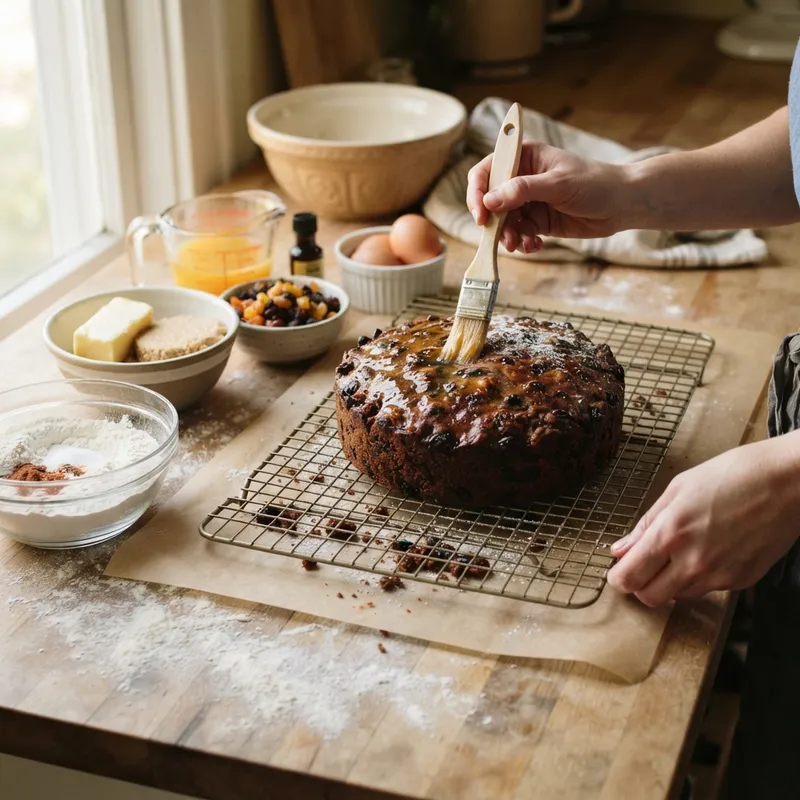
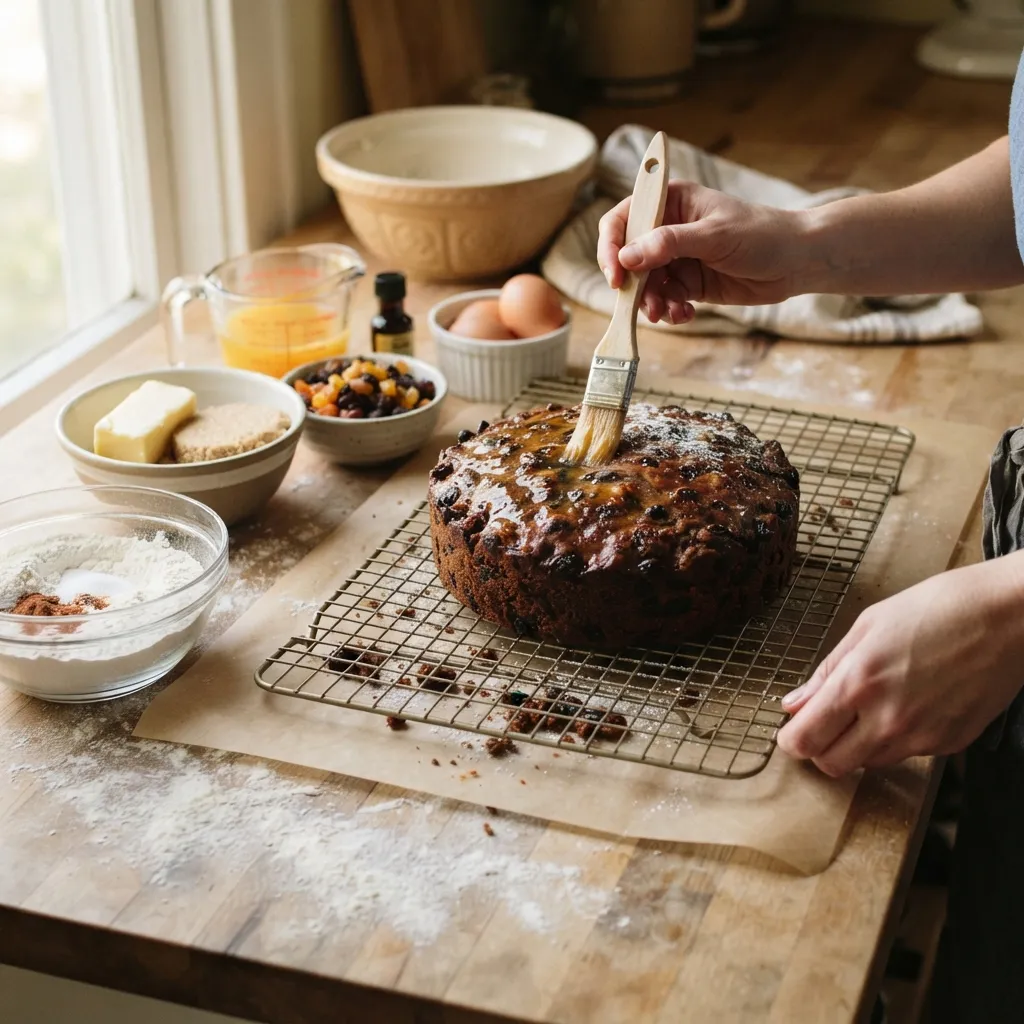
Cool the cake completely on a wire rack; if you like a glossy finish, brush with a mixture of orange juice and a little powdered sugar.
Nutrition per serving
- 420 kcal
- Calories
- 5 g
- Protein
- 58 g
- Carbs
- 18 g
- Fat
Tips & notes
- If you prefer a denser cake, add an extra 1/4 cup of dried fruit. - A pinch of almond flour can keep the crumb extra moist. - For a deeper citrus note, replace half of the orange juice with a splash of Grand Marnier‑free orange liqueur alternative.
Frequently asked questions
Can I use fresh fruit instead of dried?
Fresh fruit will add moisture but change the texture; you’d need to reduce the liquid in the batter.
How long does the cake keep?
Wrapped tightly, it stays fresh for up to two weeks at room temperature, even longer refrigerated.
Do I need to glaze the cake?
A glaze adds a glossy finish and extra citrus flavor, but it’s optional.
What spices work best?
Traditional German spice blend: cinnamon, nutmeg, and ground clove. A pinch of allspice works nicely, too.
Can I make this gluten‑free?
Replace all‑purpose flour with a 1:1 gluten‑free blend; the texture remains lovely.
Is this cake suitable for vegans?
Yes, swap butter for plant‑based margarine and use flax‑egg replacer; the flavor stays true.

Emma Harper
🥖✨ Lover of timeless recipes, cozy kitchens, and golden loaves. Always baking memories with love ❤️🍽️.